
In This Article
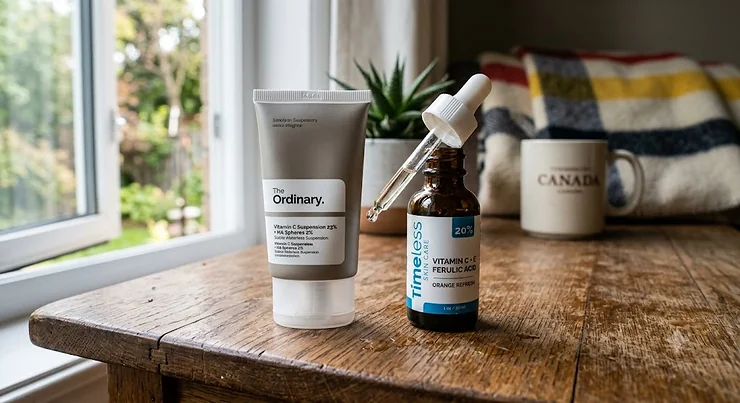
If you’ve spent more than ten minutes in the skincare aisle of a Canadian Shoppers Drug Mart, you’ve probably picked up a bottle of The Ordinary or Timeless and wondered which one actually deserves a spot on your bathroom shelf. The Ordinary vs Timeless vitamin C serum debate shows up in nearly every skincare forum, and for good reason: both brands built their reputation on giving you lab-grade actives without the department-store markup. What is vitamin C serum, really? It’s a topical antioxidant treatment — usually built around L-ascorbic acid or one of its gentler cousins — that helps brighten dull skin, fade old sun spots, and support your skin’s own collagen production over time.
Here’s the thing nobody tells you upfront: the “best” vitamin C serum isn’t the one with the flashiest percentage on the label. It’s the one your skin will actually tolerate, apply consistently, and finish before it oxidizes into a sad orange puddle at the bottom of the bottle. Below, we’re breaking down seven real, purchasable vitamin C serums — from budget powerhouses to clinical-grade splurges — with honest analysis of concentration, stability, and cost per use, so you can stop guessing and start glowing (responsibly, and with sunscreen).
Quick Comparison Table
| Serum | Vitamin C Type | Concentration | Price Range (CAD) | Best For |
|---|---|---|---|---|
| The Ordinary Vitamin C Suspension 23% + HA Spheres 2% | L-Ascorbic Acid | 23% | C$9-C$13 | Tight budgets, oily skin |
| Timeless 20% Vitamin C + E Ferulic Acid Serum | L-Ascorbic Acid | 20% | C$35-C$45 | Experienced users wanting a SkinCeuticals dupe |
| SkinCeuticals C E Ferulic | L-Ascorbic Acid | 15% | C$195-C$250 | Splurge-worthy, clinically studied |
A quick glance tells the real story here: concentration alone doesn’t decide the winner. The Ordinary offers the highest raw percentage for the lowest price, but Timeless pairs a slightly lower dose with stabilizing antioxidants, and SkinCeuticals bets everything on decades of published photoprotection data. Your skin’s tolerance and your patience for a slightly gritty texture will matter more than the number on the label.
💬 Just one click — help others make better buying decisions too!😊
Top 7 Vitamin C Serums: Expert Analysis
1. The Ordinary Vitamin C Suspension 23% + HA Spheres 2% — highest concentration for the lowest price
This water-free suspension packs a genuinely startling amount of active ingredient into a tiny, unassuming bottle. Because the formula skips water entirely, the pure L-ascorbic acid powder stays suspended rather than dissolved, which is why it feels slightly gritty going on — a texture quirk, not a defect. The 23% concentration sits at the upper edge of what dermatology research generally considers useful, and the added hyaluronic acid spheres offset some of the dryness that high-strength vitamin C can otherwise cause. Based on the spec comparison, this is the product to reach for if your priority is raw antioxidant strength per dollar spent, though the lack of ferulic acid or vitamin E means you’re getting less built-in stability than the pricier options on this list. Reviewers consistently report a genuine brightening effect within a few weeks, alongside near-universal comments about the gritty, slow-absorbing texture that some find off-putting for daytime wear under makeup. It’s also the product most likely to oxidize quickly once opened, so buying small and using it up matters more here than with almost anything else on this list.
Pros:
- ✅ Highest vitamin C concentration on this list for the price
- ✅ Water-free formula slows oxidation before opening
- ✅ Hyaluronic acid spheres soften the drying effect
Cons:
- ❌ Gritty texture takes longer to absorb than liquid serums
- ❌ No ferulic acid or vitamin E for extra stability
Priced under C$13 for a 30 mL bottle, this remains one of the best value-per-percentage vitamin C options sold in Canada, and it’s a smart entry point if you’ve never tried a high-strength formula before.
2. Timeless 20% Vitamin C + E Ferulic Acid Serum — closest budget dupe for a clinical-grade formula
Timeless built its entire brand identity around mimicking prestige antioxidant formulas at a fraction of the price, and this serum is the clearest example. What most buyers overlook about this bottle is that its ingredient list — water, L-ascorbic acid, vitamin E, ferulic acid, sodium hyaluronate — reads almost identically to a serum costing five times more, just with slightly different ratios of the same synergistic trio. The 20% concentration paired with ferulic acid means the formula is chemically more stable than a straight ascorbic acid suspension, translating into a longer usable shelf life once opened, provided you refrigerate it as the brand recommends. Aggregated reviewer sentiment frequently calls this a near-dupe for pricier ferulic acid serums, with many long-term users reporting brighter, more even-toned skin after consistent use, alongside occasional complaints about a runny consistency and the need for refrigeration to preserve potency.
Pros:
- ✅ Ferulic acid and vitamin E boost chemical stability
- ✅ Frequently compared favourably to premium alternatives
- ✅ Non-greasy, fast-absorbing liquid texture
Cons:
- ❌ Requires refrigeration to maximize shelf life
- ❌ Ships from the US, so Canadian pricing varies with duties
In the C$35-C$45 range for a 1 oz bottle landed in Canada, it sits squarely between drugstore and prestige pricing, which is exactly where its reputation lives.
3. TruSkin Vitamin C Serum — gentlest first-timer pick
TruSkin leans on sodium ascorbyl phosphate (SAP) rather than pure L-ascorbic acid, and that single formulation choice explains almost everything about how this serum behaves. SAP is a more stable, less acidic derivative of vitamin C, so it typically causes far less tingling or redness than a straight 20%+ ascorbic acid formula. Here’s what to weigh: SAP-based formulas tend to work more gradually, often needing six to eight weeks of consistent use before changes in tone become obvious, compared to the faster (if harsher) results some users report from high-strength L-ascorbic acid suspensions. Reviewers overwhelmingly describe this serum as beginner-friendly, layering well under makeup with minimal irritation, though a distinct herbal scent and a lighter, less deeply hydrating texture are common notes among more experienced skincare users who’ve moved on to richer formulas.
Pros:
- ✅ Gentle SAP form suits sensitive or reactive skin
- ✅ Layers cleanly under sunscreen and makeup
- ✅ Large, established review base for a budget product
Cons:
- ❌ Slower visible results than higher-strength L-ascorbic acid
- ❌ Noticeable scent that some users find unpleasant
At roughly C$28-C$35 for a 1 oz bottle, it’s a reasonable low-risk entry point for anyone nervous about vitamin C irritation.
4. Mad Hippie Vitamin C Serum — best clean-beauty formulation
Mad Hippie also builds around sodium ascorbyl phosphate, but layers in ferulic acid, chamomile extract, and konjac root powder for a formula that reads more like a soothing treatment than an aggressive active. The spec sheet won’t tell you this, but reviewers note the konjac root contributes a subtle smoothing effect on texture that goes beyond what vitamin C alone typically delivers. This is a serum built for people prioritizing ingredient transparency and gentle, cumulative results over speed — a fair trade-off if your skin has previously reacted badly to potent L-ascorbic acid formulas. Aggregated review sentiment across major retailers skews strongly positive, with long-time users frequently mentioning years of consistent use without breakouts or irritation, though some note the pump dispenser lets in more air than an airless bottle would, which can shorten shelf life once opened.
Pros:
- ✅ Clean, fragrance-conscious formula with chamomile and konjac root
- ✅ Vegan, cruelty-free, and EWG-verified credentials
- ✅ Strong long-term reviewer loyalty and repeat purchases
Cons:
- ❌ Pricier than other SAP-based competitors
- ❌ Pump-style bottle allows more air exposure than airless packaging
Sitting around C$45-C$55 for 1.02 oz, it’s positioned for buyers who’ll pay a premium for clean-beauty certifications alongside a gentler active.
5. La Roche-Posay Pure Vitamin C10 Serum — best pharmacy pick for sensitive or oily skin
La Roche-Posay formulates this serum around a lower 10% ascorbic acid concentration alongside salicylic acid, aiming squarely at oily and acne-prone skin types that need brightening without the irritation risk of a stronger dose. On paper this means slower results than the 20%+ options on this list, but the trade-off is meaningfully better tolerance for reactive or blemish-prone skin, and the salicylic acid adds a mild exfoliating benefit that plain vitamin C serums don’t offer. It’s also one of the few products here sold directly through Canadian pharmacies like Shoppers Drug Mart, which matters if you’d rather not deal with cross-border shipping. Reviewers commonly praise its lightweight, non-greasy finish and compatibility with oily skin, while some with very dry skin find it insufficiently hydrating on its own and prefer layering it under a richer moisturizer.
Pros:
- ✅ Widely available in Canadian pharmacies, no cross-border shipping
- ✅ Salicylic acid adds gentle exfoliation for oily/acne-prone skin
- ✅ Formulated specifically for tolerance and lower irritation
Cons:
- ❌ Lower concentration means more gradual brightening results
- ❌ Can feel insufficiently hydrating for very dry skin types
At around C$50-C$60 per bottle, it lands mid-pack in price but wins hard on convenience for Canadian shoppers.
6. SkinCeuticals C E Ferulic — the clinically studied splurge
SkinCeuticals occupies the premium end of this list, and the justification isn’t just marketing — the 15% L-ascorbic acid, 1% alpha tocopherol, 0.5% ferulic acid combination is the exact ratio validated in a peer-reviewed Duke University study showing roughly doubled photoprotection against UV-induced skin damage when the three antioxidants are combined this way. What most buyers overlook about this serum is that its lower 15% concentration is a deliberate formulation choice, not a shortcoming: past a certain threshold, added vitamin C doesn’t necessarily translate to added benefit, and this ratio is what the published research actually tested. The brand backs the formula with 36-month stability testing in sealed packaging, addressing the oxidation problem that dogs cheaper suspensions. Reviewers, including professional dermatologists frequently cited in beauty press, consistently rank this as a top overall pick, though the price tag and the fact that the serum naturally darkens somewhat after opening (without losing efficacy) are recurring points of discussion.
Pros:
- ✅ Formula ratio matches the exact combination validated in published research
- ✅ Brand-verified 36-month stability in sealed packaging
- ✅ Frequently recommended by dermatologists in independent reviews
Cons:
- ❌ Significantly more expensive than every other option here
- ❌ Natural discolouration after opening can worry first-time buyers
Expect to pay in the C$195-C$250 range for a 1 oz bottle — a genuine investment, but one with more independent clinical backing than almost anything else in this category.
7. The Ordinary Vitamin C Suspension 30% in Silicone — highest percentage, smoothest application
The Ordinary’s second entry on this list swaps the oil-suspended base for a silicone-based one, bumping the labelled concentration to 30% while delivering a noticeably smoother, less gritty application than its HA Spheres sibling. Here’s what to weigh: independent ingredient analysts note that silicones may slightly reduce how efficiently skin absorbs vitamin C compared to the non-silicone version, meaning the jump from 23% to 30% likely doesn’t translate into a proportional jump in real-world effectiveness. It also skips the hyaluronic acid and squalane found in the HA Spheres formula, so it offers fewer supporting moisturizing ingredients to buffer irritation from the high dose. Reviewers frequently pick between these two Ordinary formulas based purely on texture preference — silicone-averse skin types tend to stick with the HA Spheres version, while those chasing the smoothest possible finish choose this one instead.
Pros:
- ✅ Smoothest, least gritty texture among high-concentration options
- ✅ Highest labelled vitamin C percentage on this list
- ✅ Still budget-friendly despite the higher percentage
Cons:
- ❌ Silicone base may reduce absorption efficiency versus the HA Spheres version
- ❌ Lacks the moisturizing hyaluronic acid and squalane of its sibling formula
At a similar C$10-C$14 price point to its sibling, this one’s really a texture decision rather than a value decision.
Affordable Vitamin C Comparison: Budget Picks That Actually Work
An affordable vitamin C comparison quickly reveals that price and effectiveness don’t move in lockstep in this category. The Ordinary’s two suspensions remain the cheapest way into a genuinely high concentration, typically landing under C$14 in Canada, while TruSkin sits a notch higher in the C$28-C$35 range for a gentler, more forgiving formula. Reviewers consistently note that budget doesn’t have to mean compromise here: the same L-ascorbic acid molecule doing the antioxidant work in a C$250 SkinCeuticals bottle is chemically identical to the one in a C$10 Ordinary bottle. What actually costs money is the surrounding science — stability testing, packaging that blocks light and air, and the ferulic acid/vitamin E combination proven to extend photoprotection. If your budget caps out under C$20, prioritize The Ordinary or TruSkin and simply commit to using the bottle up within two to three months of opening to sidestep the oxidation issue that plagues cheaper, less-stabilized formulas.
Which Vitamin C Works Faster? Concentration vs Speed of Results
Which vitamin C works faster genuinely depends on the form of vitamin C used, not just the percentage on the label. Here’s a quick breakdown:
- L-ascorbic acid at 15-23% (The Ordinary, Timeless, SkinCeuticals) typically shows visible brightening within two to four weeks of daily use, because it’s the most bioavailable, directly active form of vitamin C.
- Sodium ascorbyl phosphate (SAP) (TruSkin, Mad Hippie) generally needs six to eight weeks of consistent application before comparable results appear, since it must convert within the skin before becoming active.
- Lower-concentration L-ascorbic acid (10%) paired with supporting acids (La Roche-Posay) sits in between, often showing gradual improvement over four to six weeks.
- pH matters as much as percentage — L-ascorbic acid only penetrates skin efficiently below a pH of roughly 3.5, so a “high percentage” serum formulated at the wrong pH may underperform a lower-percentage one formulated correctly.
- Consistency beats concentration — reviewers across every product on this list report that daily, uninterrupted use for at least a month outweighs any formula difference in determining whether results show up at all.
If speed matters more than gentleness to you, lean toward one of the higher L-ascorbic acid concentrations; if your skin reacts easily, accept the slower timeline that comes with SAP-based formulas.
L-Ascorbic Acid Serum Review: The Ordinary vs Timeless Head-to-Head
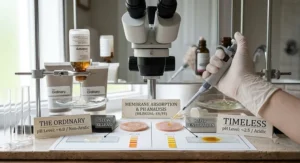
Putting The Ordinary Vitamin C Suspension 23% + HA Spheres 2% directly against the Timeless 20% Vitamin C + E Ferulic Acid Serum is really where the “vs” in this whole debate lives. Both use pure L-ascorbic acid as the active workhorse, but the similarities mostly end there. The Ordinary’s suspension format means near-total stability before opening (there’s no water for the vitamin C to react with), at the cost of a gritty texture and zero built-in antioxidant stabilizers once you do open it. Timeless takes the opposite approach: a fully dissolved liquid formula that absorbs faster and layers more smoothly, protected by the same vitamin E and ferulic acid combination validated in photoprotection research, but requiring refrigeration to slow oxidation after opening.
On paper this means The Ordinary wins on raw concentration-per-dollar and shelf stability before use, while Timeless wins on in-use stability, texture, and the added UV-defense benefit ferulic acid provides. Reviewers who’ve tried both frequently describe The Ordinary as the better choice for oily, resilient skin that can tolerate a stronger, less-buffered dose, and Timeless as the better fit for anyone layering vitamin C into a fuller morning routine underneath sunscreen. Neither is objectively “better” — they’re optimized for different priorities, which is really the honest answer to the entire The Ordinary vs Timeless vitamin C serum question.
| Factor | The Ordinary 23% + HA | Timeless 20% + E Ferulic |
|---|---|---|
| Vitamin C Form | L-Ascorbic Acid | L-Ascorbic Acid |
| Stabilizers | Hyaluronic acid, squalane | Vitamin E, ferulic acid |
| Texture | Gritty, oil-suspended | Liquid, fast-absorbing |
| Best For | Budget, oily/resilient skin | Layered routines, UV-defense boost |
The table above underscores that this isn’t a knockout comparison — it’s a trade-off between pre-opening stability and post-opening stability, and between texture preferences. Buyers prioritizing pure cost-efficiency should lean Ordinary; those wanting a documented antioxidant-boosting trio should lean Timeless.
Concentration Levels Explained: How Much Vitamin C Do You Actually Need
Concentration levels get treated like a bidding war in vitamin C marketing, but dermatology research generally points to diminishing returns well before you hit the highest percentages sold at retail. Most published studies on L-ascorbic acid efficacy cluster around the 10-20% range, which is also where the well-known Duke University photoprotection research landed when testing the vitamin C, E, and ferulic acid combination. Concentrations climbing past 20%, like The Ordinary’s 23% and 30% suspensions, aren’t inherently harmful, but the added strength mostly buys you a bit more antioxidant reserve rather than a proportional jump in visible benefit — and it does raise your odds of tingling, redness, or peeling, especially for first-time users.
What most buyers overlook here is that concentration only matters if the formula’s pH allows the vitamin C to actually penetrate skin. A poorly formulated 20% serum at the wrong pH can underperform a well-formulated 10% one. Sensitive or rosacea-prone skin generally does better starting around 10%, like the La Roche-Posay option on this list, before working up to stronger formulas once tolerance is established. If you’re newer to actives generally, starting low and increasing gradually will almost always serve your skin barrier better than reaching straight for the highest number on the shelf.
Stability Testing: Why Some Vitamin C Serums Turn Orange Faster
Stability testing is the unglamorous science behind why some bottles of vitamin C serum last months and others turn a sad amber colour within weeks. Pure L-ascorbic acid degrades on contact with air, light, and heat — the same instability that makes it such a potent antioxidant is exactly why it’s chemically fragile once exposed. A landmark 2005 study published in the Journal of Investigative Dermatology found that adding ferulic acid to a vitamin C and E solution measurably improved the chemical stability of the antioxidants while also roughly doubling the mixture’s photoprotective effect — which is the exact research SkinCeuticals still cites for its C E Ferulic formula today, and one reason Timeless leans on the same trio.
Formulation format matters just as much as added stabilizers. The Ordinary’s water-free suspensions sidestep degradation before opening simply by removing water from the equation, but they lack ferulic acid to slow oxidation once you start using them daily. Watch for colour change as your real-world stability indicator: a pale yellow tint is normal and expected, but a serum that’s turned deep orange or brown has likely lost a meaningful share of its active potency and is due for replacement, regardless of how much product remains in the bottle.
Practical Usage Guide: How to Add Vitamin C to Your Routine
Getting genuine value out of any vitamin C serum comes down to routine more than product choice. Apply your serum to clean, dry skin — moisture on the skin can dilute the concentration and reduce penetration, especially for L-ascorbic acid formulas that depend on a low pH to work. Morning application is generally preferred since vitamin C’s antioxidant action helps neutralize free radicals generated by daytime UV and pollution exposure, but it must always be followed by sunscreen; vitamin C boosts your sunscreen’s effectiveness, it doesn’t replace it.
In the first thirty days, expect a mild tingling sensation with higher-concentration formulas — this is common and typically fades as your skin adjusts, but persistent redness or burning means you should scale back to every other day or switch to a gentler SAP-based option. A common first-timer mistake is layering vitamin C with niacinamide, direct acids, or retinoids in the same routine, which can destabilize the vitamin C or increase irritation; most brands, including The Ordinary, explicitly recommend separating these actives into different parts of your routine. For maintenance, store your serum away from direct sunlight and heat, and consider refrigerating liquid formulas like Timeless to extend their usable window well past the standard three-month mark.
Real-World Scenarios: Which Serum Matches Your Skin
Picture three different Canadian skincare shoppers and you’ll see how quickly the “best” answer changes. A budget-conscious university student in Toronto dealing with oily, acne-prone skin and a tight monthly beauty budget is generally best served by The Ordinary’s 23% suspension or the La Roche-Posay C10 — both affordable, both formulated with oil control in mind. A busy professional in Calgary building a full morning anti-aging routine with sunscreen and retinol at night will likely get more consistent mileage from Timeless or SkinCeuticals, since the added ferulic acid and vitamin E integrate cleanly into a layered regimen without extra irritation risk. Meanwhile, someone in Vancouver with reactive, easily-inflamed skin who’s tried and failed with high-strength vitamin C before is a strong candidate for Mad Hippie or TruSkin’s gentler SAP formulas, accepting a slower six-to-eight week timeline in exchange for far less risk of a reaction.
None of these profiles are rigid — skin type, climate, existing routine complexity, and simple trial and error all play a role — but matching your starting point to one of these scenarios is a far more reliable strategy than chasing whichever serum currently has the loudest online buzz.
Problem → Solution Guide: Common Vitamin C Serum Complaints Fixed
Several recurring problems show up again and again in aggregated vitamin C serum reviews, and most have straightforward fixes. If your serum stings or tingles uncomfortably, the solution is usually to dilute it into your moisturizer for the first few weeks or switch to a lower-concentration or SAP-based formula like TruSkin. If your bottle has turned orange faster than expected, the fix is proper storage away from light and heat, and buying smaller sizes so you finish the bottle within the stable window rather than a giant one that outlasts its potency. If you’re not seeing results after weeks of use, check whether you’re pairing the serum with sunscreen daily — vitamin C without UV protection is fighting an uphill battle against new photodamage every single day. If the texture feels too heavy or greasy under makeup, a lighter liquid formula like Timeless or TruSkin will layer more cleanly than an oil-suspended product like The Ordinary. And if cost is the barrier, remember that consistent use of an affordable serum will outperform inconsistent use of an expensive one every time.
Price Per Use: The Real Cost Comparison
Price per use tells a very different story than sticker price alone, since bottle sizes and recommended daily amounts vary meaningfully across this lineup. The Ordinary’s 30 mL bottles, used at roughly one to two drops nightly, can stretch three to four months for under C$13 — putting the daily cost at just a few cents. Timeless and TruSkin, used at two to three pumps, generally last two to three months per 1 oz bottle, landing daily cost somewhere in the mid-range of this group. SkinCeuticals recommends a comparatively generous four to five drops applied to face, neck, and chest, and even with its 36-month stability window before opening, the C$195-C$250 price tag means its price per use is dramatically higher than everything else on this list, even accounting for its longer usable shelf life once opened.
The real takeaway: if you use your serum every single day as directed, the gap in price per use between the cheapest and priciest options here is smaller than the sticker prices suggest — but it’s still substantial, and it’s worth weighing against how much of the premium price actually reflects the ferulic acid stability research versus the brand name itself.
Buyer’s Decision Framework
If you have sensitive or reactive skin, choose a SAP-based formula like TruSkin or Mad Hippie because the lower irritation risk outweighs the slower results timeline. If your top priority is stretching a tight budget as far as possible, choose one of The Ordinary’s suspensions because the cost per percentage of active ingredient is unmatched in this category. If you already tolerate actives well and want documented UV-defense benefits, choose Timeless or SkinCeuticals because both are built on the ferulic acid combination with published photoprotection data behind it. If convenience and easy Canadian availability matter most, choose La Roche-Posay since it’s stocked in pharmacies nationwide without cross-border shipping delays. And if you’re simply undecided, start with the lowest-risk, lowest-cost option on this list and build up from there rather than gambling on the priciest formula first.
Common Mistakes When Buying Vitamin C Serum
The most common mistake is assuming a higher percentage automatically means a better result, when formulation quality, pH, and stabilizing ingredients matter just as much as the number on the label. A close second is buying a large bottle of a fast-degrading L-ascorbic acid formula without a realistic plan to use it up within two to three months, effectively paying for antioxidant potency you’ll never actually apply to your skin. Many buyers also skip patch-testing entirely, jumping straight to daily full-face application of a 20%+ formula and then blaming the “harsh” serum for irritation that a slower introduction would have avoided. Finally, plenty of shoppers layer vitamin C with incompatible actives like direct acids or benzoyl peroxide in the same routine, unknowingly neutralizing the vitamin C before it can do any work at all.
Safety, Sensitivity & Health Canada Regulations Guide
Cosmetic vitamin C serums sold in Canada fall under Health Canada’s Cosmetic Regulations, and ingredients like ascorbic acid must comply with the Cosmetic Ingredient Hotlist, which sets out substances that are prohibited or restricted for cosmetic use nationwide. This means any legitimately imported or Canadian-sold vitamin C serum, including the cross-border options like Timeless and SkinCeuticals, must meet the same baseline safety standard before it can be sold here. That said, regulatory compliance isn’t the same as guaranteed compatibility with your individual skin. Anyone with a diagnosed skin condition such as rosacea or eczema should introduce a new vitamin C serum gradually and consider a patch test on the inner forearm before applying it to the face, and pregnant or breastfeeding individuals should review the full ingredient list with a healthcare provider, since some formulas include additional actives like salicylic acid that warrant a closer look.
Frequently Asked Questions
❓ Is The Ordinary or Timeless better for vitamin C?
❓ How long does an opened vitamin C serum actually last?
❓ Can I use vitamin C serum every day?
❓ Does a higher vitamin C percentage always work better?
❓ Should vitamin C serum go before or after moisturizer?
Conclusion
Choosing between The Ordinary and Timeless — or any of the other five serums on this list — really comes down to matching a formula’s strengths to your own skin, budget, and routine complexity rather than chasing the single “best” bottle on the internet. The Ordinary wins for anyone counting every dollar and wanting maximum concentration; Timeless and SkinCeuticals win for buyers who want research-backed stability and UV-defense; TruSkin and Mad Hippie win for sensitive skin that needs a gentler introduction; and La Roche-Posay wins for pure Canadian convenience. What all seven have genuinely in common is real, verifiable L-ascorbic acid or SAP as the active ingredient, doing legitimate antioxidant work when used consistently and paired with daily sunscreen. Start with the option that matches your skin’s actual tolerance today, not the one with the biggest number on the label, and give it a full month before judging the results.
✨ Don’t Miss These Exclusive Deals!
🔍 Ready to brighten your skin tone and fade those stubborn dark spots? Click through to check current pricing on any of the seven serums above — availability shifts often, so grab your pick while it’s in stock!
Recommended for You
- CeraVe vs Cetaphil Cleanser: 7 Picks Compared Honestly (2026)
- Best PDRN Serum 2026: 7 Salmon DNA Picks Actually Worth It
- Cica Serum for Redness: 7 Proven Picks to Calm Skin (2026)
Disclaimer: This article contains affiliate links. As an Amazon Associate, I earn from qualifying purchases. If you purchase products through these links, we may earn a small commission at no additional cost to you.
✨ Found this helpful? Share it with your friends! 💬🤗
