
In This Article
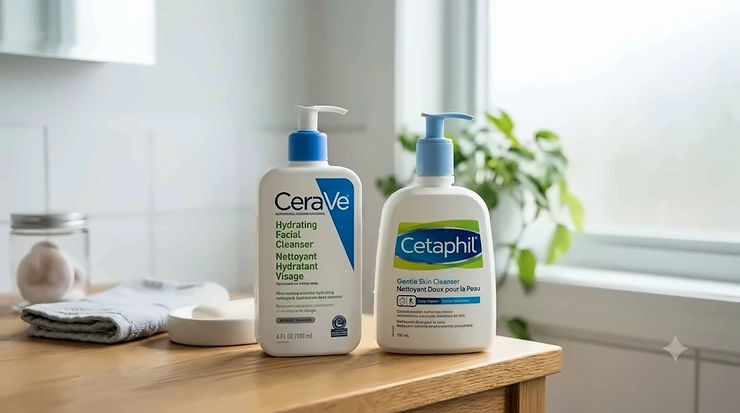
Standing in the skincare aisle of your local Shoppers Drug Mart, staring down two nearly identical white bottles, is a peculiarly Canadian rite of passage. CeraVe vs Cetaphil cleanser is one of the most searched skincare questions in the country, and for good reason — both brands are fragrance-free, dermatologist-adjacent, and priced like they know your grocery budget is already stretched thin. In short: CeraVe leans on a patented ceramide-and-MVE-technology formula built to actively repair the skin barrier, while Cetaphil focuses on a simpler, glycerin-and-panthenol base designed to be as gentle and non-irritating as physically possible. Neither is objectively “better” in a vacuum — the right pick depends entirely on your skin type, your climate, and what you’re actually trying to fix.
This guide digs past the marketing copy. We pulled real product specs, aggregated genuine reviewer sentiment, and cross-referenced formulation claims against what dermatology bodies actually look for, including the Canadian Dermatology Association’s Skin Health recognition program, which independently evaluates skincare products against dermatological standards. You’ll get a head-to-head breakdown of seven real products available on amazon.ca, an honest look at formulation differences, and a decision framework that accounts for Canadian winters, hard water, and the fact that most of us don’t want a ten-step routine just to wash our face.
By the end, you’ll know exactly which bottle deserves a spot on your bathroom shelf — and which one is quietly wrong for your skin, no matter how many “dermatologist recommended” stickers are on the label.
Quick Comparison Table: CeraVe vs Cetaphil at a Glance
| Feature | CeraVe Cleansers | Cetaphil Cleansers | Best For |
|---|---|---|---|
| Core technology | 3 ceramides + MVE delivery | Glycerin + niacinamide + panthenol | CeraVe: barrier repair; Cetaphil: simplicity |
| Texture range | Foaming, non-foaming, cream-to-foam | Foaming gel, non-foaming lotion | Both: skin-type specific |
| Price range (473-500 mL) | around C$15-C$20 | around C$14-C$19 | Cetaphil: marginally cheaper |
| Fragrance | Fragrance-free across the line | Fragrance-free across the line | Tie |
| Exfoliating options | Salicylic acid, benzoyl peroxide | Gentle AHA/BHA/PHA blend | Depends on tolerance |
Looking at the table, the two brands are closer than most marketing suggests — both are fragrance-free, both are non-comedogenic, and both sit in roughly the same price bracket at the time of research. Where they actually diverge is formulation philosophy: CeraVe treats the cleanser as one piece of an active barrier-repair system, while Cetaphil treats the cleanser as the least irritating possible delivery vehicle. That distinction matters more than the price tag once you factor in your specific skin concerns.
💬 Just one click — help others make better buying decisions too!😊
💬 Already have a favourite? Drop a comment below and help other Canadians decide faster!
Top 7 CeraVe vs Cetaphil Cleanser Picks: Expert Analysis
Below are seven real, currently available products split across both brands, covering dry, oily, combination, and exfoliation needs — plus budget, mid-range, and premium-format options.
1. CeraVe Hydrating Facial Cleanser — best all-rounder for dry, sensitive skin
This is the cleanser most Canadian estheticians reach for first when someone complains their face feels tight after washing. It’s a non-foaming, cream-based formula, and that matters more than it sounds — foam requires surfactants that strip lipids, while cream cleansers rely on gentler emulsifying agents to lift dirt without disturbing the skin barrier.
Key specs with real-world meaning: it’s built around three ceramides (NP, AP, EOP) plus hyaluronic acid and CeraVe’s MVE (MultiVesicular Emulsion) delivery technology, which releases moisturizing ingredients gradually rather than all at once. In practice, that means the “squeaky clean” feeling other cleansers give you — which is actually a sign of over-stripped skin — simply doesn’t happen here. Based on the spec comparison against foaming alternatives, this formula is squarely aimed at dry, eczema-prone, or winter-battered skin rather than oily or acne-prone types. Reviewers consistently report that it doesn’t tingle or sting even on compromised, post-treatment, or rosacea-affected skin, and a common theme in aggregated feedback is that it removes makeup better than expected for a “gentle” cleanser, though a recurring complaint is that heavy waterproof mascara still needs a dedicated remover.
Pros:
- ✅ Genuinely non-stripping on dry and eczema-prone skin
- ✅ Ceramide trio backed by real barrier-repair research
- ✅ Recognized by the Canadian Dermatology Association
Cons:
- ❌ Doesn’t fully remove heavy or waterproof makeup
- ❌ Too rich-feeling for oily or acne-prone users
Price sits around C$15-C$19 for the standard 473 mL bottle, and given the cost-per-wash works out to pennies, it’s an easy value pick for anyone with dry or reactive skin.

2. Cetaphil Gentle Skin Cleanser — the original dermatologist classic
If CeraVe’s cleanser is the newer barrier-science approach, Cetaphil’s original Gentle Skin Cleanser is the decades-old benchmark everyone else gets compared against. It’s a soap-free, sulfate-free lotion cleanser, and the “wipe-off without water” option is a genuinely distinct feature — dermatologists frequently recommend it post-procedure precisely because it can be applied and removed with a cotton pad.
The current formula adds glycerin, niacinamide, and panthenol to what used to be a fairly bare-bones base, which is a meaningful upgrade in practice: niacinamide helps calm redness while panthenol supports the moisture barrier during healing. What most buyers overlook about this cleanser is that its “boring” simplicity is the entire point — fewer ingredients means fewer chances to trigger a reaction, which is exactly why it’s a go-to recommendation for eczema, rosacea, and post-laser skin. Aggregated reviewer sentiment consistently highlights how well it’s tolerated by people who react to almost everything else, though some long-time users note the reformulated version feels slightly different (less “silky”) than the original recipe many grew up with.
Pros:
- ✅ Can be used without water for sensitive or compromised skin
- ✅ Extremely low irritation profile, ideal post-procedure
- ✅ Recognized by the Canadian Dermatology Association
Cons:
- ❌ Minimal cleansing power on oily or heavily made-up skin
- ❌ Some longtime users dislike the reformulated texture
At around C$14-C$18 for 500 mL, it’s often the cheapest “real” dermatologist cleanser on the shelf, and for ultra-sensitive skin types, that value is hard to beat.
3. CeraVe Foaming Facial Cleanser — best pick for normal to oily skin
Where the Hydrating Cleanser is cream-based, this is CeraVe’s answer for oilier skin types — a gel-to-foam formula built to cut through excess sebum without tipping into the harsh, tight-feeling territory of old-school acne washes.
The formula pairs niacinamide with the same three ceramides found across the CeraVe line, plus hyaluronic acid for a bit of hydration insurance. Here’s what to weigh: foaming cleansers are inherently more stripping than cream cleansers by design, so even a “gentle” foaming formula like this one is a noticeably different experience than the Hydrating version. On paper, this means it’s suited to normal-to-oily skin that actually benefits from a slightly more thorough cleanse, not dry or compromised skin that needs the cream formula instead. Reviewers consistently note it cuts oil and makeup residue effectively while still leaving skin feeling comfortable rather than stripped, and a common thread in feedback is that it works well as a second cleanse after an oil-based makeup remover.
Pros:
- ✅ Effectively controls midday oil and shine
- ✅ Doesn’t leave the tight, stripped feeling of older foam washes
- ✅ Fragrance-free and non-comedogenic
Cons:
- ❌ Too drying if your skin leans dry or dehydrated
- ❌ Foam pump packaging can clog or sputter over time
Priced in the mid-C$15 to C$20 range for 473 mL, it lands in the same value tier as the Hydrating version, making the “which CeraVe” decision purely about skin type, not budget.
4. Cetaphil Daily Facial Cleanser — best gel formula for combination skin
This is Cetaphil’s direct answer to combination and normal-to-oily skin, and it’s a noticeably different animal than the classic Gentle Skin Cleanser — a low-lather gel rather than a lotion, formulated to deep-clean pores without the tightness that combination-skin users often complain about.
Specs worth flagging: it’s built on the same vitamin B3 (niacinamide) and pro-vitamin B5 (panthenol) blend as the rest of the current Cetaphil lineup, but the gel base and slightly higher surfactant load give it more actual pore-clearing power. Based on the spec comparison with the original Gentle Skin Cleanser, this is the version to reach for if you get shiny by noon but still can’t tolerate a harsh acne wash. Aggregated review sentiment frequently mentions that it “actually removes makeup” in a way the original formula doesn’t, while a recurring gripe is that it can feel slightly drying if overused twice daily on skin that’s only mildly oily.
Pros:
- ✅ Minimizes the look of pores without over-drying
- ✅ Removes makeup and SPF more thoroughly than the original formula
- ✅ Defends against common sensitivity triggers per brand testing
Cons:
- ❌ Can feel drying with twice-daily use on borderline-dry skin
- ❌ Gel texture takes some getting used to versus a lotion cleanser
Expect to pay roughly C$14-C$19 for the standard bottle — again nearly identical to CeraVe’s oily-skin option, which keeps this comparison firmly about formulation fit rather than price.
5. CeraVe SA Smoothing Cleanser — best exfoliating option for rough texture
For anyone dealing with keratosis pilaris, rough patches, or general textural dullness, CeraVe’s salicylic acid cleanser is a genuinely different tool than the two above — this is a treatment cleanser, not a daily basic.
The formula centres on salicylic acid alongside the brand’s three ceramides, niacinamide, and hyaluronic acid, and the inclusion of vitamin D is a small but real point of differentiation versus competing exfoliating washes. What the spec sheet won’t tell you, but reviewer patterns suggest, is that this cleanser rewards patience — visible smoothing tends to show up over several weeks of consistent use rather than overnight. It’s built for face and body use, which is a genuine advantage for anyone treating rough patches on the arms or thighs in addition to facial texture. Common feedback themes include noticeably smoother skin on backs and arms after a few weeks, alongside occasional reports of mild dryness for users who exfoliate more than every other day.
Pros:
- ✅ Doubles as a face and body treatment cleanser
- ✅ Salicylic acid pairs with ceramides to offset dryness
- ✅ Non-irritating enough for daily use per brand testing
Cons:
- ❌ Overuse can cause dryness or mild flaking
- ❌ Not the right pick for actively inflamed acne
Priced around C$16-C$21 for 473 mL, it commands a small premium over the basic cleansers — reasonable, given it’s doing double duty as a light exfoliant.

6. Cetaphil Gentle Exfoliating Cleanser — gentlest daily exfoliation alternative
Cetaphil’s answer to the “can I exfoliate every day” question is this AHA/BHA/PHA blend cleanser, designed specifically to be milder than CeraVe’s salicylic-acid option while still delivering a real exfoliating benefit.
The multi-acid approach is the key differentiator here: PHA (polyhydroxy acid) molecules are larger than AHAs or BHAs, which means slower penetration and, in theory, less irritation potential — a detail that matters enormously for rosacea-prone or reactive skin that still wants smoother texture. Here’s what to weigh against the CeraVe SA option: this formula trades some exfoliating strength for a gentler daily-use profile, so it suits people who want subtle, cumulative improvement rather than a fast fix. Reviewers frequently describe it as surprisingly non-irritating for a daily acid cleanser, with a recurring note that results are gradual rather than dramatic — which, for a gentle-skin brand, is exactly the expected trade-off.
Pros:
- ✅ Gentle enough for daily use on reactive skin
- ✅ Multi-acid blend targets texture without harsh grit
- ✅ Fragrance-free, paraben-free formulation
Cons:
- ❌ Slower, subtler results than stronger acid treatments
- ❌ Less effective for stubborn keratosis pilaris than salicylic acid
At roughly C$16-C$22 for 473 mL, it’s priced close to CeraVe’s exfoliating option, so the deciding factor really is tolerance level rather than value.
7. CeraVe Hydrating Cream-to-Foam Cleanser — best hybrid formula for makeup removal
Rounding out the list is CeraVe’s most recent format innovation: a cleanser that starts as a rich cream and transforms into a soft foam as you lather, aiming to combine the makeup-removal power of foam with the gentleness of a cream base.
This formula includes the standard three ceramides plus amino acids and hyaluronic acid, and the cream-to-foam mechanic genuinely solves a common complaint — that cream cleansers alone don’t fully remove long-wear makeup or SPF. Based on the spec comparison with the standard Hydrating Cleanser, this version is the pick for anyone wearing daily sunscreen or makeup who still has dry or sensitive skin and doesn’t want to switch to a stripping foam wash. Aggregated reviewer sentiment notes it removes sunscreen and makeup more thoroughly than the plain Hydrating Cleanser while still feeling comfortable afterward, with occasional comments that the texture takes a wash or two to get used to before the foam transformation feels intuitive.
Pros:
- ✅ Removes makeup and SPF better than a standard cream cleanser
- ✅ Retains a gentle, non-stripping finish despite foaming
- ✅ Allergy-tested and non-comedogenic formulation
Cons:
- ❌ Slightly pricier than CeraVe’s core cleanser lineup
- ❌ Newer formula means a smaller pool of long-term reviews
Expect to pay in the C$18-C$24 range — a small premium that’s arguably justified for anyone who’s been layering a separate makeup remover on top of a basic cleanser.
Top 7 Products: Specs, Price Range & Reviewer Sentiment
| Product | Format | Best Skin Type | Price Range (CAD) | Aggregated Reviewer Sentiment |
|---|---|---|---|---|
| CeraVe Hydrating Facial Cleanser | Non-foaming cream | Dry, sensitive | C$15-C$19 | Consistently praised for non-stripping feel |
| Cetaphil Gentle Skin Cleanser | Lotion, water-optional | Ultra-sensitive | C$14-C$18 | Long-trusted for post-procedure skin |
| CeraVe Foaming Facial Cleanser | Gel-to-foam | Normal, oily | C$15-C$20 | Frequently praised for oil control |
| Cetaphil Daily Facial Cleanser | Low-lather gel | Combination | C$14-C$19 | Noted for better makeup removal than original |
| CeraVe SA Smoothing Cleanser | Foaming gel | Rough, textured | C$16-C$21 | Reports of smoother skin over weeks |
| Cetaphil Gentle Exfoliating Cleanser | Foaming gel | Reactive, exfoliation-curious | C$16-C$22 | Praised as milder than typical acid washes |
| CeraVe Cream-to-Foam Cleanser | Cream-to-foam | Dry with makeup/SPF | C$18-C$24 | Strong marks for makeup removal |
This table makes the pattern obvious: price is nearly a non-factor across the entire CeraVe vs Cetaphil cleanser comparison, with every product landing within about C$10 of each other. The real decision driver is texture and treatment focus — foam versus cream, treatment versus daily basic — not brand loyalty or cost. If you’re torn between two options at a similar price, let your skin’s actual oil level and sensitivity, not the label, make the call.
Real-World Scenarios: Matching Cleansers to Canadian Lifestyles
The winter-battered commuter: Picture someone in Ottawa or Winnipeg who spends fifteen minutes walking to transit in -20°C wind, then sits in a bone-dry, overheated office all day. That combination destroys the skin barrier fast. For this person, the CeraVe Hydrating Facial Cleanser or Cetaphil Gentle Skin Cleanser makes far more sense than anything foaming — both prioritize barrier support over deep cleansing, which is exactly the trade-off a dehydrated, wind-chapped face needs through a Canadian winter.
The humid-summer, oily-T-zone office worker: Come July in Toronto or Montreal, humidity flips the equation entirely. Someone with oily or combination skin who’s shiny by 2 p.m. is better served by the CeraVe Foaming Facial Cleanser or Cetaphil Daily Facial Cleanser, both of which are built to manage midday oil without the harshness of an acne-specific wash.
The budget-conscious student with textural concerns: A university student dealing with keratosis pilaris on their arms and mild texture on their face, working with a tight budget, is a great candidate for either exfoliating option — the CeraVe SA Smoothing Cleanser if they can tolerate a bit more strength, or the Cetaphil Gentle Exfoliating Cleanser if their skin reacts easily. Either one, used two to three times weekly rather than daily, delivers gradual improvement without requiring a separate body scrub purchase.
Problem → Solution Guide
Problem: “My face feels tight and squeaky after washing.” This is almost always a sign your cleanser is stripping more lipids than your skin can spare. Solution: switch to a non-foaming, cream-based option like the CeraVe Hydrating Facial Cleanser or Cetaphil Gentle Skin Cleanser, both formulated specifically to avoid that reaction.
Problem: “I’m shiny again by lunchtime.” A cream cleanser that’s too rich for your skin type can actually contribute to this. Solution: the CeraVe Foaming Facial Cleanser or Cetaphil Daily Facial Cleanser are purpose-built for oil control without over-drying, which paradoxically helps regulate oil production over time.
Problem: “My makeup and SPF never seem fully gone at night.” Solution: try the CeraVe Hydrating Cream-to-Foam Cleanser, or double-cleanse with an oil-based remover first, then follow with your regular CeraVe or Cetaphil formula.
Problem: “I have rough, bumpy skin on my arms and can’t afford three different products.” Solution: both the CeraVe SA Smoothing Cleanser and Cetaphil Gentle Exfoliating Cleanser are approved for face and body use, cutting the need for a separate body-specific exfoliant.
Problem: “Everything I try seems to irritate my skin.” Solution: fall back to Cetaphil’s Gentle Skin Cleanser, the closest thing to a universally tolerated option, and introduce any actives (like exfoliating acids) only one at a time, weeks apart.

Formulation Differences: Foam vs Cream, Ceramides vs Panthenol
The core formulation differences between these two brands come down to philosophy, not just ingredients. CeraVe builds nearly every product around three specific ceramides (NP, AP, EOP) delivered through its patented MVE technology, a slow-release system designed to keep moisturizing ingredients working over time rather than washing away instantly. Cetaphil, by contrast, leans on a simpler combination of glycerin, niacinamide, and panthenol — fewer active ingredients, but arguably a lower ceiling for irritation risk.
Independent barrier-repair research backs the general premise behind both approaches — a recent narrative review of skin barrier science describes the skin barrier as the body’s primary line of defence against external irritants, with ceramide-based ingredients widely studied for restoring that barrier after it’s been compromised by harsh cleansing, cold weather, or active ingredients like retinoids. Where the two brands genuinely diverge is texture engineering — CeraVe has invested heavily in cream-to-foam and MVE delivery mechanics, while Cetaphil has stuck closer to its original, decades-old lotion-cleanser formula with incremental vitamin additions. Neither approach is “wrong”; they’re simply optimized for different priorities, and understanding that distinction is the fastest way to stop bouncing between products that don’t fit your skin.
Ingredient Analysis: Breaking Down the Label
Squint at the ingredient list on either brand’s bottle and you’ll notice more overlap than difference: water, glycerin, and some form of mild surfactant anchor almost every formula. The meaningful divergence shows up further down the list. CeraVe formulas consistently include ceramide NP, ceramide AP, and often ceramide EOP, alongside sodium hyaluronate for hydration and, in several products, niacinamide for barrier support. Cetaphil’s current formulas centre on niacinamide (vitamin B3) and panthenol (pro-vitamin B5), paired with sodium cocoyl isethionate or sodium lauroyl sarcosinate as their gentler surfactant choices.
For exfoliating products, the ingredient gap widens: CeraVe’s SA cleanser uses straightforward salicylic acid, while Cetaphil’s Gentle Exfoliating Cleanser blends AHA, BHA, and PHA together, banking on the larger PHA molecules to slow penetration and reduce irritation potential. All of these ingredients fall under Health Canada’s regulatory umbrella, and any product sold legally in Canada must comply with the Cosmetic Ingredient Hotlist, the administrative tool Health Canada uses to flag prohibited and restricted cosmetic substances. That’s a meaningful trust signal — every cleanser on this list has cleared that regulatory bar, so the “which is safer” question mostly comes down to personal tolerance, not hidden risk.
Dermatologist Recommended Comparison: What the Experts Actually Say
Both brands lean hard on the “developed with dermatologists” positioning, and both have genuine third-party backing to support it — a detail worth taking seriously rather than dismissing as marketing fluff. As noted earlier, the CDA’s recognition program evaluates products against criteria set by an expert dermatology panel on a defined review cycle, and multiple products from both CeraVe and Cetaphil lines carry that recognition.
Where dermatologist sentiment tends to split is by use case rather than brand loyalty. Practitioners frequently point to CeraVe’s ceramide-focused formulas when a patient’s chief complaint is barrier dysfunction — post-retinoid dryness, eczema flares, or generally compromised skin. Cetaphil’s Gentle Skin Cleanser, meanwhile, is the more common recommendation immediately after in-office procedures like chemical peels or laser treatments, precisely because its minimal ingredient list and water-optional application reduce the odds of post-procedure irritation. Reviewers consistently note that dermatologists rarely present this as an either-or choice — many recommend keeping one bottle of each on hand and rotating based on how the skin is behaving that week.
How to Choose Between CeraVe and Cetaphil Cleanser
- Identify your primary skin concern first. Barrier repair and long-term dryness point toward CeraVe’s ceramide formulas; maximum gentleness and post-procedure care point toward Cetaphil.
- Check your skin’s oil level honestly. Genuinely oily or acne-prone skin does better with a foaming option from either brand rather than a rich cream cleanser.
- Consider your local climate and season. Dry winter air favours cream and lotion formats; humid summers tolerate foaming gels better.
- Factor in makeup and SPF use. Daily makeup or sunscreen wearers benefit from CeraVe’s Cream-to-Foam or a foaming Cetaphil option over a purely non-foaming cleanser.
- Decide if you need exfoliation. Rough texture or keratosis pilaris justifies adding CeraVe’s SA cleanser or Cetaphil’s Gentle Exfoliating option two to three times weekly.
- Patch-test before committing to a full bottle. Apply a small amount to your inner forearm for three days, as CeraVe itself recommends for new formulas, to catch sensitivity before it reaches your face.
- Re-evaluate seasonally. Many Canadians genuinely need a lighter formula in summer and a richer one in winter — owning one bottle of each isn’t overkill, it’s practical.
✨ Ready to Find Your Match?
🔍 Compare these seven cleansers side by side and pick the one built for your actual skin, not just the prettiest label. Click through to check current pricing and availability before your next drugstore run!
Affordable Cleanser Showdown: Value Comparison and Long-Term Cost
Here’s the number that surprises most people: across all seven products in this comparison, per-millilitre pricing barely moves. Whether you land on CeraVe or Cetaphil, you’re looking at roughly C$0.03 to C$0.05 per millilitre at the time of research — meaning a single 473-500 mL bottle typically lasts two to three months with twice-daily use. That works out to well under a dollar a week for facial cleansing, which is a genuinely strong value proposition compared to prestige or clinic-brand cleansers that can run three to five times the price for similar core ingredients.
The real long-term cost difference isn’t between CeraVe and Cetaphil at all — it’s between committing to one well-matched cleanser versus bouncing between five mismatched ones while your skin reacts to each new formula. A C$18 bottle used consistently for three months beats three different C$15 bottles abandoned after two weeks each, both financially and for your skin’s stability. If you’re deciding purely on affordability, Cetaphil’s core lineup edges out CeraVe by a couple of dollars per bottle on average, but the gap is small enough that skin-type fit should always outrank price as your deciding factor.
Common Mistakes When Buying a Facial Cleanser
The single biggest mistake shoppers make in the CeraVe vs Cetaphil cleanser decision is choosing based on which brand a friend or influencer uses, rather than matching the formula to their own skin type — a foaming cleanser built for oily skin will absolutely worsen dryness on someone with a compromised barrier, regardless of how many five-star reviews it has. A close second mistake is over-exfoliating: reaching for a salicylic acid or AHA/BHA/PHA cleanser daily rather than the two-to-three-times-weekly cadence dermatologists typically recommend, which can trigger the very dryness and sensitivity these gentle brands are designed to avoid.
A third common error is ignoring seasonal changes — sticking with a rich winter cream cleanser through a humid summer, or vice versa, instead of adjusting with the weather. Finally, many buyers skip the patch test entirely, applying a new cleanser to their whole face immediately rather than testing a small area first, which is exactly backward for anyone with a history of sensitive or reactive skin.
Safety, Regulations & Compliance in Canada
Every cleanser discussed here is sold under Health Canada’s Cosmetic Regulations, which require that cosmetic products be safe for their intended use under the Food and Drugs Act. Both CeraVe and Cetaphil formulas are screened against Health Canada’s ingredient restrictions before they reach store shelves, and manufacturers are required to keep marketing claims anchored to appearance and texture rather than implying a therapeutic or disease-treating benefit, which is why you’ll notice both brands stick to language like “helps restore” rather than “cures” or “treats.”
One regulatory shift worth knowing about if you’re sensitive to fragrance additives: Canada is phasing in mandatory fragrance allergen disclosure over the next couple of years. Since both CeraVe and Cetaphil’s core cleanser lines are already fragrance-free, this shouldn’t meaningfully affect these particular products, but it’s a useful data point if you’re comparing against a scented alternative from another brand. For deeper reading on how Health Canada regulates cosmetic ingredients generally, the government’s own regulatory information page for cosmetics is a genuinely useful resource before your next purchase.

Frequently Asked Questions
❓ Which cleanser is better, CeraVe or Cetaphil?
❓ Is Cetaphil or CeraVe better for acne-prone skin?
❓ Can I use CeraVe and Cetaphil products together?
❓ Which brand is more affordable, CeraVe or Cetaphil?
❓ Do dermatologists recommend CeraVe or Cetaphil more often?
Conclusion
The CeraVe vs Cetaphil cleanser debate isn’t really a rivalry — it’s two well-researched approaches to the same goal of cleaning skin without wrecking its barrier. CeraVe’s ceramide-and-MVE system is the stronger pick when barrier repair, dryness, or post-retinoid recovery is your priority, while Cetaphil’s streamlined formulas remain the safer bet for ultra-reactive, post-procedure, or “I react to everything” skin. Both brands cover oily and combination skin capably, and both offer gentle exfoliating options for anyone dealing with rough texture or keratosis pilaris.
If you only remember one thing from this guide, let it be this: match the format (cream versus foam) and the treatment focus (basic versus exfoliating) to your actual skin behaviour this season, not to brand loyalty or whichever bottle has the louder marketing. Do that, and either brand will serve you well for years, at a price that won’t make your wallet flinch.
✨ Don’t Miss These Exclusive Deals!
🔍 Take your skincare routine to the next level with these carefully selected CeraVe and Cetaphil cleansers. Click on any highlighted item to check current pricing and availability. These formulas will help you build a routine your skin will genuinely thank you for!
Recommended for You
- Best PDRN Serum 2026: 7 Salmon DNA Picks Actually Worth It
- Cica Serum for Redness: 7 Proven Picks to Calm Skin (2026)
- Best Niacinamide Serum for Acne Scars in Canada 2026: 7 Proven Picks
Disclaimer: This article contains affiliate links. As an Amazon Associate, I earn from qualifying purchases. If you purchase products through these links, we may earn a small commission at no additional cost to you.
✨ Found this helpful? Share it with your friends! 💬🤗
