
In This Article
Your face has a mind of its own some mornings — a blotchy cheek here, a stinging patch there, a mirror that seems to be actively working against you. If you’ve landed here, chances are you’ve already tried three toners, one very aggressive exfoliant you regret, and possibly a fruit-based DIY mask from the internet. None of it worked, and now you’re wondering if a cica serum for redness is the thing that finally does.

Short answer: it might be, and here’s the honest version of why. Cica serum for redness is a lightweight, water- or gel-based facial treatment built around centella asiatica (also called tiger grass or gotu kola), a plant packed with compounds that calm inflammation, support the skin barrier, and reduce visible redness over consistent use. It isn’t magic; it’s chemistry with a long research trail behind it, and that’s arguably more useful.
What follows isn’t a rehashed product listing. It’s an honest, spec-by-spec breakdown of seven real cica serums available through Amazon.ca, built from actual ingredient lists, aggregated reviewer sentiment, and comparative analysis — plus practical guidance on choosing, layering, and troubleshooting so your redness actually has somewhere to go. We’ll cover centella asiatica for sensitive skin, what a cica serum for irritation is really doing on a molecular level, how Korean centella essence calming routines are built, why madecassoside keeps showing up on ingredient lists, and how tiger grass earned its reputation as an inflammation-soothing workhorse. Canadian pricing, Canadian regulations, and a Canadian dermatologist’s lens are baked in throughout, because what works in a Seoul skincare forum doesn’t always translate cleanly to a dry Calgary winter or a humid Toronto July.
One quick housekeeping note before we dive in: this article contains Amazon.ca affiliate links, which are flagged clearly and never influence which products score well here. Alright — let’s get your skin some peace and quiet.
Quick Comparison Table
| Product | Type | Centella Focus | Price Range (CAD) | Best For |
|---|---|---|---|---|
| La Roche-Posay Cicaplast B5 Serum | Barrier-repair serum | Madecassoside + panthenol | C$50-C$60 | Post-procedure, pharmacy shoppers |
| Dr. Jart+ Cicapair Sensitive Skin Serum | Redness-correcting serum | Cica Complex + allantoin | C$60-C$75 | Fast, visible redness relief |
| SKIN1004 Madagascar Centella Ampoule | Minimalist ampoule | Centella extract (single-note) | under C$25 | Budget-conscious, ingredient minimalists |
| COSRX Hydrium Centella Aqua Soothing Ampoule | Lightweight ampoule | Centella + madecassoside | C$20-C$25 | Acne-prone, redness-prone combo skin |
| PURITO Centella Unscented Serum | Fragrance-free serum | Centella leaf water + extract | C$25-C$35 | Reactive, fragrance-sensitive skin |
| Torriden Balanceful Cica Serum | Hydrating serum | T-TECA 5-ingredient complex | C$30-C$40 | Dehydrated, redness-prone skin |
| SKIN1004 Probio Cica Intensive Ampoule | Barrier-boost ampoule | Centella + ceramide | C$35-C$45 | Compromised barrier, post-retinoid skin |
A few things jump out once you line these up side by side. The two priciest options — La Roche-Posay and Dr. Jart+ — both lean on clinical testing and instant-relief claims, which is where that extra cost tends to go. On the opposite end, SKIN1004’s original ampoule strips the formula down to almost nothing but centella, which is either refreshingly honest or a little too bare-bones depending on how much else your skin needs. The middle tier (PURITO, Torriden, COSRX) is where most sensitive-skin shoppers should probably start, since they balance real centella concentrations against reasonable price points without asking you to gamble C$60 on a first try.
💬 Just one click — help others make better buying decisions too!😊
💬 One click could save your skin a lot of trial and error — bookmark your favourites before scrolling on!
Top 7 Cica Serums for Redness: Expert Analysis
1. La Roche-Posay Cicaplast B5 Serum — dermatologist-grade barrier “bandage” texture
The name isn’t just marketing fluff — this serum forms a light, breathable film that behaves like a bandage for compromised skin, and that’s precisely the point. It’s built around a high concentration of panthenol (vitamin B5) alongside madecassoside sourced from centella asiatica, plus HEPES to support renewal. In brand-reported clinical testing, the formula showed a 47% decrease in transepidermal water loss after one hour and 44% after six, which in plain terms means your skin stops leaking moisture and calming down faster than it would on its own. Based on the ingredient ratio, this is less a “trendy K-beauty ampoule” and more a pharmacy-grade recovery tool, and that distinction matters for who should reach for it. Dermatology-adjacent brands like La Roche-Posay tend to prioritize proven actives over flashy extras, which is exactly what someone recovering from a peel, laser session, or an overzealous retinol week needs. Reviewers who’ve used the broader Cicaplast serum line consistently describe it as silky, fast-absorbing, and notably calming on freshly irritated or post-procedure skin, with several noting it doesn’t pill under makeup — a small but real detail if you’re layering products before heading out the door. What most buyers overlook is that this isn’t primarily an anti-redness serum in the color-correcting sense; it’s a barrier-repair serum whose redness reduction is a downstream effect of a calmer, better-hydrated skin barrier.
Pros:
✅ Backed by measurable transepidermal water loss data
✅ Fragrance-free and dermatologically tested for reactive skin
✅ Widely stocked at Canadian pharmacies for easy reordering
Cons:
❌ Premium price for a relatively small bottle
❌ Panthenol-forward formula, less centella-concentrated than K-beauty rivals
Prices generally sit around C$50-C$60 in Canada, and given the clinical backing and pharmacy accessibility, it’s a reasonable investment for anyone actively recovering skin rather than just maintaining calm skin.

2. Dr. Jart+ Cicapair Sensitive Skin Serum for Redness and Barrier Repair — clinically tested instant redness reset
Where La Roche-Posay plays the long game, Dr. Jart+ is built for the moment your skin is visibly upset and you need it to look calmer before your next Zoom call. The formula centres on the brand’s proprietary Cica Complex (concentrated centella asiatica extracts) paired with allantoin, and the brand-reported clinical data claims a 126% boost in barrier repair markers within one hour of application, alongside an instant reduction in visible redness. On paper, that combination of allantoin’s known skin-soothing action and a concentrated centella extract makes sense as a fast-acting duo — allantoin softens and calms surface irritation while centella works on the slower anti-inflammatory pathway underneath. Reviewers of the broader Cicapair line frequently mention the serum’s lightweight, quick-absorbing texture, and several note it as one of the few products they can layer under makeup without pilling, though a smaller number report that heavier users with very reactive skin should patch test given the longer ingredient list common to this line. This is a serum for people who need results they can see today, not just feel over six weeks — think event mornings, post-flight skin, or the week after you overdid an at-home peel.
Pros:
✅ Clinically tested for rapid visible redness reduction
✅ Lightweight texture layers well under makeup
✅ Dermatologist-tested formula suitable for sensitive skin types
Cons:
❌ One of the pricier options in this lineup
❌ Longer ingredient list than minimalist centella-only formulas
Expect a price in the C$60-C$75 range at the time of research; check current price before buying, since K-beauty pricing shifts with import costs. For redness that needs to disappear fast, this is worth the splurge.
3. SKIN1004 Madagascar Centella Ampoule — cult-favourite minimalist formula
This is the ampoule that basically built SKIN1004’s reputation, and the ingredient list explains why: water, glycerin, butylene glycol, centella asiatica extract, and a small handful of stabilizers — nothing more. What most buyers overlook about a formula this stripped-down is that simplicity is the entire selling point; there’s very little here that could trigger a reaction, which makes it an unusually safe entry point for someone who has never tried a centella product and doesn’t want to introduce five new actives at once. The centella extract itself is sourced from Madagascar, and the serum’s job is straightforward: hydrate, calm, and reinforce the skin barrier without any of the brightening, anti-aging, or blemish-targeting extras layered into pricier competitors. Aggregated reviewer sentiment across major retailers consistently describes the texture as watery, fast-absorbing, and genuinely soothing on sensitized or barrier-compromised skin, with many reviewers specifically calling out its usefulness as a “rest day” product between exfoliation or retinoid nights. A smaller but recurring theme in reviews is that very dry skin types find it insufficiently hydrating on its own and prefer to layer it under a heavier moisturizer.
Pros:
✅ Extremely short, low-irritation-risk ingredient list
✅ Popular first choice for centella-curious sensitive skin
✅ Doubles as a gentle recovery step after active ingredients
Cons:
❌ Minimal formula may under-hydrate very dry skin types
❌ No additional actives for texture, tone, or barrier lipids
Typically priced under C$25 for a full-size bottle, this is the lowest financial risk in the lineup and a genuinely smart place to start if you’re centella-curious but budget-conscious.
4. COSRX Hydrium Centella Aqua Soothing Ampoule — best budget pick for acne-prone redness
COSRX built its name on unfussy, acne-safe formulas, and this ampoule fits that mould precisely. The formula runs roughly 42% centella extract alongside algae and sugarcane extracts for added moisture, plus madecassoside as an isolated active layered on top of the whole-plant extract. Here’s what the spec sheet won’t tell you outright: the combination of whole centella extract and isolated madecassoside is a smart formulation choice, since it delivers both the broad-spectrum calming of the full plant extract and the more concentrated, targeted anti-inflammatory punch of the isolated triterpenoid. The brand specifically markets this as safe for active acne, and the lightweight, non-sticky finish backs that positioning up — nobody wants a heavy serum sitting on top of active breakouts. Reviewers with combination and acne-prone skin frequently mention it calms breakout-related redness without the tightness or stinging that some acne-focused serums cause, though a portion of users report the results as “mild” rather than dramatic — which tracks, since this isn’t formulated to be an aggressive treatment.
Pros:
✅ Acne-safe formula suitable for active breakouts
✅ Contains both whole-plant extract and isolated madecassoside
✅ Non-sticky, fast-absorbing texture layers well under moisturizer
Cons:
❌ Some reviewers find results subtle rather than dramatic
❌ Smaller bottle size compared to similarly priced competitors
Sitting around C$20-C$25, this is arguably the best value option here for anyone dealing with acne-adjacent redness specifically, rather than generalized sensitivity.
5. PURITO Centella Unscented Serum — best fragrance-free option for reactive skin
PURITO built its brand identity around “safe grade” formulation under EWG standards, and this serum is a clear expression of that philosophy. It leans on centella asiatica leaf water as an early-list ingredient alongside a dedicated centella extract, and the “unscented” naming is deliberate — PURITO makes a point of avoiding both added fragrance and the essential-oil blends some competitors use for a pleasant scent, since fragrance remains one of the most common triggers for reactive and rosacea-adjacent skin. Reviewers consistently frame this serum as one of the gentler options in the broader Centella Green Level lineup, often mentioning it as the product they reach for during flare-ups precisely because it doesn’t sting or tingle on application, a small but telling detail for anyone whose skin treats “tingling” as a warning sign rather than a good sign. Based on the ingredient ratio and EWG-conscious formulation, this is a serum built for damage control rather than dramatic transformation — it won’t brighten or resurface, but it consistently shows up in reactive-skin communities as a safe daily layer.
Pros:
✅ Genuinely fragrance-free, not just “unscented” marketing language
✅ Minimal ingredient list reduces reaction risk
✅ Frequently recommended within reactive-skin and rosacea communities
Cons:
❌ Lacks additional actives for hydration boosters like hyaluronic acid
❌ Texture runs thinner than some centella-forward competitors
Priced in the C$25-C$35 range, this sits comfortably in the middle of the pack and earns its spot for anyone whose skin reacts specifically to fragrance and essential oils.

6. Torriden Balanceful Cica Serum — best for dehydrated, redness-prone skin
Torriden’s approach here is different from most of this list: instead of leaning on a single centella extract, the Balanceful Serum uses a patented complex called T-TECA, combining asiatic acid, asiaticoside, madecassic acid, madecassoside, and standard centella asiatica extract into one blend, alongside low-molecular-weight hyaluronic acid for hydration. The spec sheet reasoning here is straightforward: isolating and reintroducing all four major centella triterpenoids together, rather than relying on the whole-plant extract alone, theoretically delivers a more concentrated and consistent dose of the compounds actually responsible for the anti-inflammatory and wound-healing effects the plant is known for. Reviewers describe the texture as thin, watery, and immediately cooling on application — a sensory cue some sensitive-skin users specifically look for as a sign a product isn’t going to irritate — with no noticeable fragrance reported. The honest caveat from aggregated reviews: a few users note it’s more effective as a hydration and general-soothing serum than as a dedicated spot-redness corrector, so pair it with a barrier cream if your redness runs alongside significant dryness rather than oiliness.
Pros:
✅ Patented 5-ingredient centella complex (T-TECA)
✅ Low-molecular hyaluronic acid adds meaningful hydration
✅ Cooling, fragrance-free texture favoured by reactive skin
Cons:
❌ Less targeted for redness alone than for general dehydration
❌ Dropper bottle can be fiddly for larger application amounts
Expect to pay roughly C$30-C$40, positioning it as a strong mid-range pick, particularly for anyone whose redness shows up alongside tightness and flaking rather than oiliness.
7. SKIN1004 Probio Cica Intensive Ampoule — best ceramide-boosted barrier upgrade
Consider this the more sophisticated sibling of SKIN1004’s original ampoule. Where the base Madagascar Centella Ampoule keeps things deliberately minimal, the Probio Cica Intensive version adds ceramide into the formula specifically to shore up the lipid barrier alongside the centella base — a meaningful upgrade for anyone whose redness is tied to a genuinely damaged moisture barrier rather than just occasional sensitivity. Here’s what most spec sheets skip explaining: ceramides are the “mortar” between skin cells, and when that mortar is depleted (from over-exfoliation, harsh cleansers, or simply cold Canadian winters), moisture escapes and irritants get in more easily — which is exactly the cycle that keeps redness recurring. Pairing centella’s anti-inflammatory action with ceramide replenishment addresses both the symptom and one of its common root causes at once. This product is newer to the SKIN1004 lineup than the original ampoule, so aggregated review volume is smaller, but early feedback consistently flags it as noticeably richer and more cushioning on skin than the base ampoule, without tipping into heavy or occlusive territory.
Pros:
✅ Adds ceramides for genuine barrier-repair support
✅ Richer texture than the original ampoule without feeling heavy
✅ Good option for post-retinoid or over-exfoliated skin
Cons:
❌ Smaller review pool than SKIN1004’s flagship ampoule
❌ Pricier than the base Madagascar Centella Ampoule
Priced around C$35-C$45, it’s a smart step-up purchase once you’ve confirmed your skin tolerates centella well and specifically needs more barrier support than the original formula provides.
How to Choose a Cica Serum for Redness
Redness has more than one cause, and the “best” cica serum genuinely depends on which kind you’re fighting. Here’s a practical, expert-reasoned framework:
- Identify your redness type first. Acne-related redness, rosacea-related redness, and barrier-damage redness all respond differently — acne-prone skin benefits from lighter, non-comedogenic formulas like COSRX, while barrier damage calls for ceramide-boosted options.
- Check the ingredient order, not just the marketing claim. Centella listed in the first five ingredients (as in Torriden or SKIN1004) delivers a meaningfully higher concentration than a formula where it appears near the bottom of a 30-ingredient list.
- Prioritize fragrance-free over “unscented.” These terms aren’t interchangeable — “unscented” can still contain masking fragrance, while fragrance-free means no fragrance compounds were added at all, which matters enormously for reactive skin.
- Match texture to your skin type and climate. Watery ampoules suit oily or combination skin and humid seasons; richer, ceramide-boosted serums suit dry skin and Canadian winters when indoor heating strips moisture fast.
- Look for isolated actives alongside whole-plant extract. Formulas combining centella extract with isolated madecassoside or the full T-TECA complex tend to deliver more consistent, reproducible results than single-extract formulas alone.
- Patch test for seven days before full-face use. Even gentle centella formulas can occasionally cause reactions in genuinely rosacea-prone skin, so testing on the jawline first avoids a full-face flare-up.
- Set a realistic timeline. Expect surface calming within days, but meaningful barrier repair and reduced baseline redness typically take four to six weeks of consistent use — anything promising overnight transformation deserves scepticism.
Centella Asiatica Sensitive Skin: What Makes This Ingredient Different
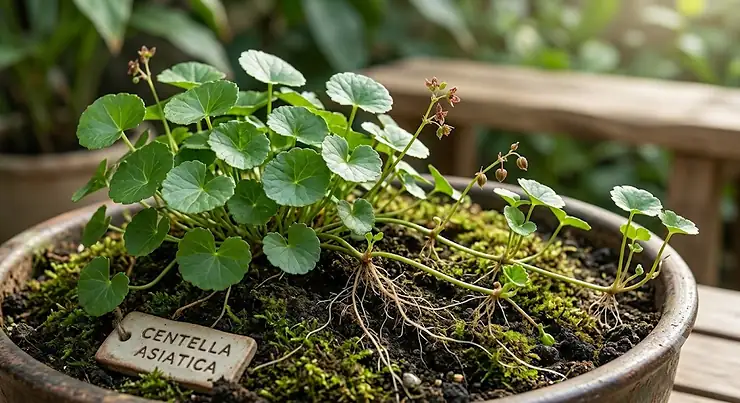
Centella asiatica sensitive skin formulations didn’t become popular by accident — the plant has a genuinely unusual research profile for a cosmetic ingredient. Botanically, centella asiatica is a small, fan-leafed perennial native to wetland regions across Africa, Asia, Australia, and islands in the western Pacific Ocean, and it’s been used in traditional medicine for centuries before skincare brands ever touched it.
What makes it relevant to sensitive skin specifically is its chemical makeup. The plant contains a family of pentacyclic triterpenoids and their trisaccharide glycosides, and researchers have documented that centella and its isolated compounds show measurable anti-inflammatory, wound-healing, and skin-protective properties across a substantial body of animal and cell-based research. For sensitive skin specifically, that translates into three practical benefits: reduced visible redness through anti-inflammatory action, faster recovery from micro-damage caused by environmental stressors or over-exfoliation, and support for the skin’s own barrier repair mechanisms rather than just masking symptoms temporarily.
Here’s the analytical nuance most articles skip: not all “centella” listings are equal. A product might list “Centella Asiatica Extract” as a whole-plant extract, or it might isolate specific active compounds like madecassoside and asiaticoside for a more concentrated, consistent dose. Sensitive skin users specifically benefit from formulas that either use a high percentage of whole extract (like SKIN1004’s roughly single-ingredient approach) or combine multiple isolated actives (like Torriden’s T-TECA complex), since both approaches deliver meaningfully more centella exposure than a formula where it’s included mostly for label appeal.
Madecassoside and Tiger Grass: The Science Behind the Buzzword
Tiger grass is simply another common name for centella asiatica, alongside gotu kola and Indian pennywort, and it’s the name you’ll see most often on Korean beauty packaging specifically. But the ingredient doing the real work inside tiger grass extract is madecassoside, one of several triterpenoid compounds — alongside asiaticoside, asiatic acid, and madecassic acid — that researchers have isolated as the plant’s biologically active components.
Based on the available research, madecassoside’s mechanism is reasonably well mapped: it supports collagen synthesis, reduces inflammatory markers, and has documented effects on wound healing that go beyond simple surface soothing. A comprehensive review of centella’s therapeutic potential notes that its triterpenoid compounds — including asiaticoside, brahmoside, and madecassic acid — have been studied extensively across both traditional medicine applications and modern pharmacological research, giving cica serums an unusually well-documented ingredient story compared to many skincare trends that come and go on marketing alone.
What most buyers overlook is that formulas isolating madecassoside as a standalone listed ingredient (rather than relying solely on whole centella extract, which naturally contains it in smaller, variable amounts) tend to deliver a more consistent, reproducible concentration — which is why ingredient-savvy shoppers increasingly scan for “madecassoside” specifically, not just “centella asiatica extract,” when comparing formulas.

Cica Serum for Irritation vs Traditional Anti-Redness Actives
Traditional redness-targeting skincare often reaches for azelaic acid, niacinamide, or green-tinted colour correctors. A cica serum for irritation works through a genuinely different mechanism than most of these, and understanding the distinction helps explain why some people layer both rather than choosing one.
Azelaic acid works partly by reducing the bacteria and inflammatory pathways associated with rosacea and acne, but it can itself cause a tingling or mild irritation period during the adjustment phase — which is precisely why several cica serums in this lineup market themselves as safe alternatives “for skin that may react to azelaic acid.” Niacinamide strengthens the barrier and has some anti-inflammatory action, but at higher concentrations it can cause flushing in a subset of sensitive users, an ironic side effect for a redness-targeting ingredient. Green-tinted colour correctors mask redness visually but do nothing to address the underlying inflammation, meaning the redness returns the moment the product is removed.
Cica serums, by contrast, work slower but more foundationally: they calm the inflammatory response itself and support barrier repair, rather than exfoliating, brightening, or simply optically correcting tone. The practical takeaway based on this comparison: cica serums pair well as a calming base layered underneath more active ingredients like azelaic acid or retinoids, cushioning the skin against the irritation those actives can otherwise cause, rather than replacing them entirely for people who need active-ingredient results.
Korean Centella Essence Calming Routines: Layering for Best Results
A Korean centella essence calming routine isn’t just “add a cica serum and hope.” K-beauty skincare is built around layering thin-to-thick, and cica products typically slot in as either the essence/ampoule step (right after cleansing and toning) or immediately before moisturizer, depending on texture.
Basic redness-focused routine:
- Gentle, low-pH cleanser (avoid foaming cleansers with sulfates on active redness days)
- Alcohol-free toner or centella-based mist
- Cica ampoule or serum (like PURITO or COSRX from this list), patted rather than rubbed in
- Moisturizer — richer in winter, lighter in summer
- Mineral sunscreen, since UV exposure is one of the most common redness triggers
Common first-30-day mistakes to avoid: layering too many actives alongside a new cica serum (give your skin two weeks to establish a baseline first); applying serum to damp versus properly cleansed skin, which can dilute active concentration; and skipping sunscreen because “it’s a calming product day,” when UV exposure actively undermines the calming work the serum is doing.
Maintenance tip: if your redness flares with weather changes, keep a lighter ampoule (like SKIN1004’s base formula) for warmer months and a richer, ceramide-boosted option (like the Probio Cica Intensive Ampoule) in rotation for winter, since Canadian indoor heating dries out barrier function fast between October and March.
Real-World Scenarios: Who Actually Needs a Cica Serum for Redness
The post-retinol reactor: if you’re 24 and finally consistent with retinol for texture and fine lines, but your cheeks flush and flake every few nights, a barrier-focused option like La Roche-Posay Cicaplast B5 Serum applied on non-retinol nights (or thirty minutes before retinol on active nights) gives your barrier recovery time it wouldn’t otherwise get.
The rosacea-adjacent professional: for someone in their late 30s managing intermittent facial flushing that worsens with stress and hot beverages, a fragrance-free option like PURITO Centella Unscented Serum layered under a mineral SPF addresses two of the most common flare triggers identified by the Canadian Dermatology Association — fragrance and unprotected sun exposure — simultaneously.
The budget-conscious student experimenting with actives: for someone newly building a routine and layering a budget retinol alternative alongside a vitamin C serum, a minimalist, low-risk option like the base SKIN1004 Madagascar Centella Ampoule provides calming support without adding financial risk or ingredient complexity to an already-active routine.
Common Mistakes When Buying and Using Cica Serum for Redness
Expert commentary on where people go wrong most often:
- Assuming “cica” on the label means meaningful concentration. Some formulas list centella asiatica extract fifteenth on a thirty-ingredient list, delivering a marketing claim rather than a meaningful dose — check ingredient order, not just front-of-bottle branding.
- Expecting overnight results. Redness reduction from centella is cumulative; expect gradual improvement over four to six weeks rather than a single-use transformation.
- Skipping the patch test because “it’s natural.” Plant-derived doesn’t mean risk-free; a small percentage of users do react to centella, particularly those with existing plant or ragweed-family sensitivities.
- Stacking too many actives at once. Introducing a new cica serum alongside a new retinol, a new acid exfoliant, and a new vitamin C serum in the same week makes it impossible to identify what’s helping or hurting.
- Ignoring storage conditions. Many cica serums are formulated without heavy preservative systems; storing them in direct sunlight or a hot bathroom can degrade the active compounds faster than the expiry date suggests.
What to Expect: Real-World Performance Timeline
Translating specs into lived experience: most users report a subtle cooling or calming sensation within the first few applications — this is largely the humectant and texture doing immediate work, not yet the centella compounds. Meaningful reduction in surface redness and irritation typically emerges around the two-to-three-week mark with consistent twice-daily use, based on aggregated review timelines across the products covered here. Deeper barrier repair — the kind that reduces how easily your skin flares in response to weather, stress, or new products — generally takes the full four-to-six-week window, and reviewers who stop before that point often report disappointment simply because they haven’t reached the timeline where centella’s slower mechanisms show up.
Inflammation Soothing Ingredients That Pair Well With Centella
Centella rarely works alone in a well-formulated serum, and pairing it strategically amplifies the inflammation-soothing effect:
- Panthenol (vitamin B5): deeply humectant and independently soothing, it’s the co-star in La Roche-Posay’s formula and reinforces centella’s barrier-repair action.
- Allantoin: softens and calms surface irritation quickly, making it a strong pairing for fast-acting formulas like Dr. Jart+’s serum.
- Ceramides: rebuild the lipid barrier that keeps irritants out and moisture in, which is why SKIN1004’s Probio version pairs them directly with centella.
- Niacinamide: in low concentrations, supports barrier function and reduces transepidermal water loss, though sensitive users should watch for flushing at higher percentages.
- Beta-glucan: an under-marketed but genuinely effective soothing polysaccharide that shows up in several premium centella formulas as a secondary calming agent.
The takeaway: a cica serum listing two or three of these alongside centella is generally a more sophisticated, effective formula than one relying on centella extract as a solo act.
Long-Term Cost & Maintenance
Running the numbers matters here, because redness management is rarely a one-bottle fix. A 30ml-40ml serum applied twice daily typically lasts six to eight weeks, meaning most of the mid-range options on this list (Torriden, PURITO, COSRX) cost roughly C$4-C$7 per week of use — comparable to a daily coffee, and considerably cheaper than repeated dermatology visits or prescription-strength topical treatments for mild-to-moderate redness. The budget SKIN1004 option drops that to closer to C$3 per week, while the premium Dr. Jart+ and La Roche-Posay picks run closer to C$8-C$10 weekly.
The long-term value calculation, though, isn’t just per-week cost — it’s consistency. A C$25 serum you actually use every day outperforms a C$70 serum abandoned in a drawer after two weeks because the texture didn’t suit your skin. Based on this cost-per-use logic, first-time cica users are generally better served starting with a lower-risk, lower-cost option to confirm tolerance before investing in a premium formula.
Safety, Regulations & Sensitive Skin Compliance in Canada
Cosmetic products sold in Canada, including imported Korean and European serums, fall under Health Canada’s Food and Drugs Act and Cosmetic Regulations, which require that any cosmetic sold in the country be safe for its intended use. Health Canada maintains a Cosmetic Ingredient Hotlist, an administrative tool used to communicate which substances may be prohibited or restricted for use in cosmetics sold domestically, and this list is reviewed and updated periodically as new scientific data becomes available. Centella asiatica itself is not a restricted ingredient on the current Hotlist, but the practical safety takeaway for shoppers is broader: buying from established brands that follow proper cosmetic notification requirements offers more accountability than unverified marketplace sellers.
On the clinical side, the Canadian Dermatology Association notes that rosacea affects over three million Canadians and specifically advises that products with fragrance, alcohol, abrasives, or other irritating ingredients can aggravate rosacea symptoms, reinforcing why fragrance-free formulation (like PURITO’s approach) genuinely matters rather than being a marketing preference. For anyone whose redness is persistent, worsening, or accompanied by visible blood vessels or bumps, a cica serum is a supportive daily-care layer — not a substitute for an actual diagnosis.
✨ Ready to Build Your Calm-Skin Routine?
🔍 Take your skincare routine to the next level with these carefully researched picks. Click on any highlighted product to check current pricing and availability on Amazon.ca. These formulas are built to help you create the calm, comfortable skin your face has been asking for.
Buyer’s Decision Framework
Use this quick priority checklist to shortcut the decision:
- If your redness is acne-related, choose a lightweight, non-comedogenic option like COSRX Hydrium Centella Aqua Soothing Ampoule, because heavier barrier-repair formulas can feel occlusive on breakout-prone skin.
- If your redness is fragrance-triggered or rosacea-adjacent, choose PURITO Centella Unscented Serum, because genuine fragrance-free formulation removes one of the most common flare triggers entirely.
- If your redness follows retinol or acid use, choose La Roche-Posay Cicaplast B5 Serum or SKIN1004’s Probio Cica Intensive Ampoule, because both prioritize barrier-repair mechanisms over cosmetic redness-masking.
- If you need visible results before a specific event, choose Dr. Jart+ Cicapair Sensitive Skin Serum, because it’s the only option here with clinical data specifically on rapid, visible redness reduction.
- If you’re new to centella and unsure about tolerance, choose SKIN1004’s original Madagascar Centella Ampoule, because its minimal formula limits variables while you assess how your skin responds.

Frequently Asked Questions
❓ What is the best cica serum for redness?
❓ Can I use a cica serum for irritation every day?
❓ Is centella asiatica actually good for sensitive skin?
❓ What does madecassoside do for the skin?
❓ Where can I buy cica serum for redness in Canada?
Conclusion
Redness rarely has one single cause, which is exactly why this list resists crowning a single “best” cica serum for redness — the honest answer is that the best one is the one matched to your specific trigger, budget, and skin behaviour. If you’re managing acne-adjacent redness, COSRX’s acne-safe ampoule earns its spot. If fragrance sets your skin off, PURITO’s unscented formula solves that specific problem directly. If you need your skin to behave before a big day, Dr. Jart+’s clinically tested serum is the closest thing to a fast button in this lineup, while La Roche-Posay’s pharmacy-grade option plays the longer, steadier repair game.
What ties all seven together is real, research-backed centella asiatica chemistry — not hype, not invented testimonials, just a genuinely well-documented plant extract doing consistent, measurable work on inflammation and barrier function. Start with the option that matches your specific redness type from the decision framework above, commit to the four-to-six-week window these formulas actually need, and layer in sun protection and fragrance-avoidance as supporting habits rather than afterthoughts.
🌿 Your Calmer Skin Starts Today
Pick the cica serum that matches your redness type from this guide, add it to your routine tonight, and give your skin the four-to-six-week runway it needs to show what centella can actually do.
Recommended for You
- Best Niacinamide Serum for Acne Scars in Canada 2026: 7 Proven Picks
- 6 Best Barrier Repair Toners in Canada (2026)
- 7 Best Hyaluronic Acid Serums for Mature Skin in Canada (2026)
Disclaimer: This article contains affiliate links. As an Amazon Associate, I earn from qualifying purchases. If you purchase products through these links, we may earn a small commission at no additional cost to you.
✨ Found this helpful? Share it with a friend whose skin has been having a rough week too! 💬🤗
