In This Article
Somewhere between the first frost and the last salty gust off the lake, your lips stop cooperating. They crack at the corners. They peel when you smile. And no amount of licking — a habit that actually makes things worse — seems to fix it. If you’re hunting for the best hydrating lip balm, here’s the short version: a hydrating lip balm is a leave-on lip treatment that combines humectants (like hyaluronic acid or glycerin) with occlusive agents (like beeswax or petrolatum) to pull moisture into the skin and then seal it there. That combination matters more than any single “hero ingredient” on the label.

Canadian winters are uniquely brutal on lips. Indoor heating drops humidity to desert-like levels, outdoor wind chill strips away what little moisture is left, and lips — which have no oil glands of their own — simply can’t keep up. Add a cold-weather commute or a ski weekend, and dry, flaking lips become a near-permanent condition for a lot of us.
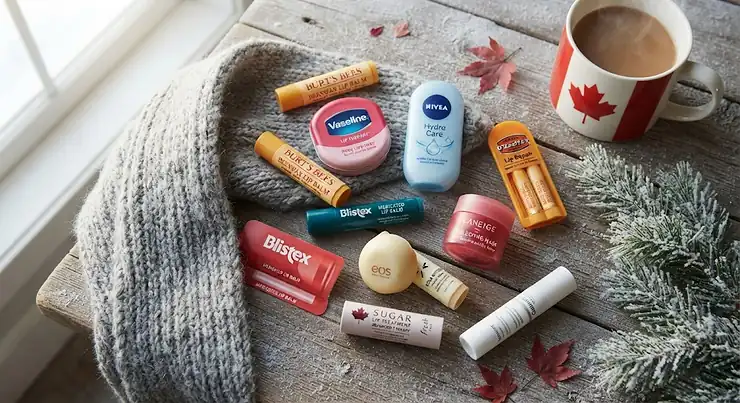
This guide breaks down seven real, currently available products across every price point, explains what actually happens on your lips when you use them, and digs into the science behind why some formulas outperform others. We’ll compare specs honestly, flag genuine trade-offs, and match products to real situations — not just list ingredients and call it a day. Let’s get into it.
Quick Comparison Table
| Product | Best For | Key Hydrator | Price Range (CAD) |
|---|---|---|---|
| Laneige Lip Sleeping Mask | Overnight barrier repair | Hyaluronic acid + murumuru butter | C$27–C$32 |
| Neutrogena Hydro Boost Hyaluronic Acid Lip Balm | Everyday hyaluronic hydration | Hyaluronic acid | C$10–C$14 |
| O’Keeffe’s Lip Repair | Extremely dry, cracked lips | Glycerin + allantoin | C$9–C$13 |
| Aquaphor Lip Repair Stick | Budget healing ointment | Petrolatum + panthenol | C$8–C$12 |
| NIVEA Dewy & Hyaluronic Acid Lip Care | Budget hyaluronic pick | Hyaluronic acid | C$7–C$10 |
| Vaseline Lip Therapy Advanced | Classic all-day protection | Petroleum jelly | C$6–C$9 |
| Maybelline Lifter Gloss | Plumping glossy hybrid | Hyaluronic acid | C$12–C$16 |
Looking at this lineup, the split isn’t really “cheap vs. expensive” — it’s occlusive-heavy versus humectant-heavy formulas. Aquaphor, Vaseline Lip Therapy Advanced, and O’Keeffe’s lean on thick, waxy or petrolatum bases that physically block moisture loss, which is exactly what dermatologists tend to recommend for genuinely cracked, bleeding lips. Laneige, Neutrogena Hydro Boost, NIVEA Dewy, and Maybelline Lifter Gloss lean on hyaluronic acid to actively draw water into the lip tissue, which feels lighter but needs more frequent reapplication in low-humidity conditions. Knowing which category you’re shopping in before you compare prices will save you from buying the wrong tool for the job.
💬 Just one click — help others make better buying decisions too!😊
Top 7 Hydrating Lip Balms: Expert Analysis
1. Laneige Lip Sleeping Mask — best overnight barrier repair
The name is literal: this is a thick, balm-like mask you sleep in, and it’s built to do its heaviest lifting while you’re not reapplying anything for eight hours straight. That single-application, overnight window is the whole point — most balms lose their grip by the time you’ve had a coffee.
The formula centres on hyaluronic acid alongside a “Berry Fruit Complex” (antioxidants) and murumuru seed butter, an occlusive plant fat that’s denser than shea. In practice, the hyaluronic acid draws moisture into the thin lip tissue while the butter and a light wax film keep it from evaporating overnight — which is precisely the humectant-plus-occlusive pairing dermatologists point to as the actual mechanism behind lip repair, rather than any single miracle ingredient.
Who should care: anyone whose lips feel tight or flaky specifically in the morning, which usually points to overnight moisture loss from mouth breathing or dry bedroom air. It’s less essential if your dryness is mainly a daytime, wind-exposure problem, where a portable stick wins on convenience.
Reviewers consistently report smoother, less flaky lips by morning after a few nights of use, and the tinted “berry” shade gets frequent mentions as a bonus rather than the main draw. A recurring criticism in aggregated feedback is the jar-and-finger application, which some find less hygienic and less travel-friendly than a stick.
Pros:
- ✅ Purpose-built for overnight moisture barrier repair
- ✅ Rich, cushiony texture noticeably outlasts daytime balms
- ✅ Antioxidant-rich formula with a flattering sheer tint
Cons:
- ❌ Jar format is messier and less travel-friendly than a stick
- ❌ Premium price for what is still a leave-on balm
Priced around C$27–C$32 for the full-size jar, it’s the most expensive pick here — but if you’re specifically fighting morning dryness, the overnight design earns its premium over a standard daytime balm.
2. Neutrogena Hydro Boost Hyaluronic Acid Lip Balm — best daily hyaluronic acid stick
This one is built for the opposite scenario from the Laneige mask: quick, one-handed application throughout a busy day, in a format you can drop in a coat pocket without a second thought.
The core active is hyaluronic acid in a lightweight, non-greasy stick base — closer in feel to a gel than a traditional wax balm. That lighter texture means faster absorption and less “coated” sensation, which matters if you’re reapplying under makeup or before a call. The trade-off, as with any humectant-forward formula, is that it needs a genuinely humid environment to hold onto the water it draws in; in a dry office or a cold outdoor commute, that moisture can evaporate faster than a heavier occlusive would allow.
This is the stick to reach for if you want hydration that doesn’t feel like a layer of wax sitting on your mouth, and you’re willing to reapply two or three times a day rather than once. Aggregated customer sentiment frequently praises the non-sticky finish and describes it as “disappearing” quickly — a plus for daytime wear, a minor downside if you were hoping for all-day coverage from a single swipe.
Pros:
- ✅ Lightweight, gel-like texture with fast absorption
- ✅ Comfortable under lipstick or gloss, no waxy residue
- ✅ Compact stick format ideal for frequent daytime reapplication
Cons:
- ❌ Shorter wear time than occlusive-heavy balms
- ❌ Less effective as a sole product in very dry, cold air
Expect to pay in the C$10–C$14 range, making it a solid mid-tier pick for anyone prioritizing a light feel over maximum staying power.
3. O’Keeffe’s Lip Repair — best for extremely dry, cracked lips
If your lips have gone past “a little tight” into visibly cracked, flaking, or splitting at the corners, this is the formula built specifically for that tier of damage — it’s essentially a lip-specific cousin of the brand’s well-known cracked-heel foot cream.
The formula uses glycerin as its primary humectant, backed by allantoin, a skin-soothing compound that supports healing of already-broken skin, plus a blend of waxes for occlusion. Unlike lighter hyaluronic sticks, this one is noticeably thicker on application — by design, since the goal is maximum moisture retention for compromised skin, not a barely-there feel. Based on the spec comparison with lighter competitors, this formula trades elegance for raw effectiveness on genuinely damaged lips.
Reviewers with chronic winter chapping or lips damaged by frequent sun exposure or certain acne medications tend to report the fastest visible improvement with this pick specifically, often citing noticeably less flaking within a couple of days of consistent use. A common complaint in user reviews is the texture, which some describe as slightly tacky compared to a traditional balm — a fair trade for the healing-focused formula, but worth knowing before you apply it under makeup.
Pros:
- ✅ Specifically formulated for cracked, severely damaged lips
- ✅ Glycerin plus allantoin supports faster visible healing
- ✅ Long-standing reputation from a brand known for skin repair
Cons:
- ❌ Slightly tacky finish, less pleasant under lipstick
- ❌ Overkill texture for lips that are only mildly dry
At roughly C$9–C$13, it delivers targeted repair-level performance at a price that undercuts most premium options — genuinely strong value if your lips need real intervention, not just upkeep.
4. Aquaphor Lip Repair Stick — best budget healing ointment
Aquaphor’s face-and-body ointment is a skincare-aisle staple, and the lip stick version applies the same logic in a more portable, sock-friendly format: heavy occlusion first, everything else second.
Petrolatum is the backbone of this formula, meaning it works almost entirely as a physical barrier rather than by drawing in extra moisture — it seals in whatever hydration is already present in the lip tissue rather than adding new water via a humectant. Panthenol (a form of vitamin B5) is included for its soothing, mildly anti-inflammatory effect on already-irritated skin. This matters practically: on lips that are cracked and stinging, a humectant-forward formula can actually sting on contact, while a petrolatum base like this one tends to feel immediately soothing.
This is the choice for genuinely miserable, wind-burned lips where comfort matters as much as science — the kind of dryness you get after a day of skiing or a brutal prairie cold snap. Aggregated reviews consistently flag it as effective for that acute-discomfort scenario, with a recurring note that the balm-stick format can feel slightly greasy compared to the classic jar.
Pros:
- ✅ Heavy-duty occlusive barrier, ideal for wind-burned lips
- ✅ Panthenol adds a soothing effect on irritated skin
- ✅ Trusted, widely available drugstore formula at a low price
Cons:
- ❌ No active humectant, so it seals moisture rather than adding it
- ❌ Can feel greasy compared to lighter balm sticks
Typically found in the C$8–C$12 range, this is one of the strongest value picks here if your priority is immediate relief over long-term barrier building.
5. NIVEA Dewy & Hyaluronic Acid Lip Care — best budget hyaluronic acid pick
For shoppers who want the hyaluronic acid trend without paying premium prices for it, this is the accessible entry point — a mass-market stick built around the same headline ingredient found in far pricier serums.
The formula pairs hyaluronic acid with shea butter and a light wax base, giving it more staying power than a pure hyaluronic gel while still feeling noticeably lighter than a petrolatum-based stick. This middle-ground positioning is the practical takeaway here: it’s a reasonable “one balm for most days” option rather than a specialist tool for either extreme dryness or ultra-light daytime wear.
Buyers frequently describe it in aggregated feedback as a dependable everyday balm with a subtle dewy finish, though some note the hydration effect feels less dramatic than pricier hyaluronic formulas — likely a function of ingredient concentration, which brands rarely disclose. What most buyers overlook about budget hyaluronic balms in general is that concentration and formulation quality vary a lot between brands, so “contains hyaluronic acid” on a label doesn’t guarantee premium-level performance.
Pros:
- ✅ Accessible price point for a hyaluronic acid formula
- ✅ Shea butter adds meaningful staying power
- ✅ Subtle dewy finish suitable for daily wear
Cons:
- ❌ Noticeably milder effect than premium hyaluronic competitors
- ❌ Limited scent/flavour options compared to competitors
At around C$7–C$10, it’s one of the most wallet-friendly ways to try a hyaluronic-based formula without committing to a premium price tag.
6. Vaseline Lip Therapy Advanced — best classic all-day protectant
Vaseline’s lip-specific format takes the brand’s century-old petroleum jelly formula and packages it as a twist-up stick — no bells, no trending actives, just the ingredient that’s been the default chapped-lip fix for generations of Canadians.
Petroleum jelly works purely as an occlusive: it doesn’t add water to the lips, it simply forms a barrier that dramatically slows the rate at which existing moisture evaporates. That’s a meaningfully different mechanism than the hyaluronic-forward picks on this list, and it’s why dermatologists still recommend plain petroleum jelly as a reliable baseline treatment even in an era of trendier ingredients. The “Advanced” formula adds a touch of glycerin and vitamin E on top of the classic base for a modest hydration boost.
This is the balm to keep in every coat pocket, glovebox, and desk drawer specifically because it’s cheap, effective at the basics, and essentially impossible to mess up. Aggregated review sentiment across drugstore retailers is remarkably consistent — people report it “just works,” with the most common complaint being the classic petroleum-jelly shine rather than any functional shortfall.
Pros:
- ✅ Extremely reliable, decades-proven occlusive protection
- ✅ Very low price point for the amount of product
- ✅ Fragrance-light formula suited to sensitive lips
Cons:
- ❌ Glossy, waxy finish some find less flattering
- ❌ Minimal active hydration beyond basic moisture sealing
At C$6–C$9, this is the best-value pick on the entire list if your priority is dependable, no-fuss protection rather than a specific active ingredient.
7. Maybelline Lifter Gloss — best plumping glossy hybrid
This one sits in a slightly different category than the rest — part lip balm, part gloss — and it’s included here because the hyaluronic acid formula genuinely does double duty as hydration and as a subtle finish.
The formula’s hyaluronic acid content is framed by Maybelline as delivering a mild plumping sensation alongside hydration, and a light, high-shine finish sits on top. Practically, this means you’re getting a humectant-driven hydration boost with a cosmetic payoff that none of the purely functional balms on this list offer — useful if you want your lip care to double as your everyday lip colour and shine.
It’s a strong fit for anyone who currently skips balm altogether in favour of a gloss; swapping to this gets you the hydration benefit without changing your routine. It’s a weaker fit as a standalone treatment for genuinely cracked or peeling lips, where the light gloss format simply won’t deliver the occlusive protection that a case like that calls for.
Aggregated reviews frequently mention a mild tingling sensation on application, which some read as a sign the plumping effect is “working” and others find genuinely irritating — worth patch-testing if you have sensitive lips, since tingling ingredients aren’t inherently a hydration benefit.
Pros:
- ✅ Doubles as hydrating balm and glossy lip colour
- ✅ Hyaluronic acid delivers a noticeable plumping sensation
- ✅ Wide shade range for a functional lip product
Cons:
- ❌ Tingling sensation may irritate already-sensitive lips
- ❌ Not sufficient alone for severely cracked lips
Priced around C$12–C$16, it’s a reasonable mid-range pick specifically for buyers who want hydration and cosmetic finish in a single step.
Top 7 Products at a Glance
| Product | Category | Standout Strength | Best For | Price Range (CAD) |
|---|---|---|---|---|
| Laneige Lip Sleeping Mask | Overnight mask | Barrier repair while you sleep | Morning dryness | C$27–C$32 |
| Neutrogena Hydro Boost | Daily stick | Lightweight hyaluronic feel | Frequent daytime touch-ups | C$10–C$14 |
| O’Keeffe’s Lip Repair | Healing balm | Glycerin + allantoin repair | Cracked, damaged lips | C$9–C$13 |
| Aquaphor Lip Repair Stick | Occlusive ointment | Instant wind-burn relief | Cold-weather protection | C$8–C$12 |
| NIVEA Dewy | Budget stick | Accessible hyaluronic acid | Everyday casual use | C$7–C$10 |
| Vaseline Lip Therapy Advanced | Classic protectant | Decades-proven reliability | No-fuss daily protection | C$6–C$9 |
| Maybelline Lifter Gloss | Balm-gloss hybrid | Hydration plus cosmetic finish | Balm-and-colour combo | C$12–C$16 |
The pattern across this table is worth sitting with for a second: price doesn’t track cleanly with effectiveness here. Vaseline Lip Therapy Advanced at under C$9 outperforms plenty of pricier competitors on pure occlusive protection, while Laneige justifies its higher cost through a genuinely different overnight use case rather than simply “more expensive ingredients.” The smartest move is picking based on your specific dryness pattern — morning, daytime, or acute wind damage — rather than assuming the priciest option automatically wins.
Practical Usage Guide: Repairing Your Moisture Barrier
Buying the right balm only solves half the problem — how you apply it determines whether you actually rebuild the moisture barrier lips rely on, or just mask the dryness temporarily.
Start by applying balm to slightly damp lips, right after you’ve had water or brushed your teeth; humectant ingredients like hyaluronic acid work by drawing in existing moisture, so applying to bone-dry lips gives them less to grab onto. Reapply before, not after, exposure — a swipe before you head out into cold wind protects the barrier proactively, while reapplying after your lips already sting means damage has begun. For genuinely cracked lips, a thin layer of an occlusive balm like Aquaphor Lip Repair Stick worn overnight, on top of a hydrating base layer, mimics a mini “sleeping mask” effect without buying a second product. A common first-30-days mistake is over-exfoliating: scrubbing flaky skin off feels satisfying but can tear already-thin lip tissue, so stick to gentle patting with a damp washcloth instead. Finally, resist the urge to lick your lips between applications — saliva evaporates quickly and pulls existing moisture with it, undoing whatever barrier work your balm just did.
Lip Products for Extremely Dry Lips: Real-World Scenarios
Not every dry-lip situation is the same, and matching the product to the actual scenario matters more than chasing whichever balm has the trendiest ingredient list.
The winter commuter: if you’re walking or waiting for transit in sub-zero wind for 20+ minutes twice a day, an occlusive-heavy option like Vaseline Lip Therapy Advanced or Aquaphor Lip Repair Stick is going to outperform a light hyaluronic gel, simply because it survives the wind exposure without needing reapplication mid-commute.
The overnight-mouth-breather: waking up with lips that feel worse than when you went to bed usually points to airflow drying them out while you sleep. Laneige Lip Sleeping Mask is built precisely for this — one thick application before bed, no reapplication needed.
The chronic cracker: if you deal with splitting at the corners of your mouth or visible peeling most of the winter, lip products for extremely dry lips like O’Keeffe’s Lip Repair are worth the switch from a cosmetic balm to something closer to a treatment product, ideally used consistently for at least a week before judging results.
Fixing Dehydrated Lips: Causes and Targeted Solutions
Dehydrated lips causes vary more than most people assume, and matching the fix to the actual cause saves you from cycling through balms that never quite solve the problem.
Cause: low indoor humidity from winter heating. Furnaces and baseboard heaters routinely drop indoor humidity below 30%, well under the comfortable range for skin. Solution: a bedroom humidifier plus a heavier evening balm, since the environment itself needs correcting, not just the symptom.
Cause: cold wind and sun exposure. Wind mechanically strips the outer layer of skin while UV radiation adds cumulative damage — a combination especially harsh on ski hills and open prairie roads. Solution: an occlusive balm reapplied every hour or two outdoors, ideally one with SPF for daytime use.
Cause: dehydration or low water intake. Since lips have no oil glands, they’re often among the first places whole-body dehydration shows up. Solution: no balm fully compensates for chronically low fluid intake — pair topical treatment with actually drinking more water.
Cause: over-exfoliation or lip-licking habits. Both mechanically damage the thin skin barrier faster than it can repair. Solution: switch to gentle patting instead of scrubbing, and consciously break the licking habit — it feels like relief but is actively counterproductive.

How to Choose the Best Hydrating Lip Balm
Picking the right formula comes down to a handful of concrete questions rather than brand reputation alone.
- Identify your dryness pattern first. Morning dryness, daytime wind exposure, and chronic cracking each call for a different formula type, as covered above.
- Check for both a humectant and an occlusive. A balm with only hyaluronic acid or glycerin and no wax, butter, or petrolatum will hydrate briefly, then let that moisture evaporate right back out.
- Avoid known irritants if your lips are already cracked. Camphor, menthol, and eucalyptus create a cooling sensation that many buyers mistake for effectiveness, but they can worsen dryness with regular use.
- Consider format based on your routine. Jars (like Laneige) suit a bedtime routine; sticks (like Neutrogena Hydro Boost) suit frequent daytime touch-ups.
- Look for SPF if you’re outdoors often. Lips burn just like the rest of your skin and rarely get sunscreen coverage otherwise.
- Match texture to tolerance. Some people find thicker, waxier balms (O’Keeffe’s, Aquaphor) uncomfortable under makeup; lighter gel-based options (Neutrogena Hydro Boost) solve that without sacrificing all hydration.
- Don’t judge results too fast. Barrier repair with a treatment-grade balm typically needs 5–7 consistent days before you see a real difference, not a single application.
Common Mistakes When Buying a Hydrating Lip Balm
The single most common mistake is chasing an ingredient name — “hyaluronic acid” or “vitamin E” on a label — without checking whether the rest of the formula actually seals that ingredient in. A humectant with no occlusive backup can leave lips feeling drier after it wears off than before you applied it, especially in low-humidity Canadian winters.
A close second is picking a balm with cooling or tingling ingredients specifically because a cracked-lip situation feels like it needs “something strong.” Those sensations come from mild irritation, not extra hydration, and can genuinely slow healing on already-damaged skin.
Buyers also frequently underestimate reapplication frequency. A lightweight hyaluronic stick used once in the morning and never again simply isn’t built to survive eight hours of talking, eating, and coffee — that’s a formula meant for repeated light touch-ups, not a single heavy-duty application.
Finally, it’s easy to assume a higher price guarantees better performance. As the comparison table above shows, a C$7 stick and a C$30 overnight mask solve genuinely different problems — the price gap reflects format and use case more than it reflects raw effectiveness.
Hydrating Lip Balm vs. Regular Lip Balm
“Regular” lip balm and hydrating lip balm often look identical on a drugstore shelf, but the formulas behind them target different problems.
| Feature | Hydrating Lip Balm | Regular Lip Balm |
|---|---|---|
| Primary mechanism | Humectant + occlusive combo | Mostly occlusive/wax-based |
| Active hydrators | Hyaluronic acid, glycerin | Rarely included |
| Best for | Chronic dryness, barrier repair | Light, occasional protection |
| Reapplication needed | Moderate to frequent | Low |
| Typical price (CAD) | C$8–C$32 | C$3–C$8 |
The analysis here is straightforward: a regular lip balm — think a basic beeswax-and-flavour stick — primarily prevents further moisture loss but does very little to actively add hydration back into already-dry lips. A genuinely hydrating lip balm, by contrast, is formulated to pull moisture in and hold it there, which matters far more once dryness has progressed past “a little tight” into visible flaking. If your lips are only mildly dry on occasion, a basic balm is fine; once you’re dealing with cracking or persistent flaking, stepping up to a purpose-built hydrating formula like the picks above makes a measurable difference.
✨ Don’t Miss These Exclusive Deals!
🔍 Take your lip care routine to the next level with these carefully selected products. Click on any highlighted item to check current pricing and availability on Amazon.ca. These picks will help you achieve genuinely soft, comfortable lips all winter long!
What to Expect: Real-World Performance With a Hyaluronic Acid Lip Balm
On paper, a hyaluronic acid lip balm sounds almost too good — a molecule that can hold up to 1,000 times its weight in water, applied directly where you need hydration most. In practice, the everyday experience is a bit more nuanced than the marketing suggests.
What actually happens: hyaluronic acid draws available moisture from the air and deeper skin layers up into the lip surface. In a genuinely humid environment, that’s fantastic — you get a plumped, dewy result with minimal effort. In a dry Canadian winter, though, there’s less ambient moisture for the ingredient to pull from, which is why reviewers of hyaluronic-forward picks like Neutrogena Hydro Boost and NIVEA Dewy consistently note shorter wear time in cold months compared to summer.
The spec sheet won’t tell you this, but user reports suggest pairing a hyaluronic acid balm with a heavier occlusive layer on top — even something as basic as Vaseline Lip Therapy Advanced — gets you the best of both formulas: active hydration underneath, sealed in from above. This “layering” approach shows up repeatedly in aggregated skincare community feedback as the most effective real-world workaround for winter conditions specifically.
Long-Term Cost & Maintenance for Long Lasting Lip Hydration
Thinking about lip balm as a one-time purchase misses the bigger picture — the real cost comparison is about how often you’re buying replacements and how consistently the product actually gets used.
A C$6 tube of Vaseline Lip Therapy Advanced that lasts three months works out to roughly C$2 per month, while a C$30 jar of Laneige used nightly might last two to three months at a similar or slightly higher effective monthly cost, once you factor in the smaller usable amount per application versus a full-coverage stick. Neither is objectively “better value” — it depends entirely on whether the premium option’s overnight-specific benefits matter enough to you to justify the price gap.
For genuinely long lasting lip hydration, consistency beats any single product choice. A cheaper balm applied five times a day will outperform an expensive one used once and forgotten. Budget-conscious buyers are often better served by keeping multiple low-cost tubes of something like NIVEA Dewy or Vaseline Lip Therapy Advanced stashed in every bag, coat, and drawer, rather than a single premium product that’s never actually within reach when needed.
Maintenance-wise, most balms have a 12-to-24-month shelf life once opened before the active ingredients degrade — check for a small “period after opening” jar symbol on the packaging, and replace a tube that’s changed texture, smell, or colour, since expired occlusives can lose their sealing effectiveness.
Safety, Ingredients & Sun Protection for Canadian Lips
Lip skin is thin, has no melanin-producing protection to speak of, and burns just as easily as any other exposed skin — a fact that gets overlooked constantly in lip-care shopping. According to Canada’s national UV Index guidance, sun protection becomes necessary whenever the index reaches 3 or higher, which in most of Canada is common from April through September during midday hours — meaning lip SPF isn’t just a summer-beach consideration, it’s a spring-and-summer daily one.
Only a handful of the picks above (and many on the broader market) include SPF, so if all-day outdoor time is part of your routine, layering a dedicated SPF lip balm underneath your regular hydrating balm is worth the extra step. Watch for reflected UV too — snow reflects a significant portion of UV radiation back upward, which is part of why lips can burn on a bright winter ski day just as easily as a summer one, per University of Guelph sun-safety guidance developed for outdoor workers.
On the ingredient-safety side, Health Canada requires cosmetic products sold in Canada, including lip balms, to comply with the Cosmetic Ingredient Hotlist, which restricts or bans specific substances. Look for fragrance-free, dye-free options if you have a history of lip irritation or contact dermatitis, and discontinue any balm that causes burning, stinging, or worsening symptoms — a genuinely hydrating product should never make dryness feel worse.

Frequently Asked Questions
❓ What is the best hydrating lip balm for extremely dry lips in Canada?
❓ Does hyaluronic acid actually work in a lip balm?
❓ How often should I apply lip balm for long lasting lip hydration?
❓ Can lip balm make dehydrated lips worse?
❓ Is Aquaphor or Vaseline better for chapped lips?
Conclusion
There’s no single “best” hydrating lip balm that wins for everyone — there’s only the right formula for your specific dryness pattern, budget, and daily routine. If mornings are the problem, Laneige Lip Sleeping Mask earns its price tag through genuinely different overnight design. If you’re fighting real cracking, O’Keeffe’s Lip Repair or Aquaphor Lip Repair Stick are built for that level of damage. And if you just want a dependable, no-fuss option to stash everywhere, Vaseline Lip Therapy Advanced remains hard to beat for the price.
What matters more than any single product pick is understanding the mechanism — humectants pull moisture in, occlusives keep it there, and irritants like menthol only feel like they’re helping. Armed with that, you can walk into any drugstore or scroll any Amazon.ca listing and actually evaluate a formula on its merits, not its marketing.
🛍️ Ready to Fix Your Dry Lips for Good?
💧 Pick the option above that matches your specific situation, add it to your routine today, and give your lips the consistent care they need to actually rebuild that moisture barrier — not just mask the dryness for an afternoon.
Recommended for You
- Lip Repair Treatment: 7 Picks That Actually Heal Cracked Lips (2026)
- Best Lip Scrub Canada 2026: 7 Picks to Ditch Flaky Lips
- Best Lip Mask 2026: 7 Top Picks That Actually Fix Dry Lips
Disclaimer: This article contains affiliate links. As an Amazon Associate, I earn from qualifying purchases. If you purchase products through these links, we may earn a small commission at no additional cost to you.
✨ Found this helpful? Share it with your friends! 💬🤗
