In This Article
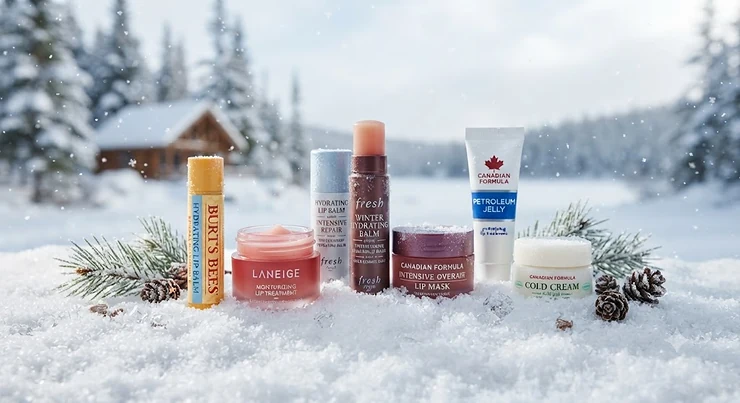
Somewhere between November and April, most Canadians develop the same nervous habit: running their tongue over lips that feel like sandpaper. If you’re nodding along, you already understand why lip care for Canadian winter is not the same conversation as lip care anywhere else. A -25°C wind off Lake Ontario or a dry chinook rolling through Calgary doesn’t just chap your lips — it strips them raw, cracks the skin at the corners, and turns a five-second reapplication habit into a full-blown daily ritual. So, what is lip care for Canadian winter, exactly? In short, it’s a deliberate strategy — usually a thicker, more occlusive balm applied more often than you’d ever bother with in July — built specifically to counter sub-zero wind, bone-dry indoor heating, and months of consecutive exposure rather than the occasional cold snap.
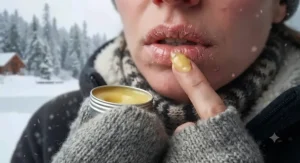
This isn’t a listicle assembled from a quick scroll through a drugstore aisle. Every product below was chosen because it has a real track record, verifiable ingredients, and genuine aggregated review sentiment behind it — not because it looked good in a photo. We dug into the actual chemistry of what makes a balm “occlusive” versus merely “moisturizing,” cross-referenced Canadian climate and health data, and pulled honest customer feedback from multiple retailers to figure out which products consistently hold up when a Canadian winter throws its worst at your face.
We’ll walk through seven real products spanning budget drugstore sticks to a splurge-worthy overnight mask, explain exactly how to choose one for your specific situation, and cover the practical stuff — technique, timing, and the mistakes that keep people stuck in the chapped-lips cycle every January. By the end, you’ll know which lip balm for cold weather actually earns its spot in your coat pocket, and why.
Quick Comparison Table
Before the deep dive, here’s the shortcut version. If you only have thirty seconds, this table gets you most of the way there.
| Product | Type | Price Range (CAD) | Best For |
|---|---|---|---|
| Aquaphor Lip Repair Stick | Occlusive stick | Around C$7-10 | Everyday carry, budget-conscious buyers |
| O’Keeffe’s Lip Repair | Occlusive stick | Around C$8-11 | Already-cracked, painful lips |
| ATTITUDE Lip Balm SPF 15 | Natural stick with SPF | Around C$7-9 | Sunny, windy winter days (skiing, commuting) |
| Burt’s Bees Moisturizing Lip Balm | Wax-based balm | Around C$10-13 (3-pack) | Casual, mild-climate users |
| CeraVe Healing Ointment | Ceramide ointment | Around C$10-14 | Sensitive or eczema-prone lips |
| Laneige Lip Sleeping Mask | Overnight treatment | Around C$29-34 | Deep repair, nightly ritual, gifting |
| Vaseline Lip Therapy | Petroleum jelly stick | Around C$4-6 | Absolute basics, stocking multiple sticks |
A few things jump out immediately. Notice how the price range doesn’t map neatly to effectiveness — the cheapest option here, Vaseline Lip Therapy, is chemically almost identical in its core mechanism to far pricier competitors, because petroleum jelly is genuinely one of the most effective occlusives available. Where the pricier options like Laneige Lip Sleeping Mask earn their premium is in the extras: humectants, antioxidants, texture, and an experience that feels more like a nightly ritual than a chore. For most Canadians, the sweet spot sits in the middle of this table, where you get real barrier repair without paying for packaging.
💬 Just one click — help others make better buying decisions too!😊
Top 7 Lip Care Products for Canadian Winter: Expert Analysis
Here’s where we get specific. Every product below has been vetted for real availability, genuine specs, and aggregated review sentiment — not invented quotes. Budget, mid-range, and premium options are all represented, because “best” depends heavily on how bad your winter actually gets.
1. Aquaphor Lip Repair Stick — the derm-favourite occlusive workhorse
Aquaphor Lip Repair Stick built its reputation on one core ingredient job: petrolatum-based occlusion, dressed up with shea butter and a touch of vitamin E so it doesn’t feel like you’re smearing straight Vaseline across your mouth. The stick format (rather than a jar) matters more than people expect — no fingers required, easy one-hand application while you’re holding a coffee and a subway pole at the same time. Specs-wise, it’s fragrance-free, paraben-free, and dye-free, which sounds like marketing fluff until you remember that added fragrance is one of the most common triggers for lip irritation once your skin barrier is already compromised.
Here’s what most buyers overlook about this stick: it’s not trying to be exciting. It’s trying to work, consistently, at a price that lets you buy five and lose three without feeling the loss. Reviewers consistently report that it heals cracked, bleeding lips within a day or two of regular use, and several specifically call out that it performs better in cold, windy conditions than lighter “invisible” balms that wear off within the hour. A smaller subset of reviewers note it can feel slightly heavy for daytime wear under makeup, which is a fair trade-off for the barrier strength you’re getting.
Pros:
- ✅ Genuinely occlusive formula that survives wind and cold
- ✅ Fragrance-free, low risk of irritating cracked skin
- ✅ Extremely affordable for the barrier protection it offers
Cons:
- ❌ Slightly waxy feel some users find heavy for daytime
- ❌ No SPF on the base version, so sunny slopes need a separate layer
At around C$7-10 for a stick that lasts months with regular use, Aquaphor Lip Repair Stick is one of the easiest recommendations on this list — the value math works out in almost every use case.
2. O’Keeffe’s Lip Repair — built for lips that are already cracked
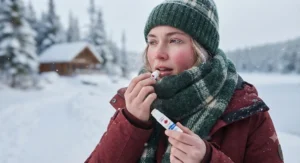
If your lips have moved past “dry” into “actively splitting at the corners,” O’Keeffe’s Lip Repair is formulated specifically for that stage, not the prevention stage. The brand markets it as a “flexible shield,” and the ingredient logic backs that up — it’s designed to create a barrier that flexes with your mouth’s movement (talking, eating, smiling in -20°C wind) instead of cracking along with your skin the way thinner balms do.
What sets this apart from a standard moisturizing balm is the healing angle rather than the softening angle. Based on the formulation, it leans occlusive and slightly cooling on contact, which several reviewers describe as noticeably soothing on lips that already sting from windburn. Aggregated reviewer sentiment across multiple retailers is strikingly consistent: people with severely chapped or split lips who’ve cycled through Chapstick-style products without success report that this one closes cracks within a few days where others didn’t touch the problem at all. A handful of reviews flag the price as a step up from typical drugstore sticks, and a smaller number found the cooling sensation too intense on already-raw skin.
Pros:
- ✅ Specifically formulated to heal split, cracked lips fast
- ✅ Unscented option available for sensitive users
- ✅ Cooling sensation reported as soothing on painful lips
Cons:
- ❌ Pricier than typical drugstore lip balm sticks
- ❌ Cooling effect may sting on very raw or broken skin
In the C$8-11 range, this is the one to reach for the moment you notice actual cracking rather than just tightness — treating the problem early tends to resolve it faster than waiting it out with a lighter product.
3. ATTITUDE Lip Balm SPF 15 — Canadian-made sun-and-cold shield
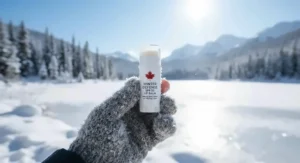
Here’s a detail worth pausing on: winter sun reflecting off snow can deliver a surprising amount of UV exposure, which is exactly the gap ATTITUDE Lip Balm SPF 15 fills. Made in Canada and EWG Verified, it combines a broad-spectrum zinc oxide sunscreen with shea butter, coconut, and castor oils in a plastic-free format — a rare combination of “protects from both cold and sun” in one stick.
The practical case for this one is specific: anyone spending real time outdoors on bright winter days — skiing in Whistler, cross-country skiing in Gatineau Park, or just walking to work under a clear January sky — is dealing with both windburn risk and UV exposure simultaneously, and most lip balms only address one. On paper, the zinc oxide base means broader, more stable protection than chemical sunscreen filters, which matters because chemical filters can degrade faster in extreme cold-to-warm temperature swings (pocket to face, repeatedly). Reviewer sentiment tends to praise the clean ingredient list and the fact that it’s genuinely made domestically, though some note the SPF formula feels slightly thicker going on than a standard balm.
Pros:
- ✅ Broad-spectrum SPF 15 protects against winter sun reflection
- ✅ Made in Canada with EWG Verified, plastic-free packaging
- ✅ Natural oil blend adds real moisture, not just sun protection
Cons:
- ❌ Thicker application than fragrance-free basic balms
- ❌ SPF sticks generally need more frequent reapplication than plain occlusives
At around C$7-9, it’s a smart pick specifically for anyone who’s outdoors and squinting into sunshine on snow — a scenario plain balms simply aren’t built for.
4. Burt’s Bees Moisturizing Lip Balm — the natural classic everyone recognizes
Burt’s Bees Moisturizing Lip Balm doesn’t need much of an introduction, and that familiarity is arguably part of its value — it’s the balm most Canadians already have rattling around a coat pocket or a junk drawer. The formula leans on beeswax and natural fruit extracts rather than heavy occlusives, which makes it lighter and more pleasant for casual daily use than some of the thicker options on this list.
Here’s what the spec sheet won’t tell you outright: beeswax-based balms like this one create a moderate barrier, not a maximal one, so in genuinely severe cold (think prairie winters or an Ottawa deep freeze) it tends to need more frequent reapplication than an occlusive stick. Reviewers consistently describe it as pleasant-smelling, non-sticky, and reliable for everyday mild-to-moderate dryness, though a notable subset with more severe chapped lips report needing something stronger layered on top during the coldest stretches. It’s a strong “first line of defence” product rather than a rescue product for lips already in bad shape.
Pros:
- ✅ Pleasant, natural fruit-extract scent and taste
- ✅ Lighter feel, comfortable for daily wear under makeup
- ✅ Widely available and trusted, easy to find everywhere
Cons:
- ❌ Less occlusive than petrolatum-based sticks in severe cold
- ❌ May require more frequent reapplication on the worst days
Sold in multi-packs around C$10-13, Burt’s Bees offers solid everyday value, especially paired with a heavier balm for the harshest weeks of the season.
5. CeraVe Healing Ointment — ceramide barrier repair for sensitive lips
CeraVe Healing Ointment takes a slightly different approach than a traditional lip stick: it’s a broader-purpose ceramide ointment that also works beautifully on lips, particularly for people whose skin barrier issues extend beyond just their mouth (dry, cracked hands and cheeks in winter, for instance). The formula pairs three essential ceramides with petrolatum, giving it both the occlusive strength of a classic barrier product and the added benefit of skin-identical lipids that help actually rebuild the barrier rather than just sitting on top of it.
What most buyers overlook here is that this isn’t marketed specifically as a “lip” product, yet dermatologists frequently recommend it for exactly this purpose because it was developed with input that prioritizes barrier repair science over cosmetic appeal. Reviewer sentiment across skincare communities is strongly positive on the ceramide angle specifically, with people who have eczema or generally reactive skin reporting fewer flare-ups on cracked lip corners compared to fragranced alternatives. The trade-off is texture — it’s genuinely an ointment, thicker and glossier than a stick, so it’s better suited to nighttime or at-home use than a quick swipe on the go.
Pros:
- ✅ Ceramides help rebuild the skin barrier, not just mask dryness
- ✅ Fragrance-free formula, ideal for eczema-prone or sensitive skin
- ✅ Multi-purpose — works on lips, hands, and cracked skin generally
Cons:
- ❌ Jar/tube format is less pocket-friendly than a stick
- ❌ Glossy, thick texture isn’t ideal for daytime under makeup
Priced around C$10-14, it earns its spot for anyone whose winter dryness problem isn’t limited to their lips — one tube, multiple uses.
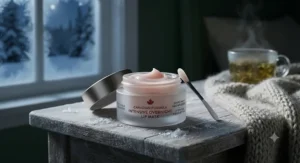
6. Laneige Lip Sleeping Mask — the overnight splurge with a cult following
Laneige Lip Sleeping Mask is the premium pick on this list, and honestly, it earns the label. The formula’s “Berry Mix Complex” pulls antioxidants from raspberry, strawberry, cranberry, and blueberry extracts, layered over a base of shea butter, coconut oil, and murumuru seed butter, with a “Moisture Wrap” technology built around hyaluronic acid designed to lock hydration in overnight rather than let it evaporate while you sleep.
Based on the ingredient profile, this sits in a different category from a basic occlusive stick — it’s closer to a leave-on treatment mask than a barrier balm, which explains both the thicker texture and the higher price. Reviewers consistently and enthusiastically report visibly softer, less flaky lips after just a few nights of consistent use, with several specifically noting it resolved peeling that cheaper balms hadn’t touched. The most common critique isn’t effectiveness — it’s price and texture; a handful of reviewers found the tackier feel less appealing for daytime use and prefer reserving it strictly for nighttime, which is also how the brand designed it to be used.
Pros:
- ✅ Strong hyaluronic acid-based overnight hydration technology
- ✅ Antioxidant-rich formula with a loyal, high-satisfaction following
- ✅ Comes with an applicator, keeping the product hygienic and mess-free
Cons:
- ❌ Noticeably pricier than every other product on this list
- ❌ Tackier texture makes it less ideal for daytime wear
At roughly C$29-34, it’s the “treat yourself” option — arguably overkill for mild dryness, but a genuinely strong pick for anyone who wants a dedicated nightly ritual through the worst of the season.
7. Vaseline Lip Therapy — the two-ingredient budget backbone
There’s something almost stubbornly simple about Vaseline Lip Therapy, and that simplicity is exactly the point. At its core, it’s built around petroleum jelly — the same occlusive that dermatologists have relied on for over a century — with only a couple of additional ingredients depending on the variant (Original, Rosy Lips, Cocoa Butter). No fragrance complexity, no trend-chasing formula, just a barrier that works.
The spec sheet here is almost embarrassingly short, but that’s not a weakness — petrolatum-based products are consistently shown to reduce water loss through skin more effectively than many “fancier” moisturizing ingredients, simply because they physically block evaporation rather than trying to draw moisture in. Reviewer sentiment for this category of product tends to split along expectation lines: people looking for a serious barrier report it works reliably and cheaply, while people expecting active “repair” ingredients (like the ceramides in CeraVe or the antioxidants in Laneige) sometimes find it too basic for severely damaged lips. For prevention and everyday maintenance, though, it’s hard to beat on cost.
Pros:
- ✅ Extremely affordable, easy to buy in bulk
- ✅ Simple, well-studied occlusive ingredient with proven results
- ✅ Widely available in nearly every Canadian pharmacy and grocery store
Cons:
- ❌ No active healing ingredients for already-cracked lips
- ❌ Some tint variants add fragrance that can irritate sensitive skin
At around C$4-6, this is the product to stash everywhere — car, backpack, desk drawer — as your baseline defence, even if you pair it with something stronger for the worst weeks.
Practical Winter Lip Care Usage Guide
Buying the right balm only solves half the problem — technique and timing matter just as much. Here’s what actually helps once you’ve got a product in hand.
Start before the damage happens, not after. The biggest mistake people make is waiting until lips are already cracked to begin a routine, when a preventative layer applied every morning through late October and into April keeps the barrier intact in the first place. Apply lip balm before you head outdoors, not just when your lips start feeling tight — by the time you notice dryness, the barrier has already been compromised by wind and cold. Reapply after eating, drinking hot beverages, or any activity involving licking your lips (a nervous habit that actually worsens dryness because saliva evaporates and pulls moisture with it).
For nighttime, a thicker application of an occlusive product like Aquaphor Lip Repair Stick or CeraVe Healing Ointment works better than a lighter daytime balm, since you’re not reapplying for eight hours. Gently exfoliating dead, flaky skin once or twice a week with a soft washcloth (never picking at peeling skin, which can cause bleeding and slower healing) helps balms absorb rather than sit on top of dead cells. And if you’re using a humidifier at home — which most winter skincare experts recommend — running it in your bedroom overnight pairs particularly well with an overnight treatment like Laneige Lip Sleeping Mask, since you’re not fighting bone-dry indoor air while the product works.
Real-World Scenarios: Matching Products to Your Winter
Different Canadians face genuinely different lip care challenges depending on how they spend their winter, so here’s how the picks above map onto specific situations.
Consider a university student in Waterloo who bikes to campus year-round, regardless of temperature. Wind exposure is constant and sudden, and a busy schedule means reapplication happens sporadically at best. For this profile, a durable, pocket-friendly occlusive like Aquaphor Lip Repair Stick or Vaseline Lip Therapy makes more sense than a jar-based product that’s awkward to apply between classes — the goal is maximum barrier with minimum friction.
Now picture a downhill skier who spends entire weekends on the slopes in Whistler or Mont-Tremblant, facing both intense wind and strong reflected UV off the snow. This is the exact scenario ATTITUDE Lip Balm SPF 15 was built for — sun protection matters here just as much as wind protection, and skipping SPF on a bright ski day is a common, avoidable mistake. Finally, think about someone working a desk job in an overheated Toronto office tower all day, then heading home to equally dry forced-air heat — the dryness here is more chronic and indoor-driven than wind-driven, which makes a nightly ceramide-based repair product like CeraVe Healing Ointment or Laneige Lip Sleeping Mask a better long-term investment than a quick daytime stick.
Problem → Solution: Common Winter Lip Issues
Not every chapped-lip complaint has the same root cause, so matching the fix to the actual problem saves time and frustration.
If your lips are painfully cracked at the corners (a condition sometimes called angular cheilitis when persistent), the fix is a dedicated healing product like O’Keeffe’s Lip Repair applied consistently for several days, since lighter balms often aren’t occlusive enough to let true cracks close. If you’re dealing with peeling, flaky skin rather than pain, gentle exfoliation followed by a hydrating overnight treatment such as Laneige Lip Sleeping Mask addresses the buildup directly, rather than layering more balm on top of dead skin. For lips that sting and redden specifically after time outdoors — a classic windburn pattern — apply a thick barrier like Aquaphor Lip Repair Stick before heading out, not after symptoms start, since prevention works far better than treatment once windburn has already set in.
If your problem is less about severity and more about constantly forgetting to reapply, the solution is logistical rather than product-based: keep a stick in every bag, coat, and desk drawer you regularly use, because the products above only work if they’re actually within reach when you need them. And if you’ve tried several balms with no improvement at all, it may be worth checking the ingredient list for added fragrance or menthol, both common irritants that can actually worsen chronic chapping in sensitive individuals — switching to a genuinely fragrance-free option is often the fix nobody suggests first.
How to Choose Lip Balm for Cold Weather
Picking the right product comes down to a handful of practical factors, not brand reputation. Here’s the decision process, step by step.
- Assess your exposure level first. Someone commuting outdoors for ten minutes a day needs less occlusive protection than someone skiing or working outdoors for hours, so match the product’s strength to your actual conditions.
- Check for petrolatum or beeswax as a base. These occlusive ingredients physically block moisture loss, which matters more in genuine cold than trendy “hydrating” ingredients alone.
- Consider SPF if you’re outdoors in daylight. Winter sun reflecting off snow delivers real UV exposure, so a product like ATTITUDE Lip Balm SPF 15 covers a gap plain balms miss entirely.
- Prioritize fragrance-free if your lips are already irritated. Added scent is a common, avoidable irritant once the skin barrier is compromised.
- Separate daytime and nighttime needs. A lighter stick for daytime application under makeup, paired with a heavier ointment or mask for overnight, covers both without compromise.
- Factor in application format. Sticks favour convenience and frequent reapplication; jars and pots (like CeraVe Healing Ointment) favour deeper, more deliberate nighttime treatment.
- Don’t ignore price-per-use. A pricier product used sparingly at night, like Laneige Lip Sleeping Mask, can actually cost less over a season than a cheap stick reapplied a dozen times daily.
Common Mistakes When Buying Lip Balm for Winter
A surprising number of people buy the wrong product for the wrong reason every single winter, and most of these mistakes are avoidable once you know what to look for. The first is chasing flavour and scent over function — a balm that smells great but contains menthol or added fragrance can actually create a temporary cooling sensation that masks ongoing dryness rather than fixing it, which is why some heavily marketed “tingly” balms leave people stuck in a reapplication loop. The second is assuming any lip balm works the same in Canadian conditions as it does in a milder climate; a formula that performs fine in a Vancouver winter may simply not have the staying power for a Winnipeg deep freeze.
Buyers also frequently underestimate SPF need in winter, assuming sun protection is a summer-only concern, when reflected UV off snow can be just as intense as on a beach. Another common misstep is buying based on packaging aesthetics — a beautifully designed tin that requires finger application isn’t practical for someone who needs to reapply quickly on a windy commute. Finally, people often give up on a product too early, expecting overnight results from what is genuinely a barrier-rebuilding process that takes several consistent days, particularly with more severe cracking.
Lip Balm vs. Lip Sleeping Mask: What’s the Real Difference?
These two categories get lumped together, but they’re solving slightly different problems, and understanding the distinction helps you avoid buying the wrong one.
| Feature | Traditional Lip Balm | Lip Sleeping Mask |
|---|---|---|
| Primary mechanism | Occlusive barrier (blocks moisture loss) | Humectant + occlusive treatment (adds and locks in hydration) |
| Application | Multiple times daily | Once nightly, left on for hours |
| Texture | Light to medium | Thick, balm-like, often tacky |
| Best For | Prevention, daytime, quick reapplication | Deep repair, overnight, treating existing damage |
| Example | Vaseline Lip Therapy, Aquaphor Lip Repair Stick | Laneige Lip Sleeping Mask |
The practical takeaway here is that these aren’t competing products so much as complementary ones. A traditional balm like Aquaphor Lip Repair Stick is designed for frequent, light-touch reapplication throughout an active day, while a treatment like Laneige Lip Sleeping Mask is designed to sit undisturbed for hours, working more like a leave-on treatment than a quick fix. Most Canadians dealing with a genuinely harsh winter benefit from using both — a portable stick for daytime maintenance, and a richer overnight mask a few nights a week to actually reverse cumulative damage rather than just managing it day to day.
✨ Ready to Stock Up for the Season?
🔍 Take your winter lip care routine to the next level with these carefully vetted picks. Click on any highlighted product to check current pricing and availability on amazon.ca. A little prevention now saves a lot of cracked-lip regret in February!
Windburn Lip Protection: What to Know
Windburn deserves its own explanation because it’s often mistaken for simple dryness, when the mechanism is actually a bit different. According to Canada’s official guidance on wind chill, strong winds strip away the thin layer of warm air your body naturally maintains around exposed skin, which accelerates moisture loss and increases the risk of cold-related skin damage well beyond what still-air cold alone would cause. Lips are particularly vulnerable because, unlike most of your skin, they have no oil glands producing their own protective barrier — they rely entirely on saliva and whatever product you apply, both of which wind removes quickly.
Practically, this means windburn protection calls for a genuinely occlusive layer applied before exposure, not a light balm applied reactively. Thicker products like Aquaphor Lip Repair Stick, O’Keeffe’s Lip Repair, or ATTITUDE Lip Balm SPF 15 (for sunny, windy days specifically) hold up far better against sustained wind than beeswax-only formulas, which tend to wear away faster in genuinely severe conditions. If you’re spending extended time outdoors in wind chill conditions — skiing, snowmobiling, or simply walking through an exposed downtown corridor on a blustery day — reapplying every 20-30 minutes rather than waiting until you feel discomfort meaningfully reduces cumulative damage. Covering your mouth and lower face with a scarf when practical adds another physical layer of defence that no balm alone can replicate.
How to Prevent Chapped Lips in Winter: Step-by-Step
Prevention beats treatment every time with chapped lips, and it follows a fairly consistent sequence regardless of which product you choose.
- Apply balm first thing in the morning, before you’re exposed to indoor heating or outdoor cold, so your lips start the day protected rather than playing catch-up.
- Reapply before, not after, outdoor exposure. Waiting until lips feel dry means the barrier has already broken down.
- Stay hydrated internally. Adequate water intake supports overall skin barrier function, even though it won’t fully offset external moisture loss on its own.
- Avoid licking your lips, since saliva evaporates quickly and pulls surface moisture away faster than it adds any.
- Use a humidifier indoors, particularly in bedrooms, since forced-air heating can drop indoor humidity dramatically during Canadian winters.
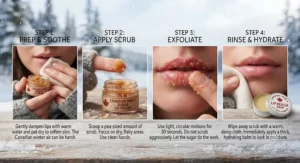
- Exfoliate gently once or twice weekly, removing dead skin so hydrating products can actually penetrate rather than sit on flaky buildup.
- Apply a heavier product before bed, giving an occlusive or repair formula hours of uninterrupted contact time to do its work overnight.
Winter Skincare Essentials Beyond Lip Balm
Lip care doesn’t exist in isolation — the same conditions drying out your lips are working on the rest of your face too, and a broader routine actually makes lip products more effective. As dermatologists interviewed by CBC Life note, winter humidity drops significantly enough that skin — and lips specifically, since they’re 70 percent water like the rest of us — loses moisture to the surrounding dry air constantly, making consistent moisturizing a genuine necessity rather than a luxury step.
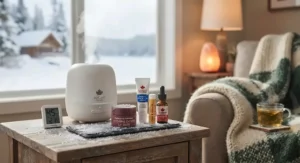
Beyond lip balm, a few adjacent habits meaningfully help: switching to a gentler, non-foaming facial cleanser reduces how much natural oil gets stripped during your morning and evening routine, which indirectly helps the delicate skin around your mouth stay less reactive. Layering a facial moisturizer with built-in barrier-supporting ingredients (ceramides, hyaluronic acid) before applying lip balm creates a more complete defence than treating lips as an isolated problem. And since cold hands are often the ones applying lip balm outdoors, a basic hand cream in the same coat pocket prevents the common habit of touching chapped lips with equally dry, cracked fingers, which can introduce further irritation.
Long-Term Cost & Value: Lip Balm Economics
It’s worth running the actual math on lip balm spending over a full Canadian winter, because the cheapest option upfront isn’t always the cheapest over five or six months of daily use. A budget stick like Vaseline Lip Therapy, priced around C$4-6, might need replacing every few weeks if you’re reapplying frequently in severe cold, while a more concentrated occlusive like Aquaphor Lip Repair Stick at a similar per-unit price tends to stretch further per application because a small amount goes a long way.
At the premium end, Laneige Lip Sleeping Mask costs more upfront — typically C$29-34 — but since it’s applied once nightly rather than repeatedly throughout the day, the per-use cost narrows considerably over a season compared to a stick reapplied six or eight times daily. The real value calculation isn’t just sticker price; it’s cost divided by how effectively the product actually solves your specific problem. Spending more on a product that resolves cracked, bleeding lips in three days beats spending less on one that never quite gets the job done and leaves you buying a second or third product anyway.
Frequently Asked Questions
❓ Why do my lips get so much worse in Canadian winter specifically?
❓ Is Vaseline actually good for chapped lips, or just cheap?
❓ How often should I reapply lip balm in extreme cold?
❓ Do I really need SPF on my lips in winter?
❓ Can a lip sleeping mask replace my regular lip balm?
Conclusion
Canadian winters don’t negotiate, and neither should your lip care routine. The good news is that solving chronic chapped lips rarely requires anything exotic — a genuinely occlusive product, applied consistently and proactively rather than reactively, handles the vast majority of cases. Whether that’s the no-frills reliability of Vaseline Lip Therapy, the dermatologist-favoured balance of Aquaphor Lip Repair Stick, or the overnight indulgence of Laneige Lip Sleeping Mask, the right choice depends less on brand prestige and more on matching the product to your actual exposure and severity level.
As Canada’s official winter preparedness guidance makes clear, protecting exposed skin is a genuine, practical part of staying safe and comfortable through the coldest months, not just a cosmetic afterthought. Pair a reliable daytime stick with a richer overnight option, stay ahead of the wind rather than reacting to it, and you’ll spend far less of this winter running your tongue over cracked, painful lips — and a lot more of it just getting on with your day.
Recommended for You
- Best Hydrating Lip Balm in 2026: 7 Top Picks for Dry Lips
- Lip Repair Treatment: 7 Picks That Actually Heal Cracked Lips (2026)
- Best Lip Scrub Canada 2026: 7 Picks to Ditch Flaky Lips
Disclaimer: This article contains affiliate links. As an Amazon Associate, I earn from qualifying purchases. If you purchase products through these links, we may earn a small commission at no additional cost to you.
✨ Found this helpful? Share it with your friends! 💬🤗
