
In This Article
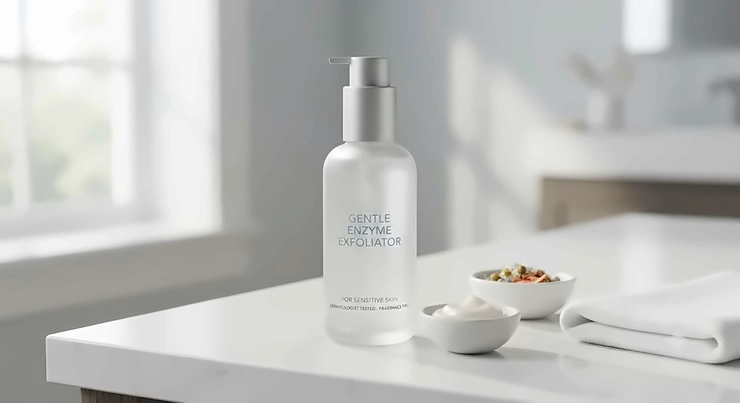
If your face turns into a stop sign every time you try a new scrub, you already know the problem with most exfoliators: they’re built for skin that can shrug off a little friction. Yours can’t. An enzyme exfoliator for sensitive skin works on a completely different principle — instead of physically sanding away dead cells or dissolving them with acid, fruit-derived enzymes like papain (from papaya) and bromelain (from pineapple) selectively break down the protein “glue” holding dead skin cells together, so they lift off with barely any mechanical effort. That distinction matters enormously if you’re managing rosacea, eczema-adjacent dryness, or skin that flares at the mere mention of glycolic acid.

This guide digs into seven real, currently available options sold through amazon.ca, from a Toronto-headquartered organic brand to a fragrance-free Korean powder cleanser under twenty dollars. We’ll walk through what’s actually inside each formula, who genuinely benefits from it, and where the marketing claim “gentle” doesn’t quite match the ingredient list — because plenty of enzyme exfoliator products still pack menthol, added fragrance, or extra acids that can undo the whole point for reactive skin. Whether you’re hunting for a papaya enzyme exfoliator Canada shoppers can actually rely on or trying to figure out if a pumpkin enzyme mask exfoliant belongs anywhere near rosacea-prone cheeks, you’ll find a straight answer here, backed by real specs and aggregated review patterns rather than guesswork.
Quick Comparison Table
| Product | Best For | Key Enzyme | Price Range (CAD) |
|---|---|---|---|
| Peter Thomas Roth Pumpkin Enzyme Mask | Occasional deep resurfacing | Pumpkin enzyme + AHA | C$55–65 |
| Dermalogica Daily Microfoliant | Daily gentle brightening | Papain + rice enzymes | C$55–75 |
| Elemis Papaya Enzyme Peel | Mature, reactive skin | Papaya + pineapple | C$60–75 |
| Eminence Organic Strawberry Rhubarb Dermafoliant | Canadian-made, vegan routines | Papain + lactic acid | C$60–70 |
| DERMA E Gentle Enzyme Peel | Budget clean-beauty fans | Papaya + pineapple | C$25–35 |
Looking at the spread above, price doesn’t track neatly with gentleness — the DERMA E Gentle Enzyme Peel costs a fraction of the Elemis Papaya Enzyme Peel, but it’s actually formulated with menthol and essential oils that can be riskier for reactive skin than Elemis’s fragrance-forward but enzyme-only cream. Meanwhile, the Dermalogica Daily Microfoliant earns its higher price partly through daily-use versatility that the once-a-week Peter Thomas Roth Pumpkin Enzyme Mask simply isn’t designed for. The lesson: read the ingredient deck, not just the price tag or the word “gentle” on the front label.
💬 Just one click — help others make better buying decisions too!😊
Top 7 Enzyme Exfoliators for Sensitive Skin: Expert Analysis
We shortlisted these seven products from real amazon.ca listings and brand data, covering budget, mid-range, and premium tiers, plus a deliberate mix of pure-enzyme and enzyme-plus-acid formulas so you can see exactly what you’re trading off at each price point.
1. Peter Thomas Roth Pumpkin Enzyme Mask — deepest triple-action resurfacing for occasional use
This one doesn’t pretend to be a daily-use product, and that’s precisely the point. The formula stacks pumpkin enzyme, alpha hydroxy acid, and aluminum oxide crystals into a single 3-to-7-minute treatment, which means you’re getting enzymatic, chemical, and physical exfoliation simultaneously rather than relying on enzymes alone. That combination explains why users report visibly smoother, brighter skin after a single application — the AHA is doing real chemical work that a pure enzyme mask can’t match on its own. Based on the spec comparison with the rest of this list, this is the most aggressive product here, which makes it a better fit for sensitive-but-resilient skin (dryness, dullness, occasional redness) than for actively flaring rosacea, where AHA and micro-abrasive crystals are more likely to sting. Reviewers commonly describe a warming or tingling sensation during the first few uses, which the brand frames as normal but which rosacea-prone users should treat as a signal to patch test extensively first. Pros and cons below reflect that trade-off between power and tolerability.
Pros:
- ✅ Three exfoliation methods combined in one weekly treatment
- ✅ Visibly brightens dull, congested skin after a single use
- ✅ Backed by a long-established, dermatologist-facing skincare brand
Cons:
- ❌ Aluminum oxide crystals and AHA may sting reactive rosacea skin
- ❌ Not suitable for more than one to two uses per week
At around C$55–65 for a 150 ml jar that lasts months at weekly use, this earns its price if your skin tolerates active ingredients — but check current price and patch test before committing if you’re rosacea-prone.
2. Dermalogica Daily Microfoliant — gentle enough for daily brightening
Unlike a rinse-off mask you use once a week, this rice-based powder is designed to be worked into your actual daily cleansing routine. It activates on contact with wet hands, releasing papain, salicylic acid, and rice enzymes that micro-exfoliate without the scrubbing motion a physical scrub demands. What most buyers overlook about this formula is that the salicylic acid concentration is deliberately kept low enough for daily tolerance, while a calming complex of colloidal oatmeal and green tea is layered in specifically to offset any irritation from the acid and enzyme combination — a detail that separates it from cheaper daily exfoliating powders that skip the buffering ingredients entirely. Reviewers consistently note a smoother, “polished” finish that shows up within the first week, and the brand’s dermatologist-facing reputation adds a layer of formulation credibility that budget dupes often lack. That said, this is still a salicylic-acid product, and some rosacea-prone reviewers report mild stinging on application, particularly on already-compromised skin barriers.
Pros:
- ✅ Formulated for daily use, not just weekly treatments
- ✅ Calming complex offsets the papain and salicylic acid actives
- ✅ Consistently high ratings across major retail listings
Cons:
- ❌ Contains salicylic acid, which can sting compromised rosacea skin
- ❌ Higher cost per gram than most powder exfoliants on this list
Expect to pay in the C$55–75 range depending on size and retailer, which is steep for a powder — but the daily-use design changes the cost-per-application math meaningfully compared to weekly-only treatments.
3. Elemis Papaya Enzyme Peel — best cream mask for mature, reactive skin
This is the closest thing on our list to a pure enzyme exfoliant with no acids or physical grit involved. The non-granular cream relies entirely on papaya and pineapple enzymes to dissolve dulling surface cells, which is exactly why the brand markets it specifically toward sensitive and mature complexions rather than oily or acne-prone skin. Based on the ingredient profile, the absence of AHAs, BHAs, or exfoliating particles is a meaningful differentiator here — what most buyers overlook is that “enzyme peel” doesn’t always mean acid-free, but this one genuinely is. Aggregated user feedback describes the texture as soothing rather than tingly, and one independent user trial cited by the brand reported that a majority of testers found it comfortable with no discomfort over a two-week period, though it’s worth flagging that figure comes from brand-commissioned research rather than a fully independent clinical source. The trade-off is a fragrance note in the ingredient list, which can still be a trigger for some rosacea sufferers even in an otherwise acid-free formula.
Pros:
- ✅ No AHAs, BHAs, or physical grit — enzymes are the only exfoliant
- ✅ Marketed and formulated specifically for sensitive and mature skin
- ✅ Nourishing marine algae and vitamin E cushion the exfoliating action
Cons:
- ❌ Contains added fragrance, a known trigger for some rosacea sufferers
- ❌ Premium price for a 50 ml jar relative to usage frequency
Priced around C$60–75 for a twice-weekly treatment, this is a strong pick if fragrance sensitivity isn’t part of your particular flare pattern.
4. Eminence Organic Strawberry Rhubarb Dermafoliant — best Canadian-made vegan pick
Eminence Organic Skin Care is headquartered in Toronto, which gives this dermafoliant a genuine home-field advantage for shoppers who want to support a Canadian-based company alongside their skincare routine. The formula blends papain with lactic and salicylic acid across a base of rice, chickpea, and oat flours, plus a botanical hyaluronic acid complex for hydration. Here’s what the spec sheet won’t tell you outright: this is technically a triple-action product — enzyme, AHA, and mild BHA together — so despite its “gentle” positioning, it sits closer to the Peter Thomas Roth mask in overall activity level than to the purely enzymatic Elemis peel. That makes it genuinely versatile for combination sensitive skin that needs a bit more than enzymes alone, but it’s a less obvious choice for someone in an active rosacea flare. Real customer feedback is largely positive on efficacy, with one recurring complaint centred on the powder-to-cream packaging clogging over time rather than on irritation.
Pros:
- ✅ Headquartered and formulated with a Canadian-based skincare company
- ✅ Vegan, soy-free, gluten-free formulation with organic-leaning ingredients
- ✅ Combines enzyme, AHA, and BHA for noticeable texture improvement
Cons:
- ❌ Contains natural fragrance, which may not suit fragrance-reactive skin
- ❌ Some reviewers report the jar packaging clogs with regular use
At roughly C$60–70 for 119 g, cost-per-use is reasonable given the small dime-sized amount needed per application.
5. philosophy The Microdelivery Purifying Peel — fastest one-minute treatment
Marketed as a one-minute purifying enzyme peel, this formula packs papain and bromelain alongside lactic and salicylic acid into a fast-acting treatment meant to fit into even the most rushed routine. The “leave on 1 to 3 minutes, as tolerated” instruction is honestly the most useful detail on the label — it builds in a built-in safety valve for sensitive skin by letting you start at the low end and extend only if your skin isn’t protesting. Based on the spec comparison with the rest of this list, the enzyme-plus-acid combination here is broadly similar in intensity to the Eminence dermafoliant, though the shorter, prescribed contact time is designed to limit cumulative irritation. What most buyers overlook is that the ingredient list also includes a synthetic dye and fragrance, both of which are common flare triggers that a truly minimalist sensitive-skin routine would typically avoid.
Pros:
- ✅ Built-in flexible timing lets sensitive skin start conservatively
- ✅ Fast treatment format fits into time-constrained routines easily
- ✅ Combines enzyme and mild acid exfoliation for visible texture change
Cons:
- ❌ Contains added fragrance and synthetic dye in the formula
- ❌ “As tolerated” instructions require more self-monitoring than a fixed timer
Typically found in the C$45–55 range at this size, it’s a reasonable mid-tier pick for sensitive skin that isn’t currently flaring and wants efficiency over minimalism.
6. DERMA E Gentle Enzyme Peel — best budget vegan formula
On paper, this looks like an ideal budget entry: papaya and pineapple fruit enzymes, milk thistle, licorice root, and a clean-beauty, cruelty-free brand positioning that appeals to ingredient-conscious shoppers. What most buyers overlook — and what an honest breakdown has to flag clearly — is that the full ingredient list also includes menthol, peppermint oil, and eucalyptus oil, three ingredients frequently cited as rosacea and sensitive-skin triggers because of the cooling, tingling sensation they’re specifically added to create. One independent ingredient-analysis source rated the product’s irritation potential as high despite its “gentle” name, which is a meaningful gap between marketing language and formulation reality. That doesn’t make it a bad product across the board — the enzyme and licorice root combination genuinely does brighten and smooth skin for many users — but for anyone managing active rosacea or reactive sensitivity, this particular “gentle” claim deserves real skepticism rather than face-value trust.
Pros:
- ✅ Budget-friendly price point relative to premium enzyme peels
- ✅ Vegan, cruelty-free clean-beauty formulation and packaging
- ✅ Milk thistle and licorice root add brightening, calming ingredients
Cons:
- ❌ Contains menthol, peppermint, and eucalyptus oil — common rosacea triggers
- ❌ Independent ingredient analysis flags a higher irritation potential
At around C$25–35, this is worth trying only after a careful patch test, and it’s arguably the least suited product on this list for true rosacea-prone skin despite the branding.
7. TONYMOLY I’m Rice Exfoliating Enzyme Cleanser — best budget daily hybrid cleanser
This water-activated Korean powder cleanser earns its spot through a combination that’s genuinely rare on this list: it’s fragrance-free, low pH, and vegan, with a short, simple ingredient list built around rice powder, rice extract, and papain. For sensitive and rosacea-prone skin, a fragrance-free formula in this category matters more than almost any other single spec, since added fragrance is one of the most commonly cited irritant categories across the exfoliators on this list. Here’s what the spec sheet won’t tell you, but the ingredient breakdown suggests: the low pH formulation is designed to work with the skin’s natural acid mantle rather than disrupting it, which is a meaningful consideration for barrier-compromised, rosacea-adjacent skin. Reviewers consistently frame it as a three-in-one product — usable as a cleanser, a scrub, or a short-contact mask — which adds versatility that pricier single-purpose products don’t offer. The trade-off is a smaller 50 g size that requires more frequent reordering than the larger jars higher up this list.
Pros:
- ✅ Fragrance-free formula, unusual for this product category
- ✅ Low pH supports rather than disrupts the skin barrier
- ✅ Extremely affordable entry point for trying enzyme exfoliation
Cons:
- ❌ Small 50 g size means more frequent repurchasing
- ❌ Less established third-party sensitive-skin testing than legacy brands
At under C$20, this is arguably the lowest-risk way to test whether enzyme exfoliation agrees with your skin before investing in a premium option.
Practical Usage Guide: Introducing Enzyme Exfoliation Safely
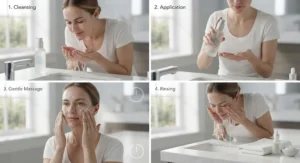
Starting any new exfoliant on sensitive or rosacea-prone skin is a slow-motion process, not a weekend project. In the first two weeks, apply your chosen enzyme exfoliator just once, on a small test area along the jawline rather than the full face, and wait 48 hours before judging the result — delayed reactions are common with rosacea-prone skin and easy to miss if you move too fast. Once the patch test is clear, introduce it to the full face at the lowest suggested frequency (often once weekly for masks, or every other day for gentler daily powders like the Dermalogica or TonyMoly options above), and always apply to slightly damp, freshly cleansed skin, since enzymes need moisture to activate properly.
A common first-30-days mistake is layering an enzyme exfoliator with a retinoid or vitamin C serum on the same night — doubling up on active ingredients is a leading cause of unexpected flare-ups that get wrongly blamed on the exfoliator alone. Instead, use enzyme exfoliation on nights when your routine is otherwise simple: cleanser, exfoliant, moisturizer. Optimization tricks worth knowing: applying a thin buffer layer of plain moisturizer under an enzyme mask can blunt intensity on very reactive days, and rinsing with lukewarm (never hot) water afterward prevents the vasodilation that triggers rosacea flushing. If redness lasts more than an hour after use, that’s your skin telling you to space out applications further, not push through it.
Real-World Scenarios: Which Enzyme Exfoliator Fits Your Skin?
Meet three composite reader profiles built from common sensitive-skin situations. If you’re a downtown-office worker in your late twenties dealing with occasional rosacea flushing triggered by hot coffee and stress, a fragrance-free, low-intensity option like the TONYMOLY I’m Rice Exfoliating Enzyme Cleanser or the fragrance-free-leaning Elemis Papaya Enzyme Peel (used at reduced frequency) makes more sense than anything containing added AHA or menthol. If you’re managing dry, wind-chapped skin through a Prairie or Northern Ontario winter, the hydrating hyaluronic acid complex in the Eminence Organic Strawberry Rhubarb Dermafoliant pulls double duty as both exfoliant and light humectant treatment.
For a budget-conscious university student in Halifax or Montreal experimenting with skincare for the first time, starting with the low-cost, low-risk TONYMOLY cleanser or the DERMA E Gentle Enzyme Peel (with a genuinely thorough patch test given its essential oil content) offers a low financial barrier to figuring out personal tolerance before committing to a premium jar. And for someone with resilient-but-dull sensitive skin who wants a noticeable once-weekly reset without full rosacea reactivity, the Peter Thomas Roth Pumpkin Enzyme Mask or philosophy The Microdelivery Purifying Peel deliver visible results that gentler daily options simply can’t match in a single application.
Problem → Solution: Fixing Common Sensitive-Skin Exfoliation Issues
Persistent stinging during application is usually a sign the product’s acid or menthol content exceeds what your barrier can currently tolerate — the solution is downgrading to a purer enzyme formula like the Elemis Papaya Enzyme Peel or TONYMOLY cleanser rather than pushing through with the same product. Post-exfoliation redness lasting beyond an hour typically points to overuse rather than a bad product choice; cutting frequency in half before abandoning a formula entirely often resolves it. Uneven, patchy results usually mean the product isn’t left on long enough to activate — enzymes need a genuine few minutes of contact time and adequate moisture, so a thirty-second rinse-and-go approach undercuts even well-formulated masks like the Peter Thomas Roth Pumpkin Enzyme Mask.
Tightness or dryness after exfoliating suggests skipping the moisturizing step immediately afterward, which enzyme exfoliation makes more urgent than usual since freshly exposed skin loses moisture faster. And if you’ve tried multiple products with no visible improvement in texture, the likely culprit is under-exfoliating out of caution — some sensitive-skin routines swing so far toward gentleness that they never reach a frequency where enzymes can meaningfully work, so a modest increase from monthly to biweekly use, closely monitored, is often the fix.
How to Choose an Enzyme Exfoliator for Sensitive Skin
Enzyme exfoliators for sensitive skin work by using fruit-derived enzymes such as papain and bromelain to dissolve the protein bonds holding dead skin cells together, offering exfoliation without the friction of scrubs or the potency of acid peels. Choosing the right one comes down to a short list of criteria worth checking in order:
- Check for added acids or physical particles first — a genuinely gentle enzyme product should list the enzyme as a primary active, not just a marketing accent alongside AHA or BHA.
- Scan for fragrance and essential oils — menthol, peppermint, and eucalyptus are common irritants disguised as “refreshing” ingredients.
- Match the leave-on time to your patience and tolerance — cream masks needing ten-plus minutes demand more monitoring than fast powder cleansers.
- Consider your climate and season — richer, more hydrating formulas suit Canadian winters better than lightweight gels.
- Verify the brand offers a smaller or travel size — testing tolerance on a low-cost or trial-size format limits financial risk.
- Read aggregated review sentiment for your specific skin concern — rosacea-specific feedback is more useful than generic “brightening” praise.
- Confirm the product is appropriate for your current skin state — active flares generally call for pausing exfoliation altogether rather than choosing a “gentler” product.
Common Mistakes When Buying Enzyme Exfoliators for Sensitive Skin
The single most common mistake is trusting the word “gentle” on packaging without reading the actual ingredient list — as the DERMA E Gentle Enzyme Peel breakdown above demonstrates, a product can be branded gentle while containing menthol and essential oils that irritate reactive skin. A second frequent error is buying a large, expensive jar before confirming personal tolerance, when a smaller or budget option like the TONYMOLY I’m Rice Exfoliating Enzyme Cleanser would let you test the same enzyme category for a fraction of the financial risk.
Shoppers also commonly assume that “enzyme” automatically means “acid-free,” when in reality several of the top-rated products on the market, including the Eminence Organic Strawberry Rhubarb Dermafoliant and philosophy The Microdelivery Purifying Peel, combine enzymes with AHA and BHA for a stronger overall effect. Finally, many buyers skip patch testing entirely because enzyme exfoliation has a gentler reputation than chemical peels — but reputation isn’t a substitute for testing your own skin’s specific reaction, especially for rosacea-prone users where individual trigger profiles vary widely.
Enzyme Exfoliants vs Chemical (AHA/BHA) Exfoliants
Enzyme and chemical exfoliants both remove dead skin cells, but they work through fundamentally different mechanisms with different risk profiles for sensitive skin. Enzymes like papain act on the protein structure of dead cells sitting on the skin’s surface, generally leaving live, healthy cells alone, which is why enzyme exfoliation is frequently described by dermatologists as milder. Chemical exfoliants such as glycolic acid (an AHA) or salicylic acid (a BHA) work by loosening the bonds between cells at a deeper level and can penetrate further into the skin, producing more dramatic results but carrying a higher irritation risk for reactive, rosacea-prone complexions.
| Exfoliation Type | Mechanism | Typical Intensity | Best For |
|---|---|---|---|
| Enzyme (e.g. papain, bromelain) | Breaks down surface protein bonds | Mild | Sensitive, rosacea-prone, reactive skin |
| AHA (e.g. glycolic, lactic acid) | Dissolves bonds between surface cells | Moderate to strong | Dullness, uneven tone, resilient skin |
| BHA (e.g. salicylic acid) | Penetrates oil, exfoliates within pores | Moderate | Oily, congested, acne-prone skin |
| Physical scrubs / granules | Manual abrasion of dead skin | Variable, often strong | Resilient skin without active irritation |
The table above makes it clear why so many of the “gentle” products on this list, like the Eminence Organic Strawberry Rhubarb Dermafoliant, actually blend categories rather than relying on enzymes alone — they’re chasing the visible results of AHA/BHA exfoliation while keeping the enzyme component as a softer entry point. For true rosacea management, sticking closer to the enzyme-only end of the spectrum, as seen in the Elemis Papaya Enzyme Peel or TONYMOLY cleanser, is generally the safer long-term strategy.
Enzyme Exfoliators for Rosacea-Prone Skin
Rosacea-prone skin occupies a genuinely different category from ordinary sensitive skin, and the products that work well for one don’t necessarily work for the other. Dermatology guidance consistently emphasizes that rosacea-prone skin should generally avoid mechanical scrubs entirely and approach any chemical or enzymatic exfoliation cautiously, often limiting frequency to once weekly or less, and skipping exfoliation entirely during active flares. The Canadian Dermatology Association notes that products containing fragrance, alcohol, or abrasive ingredients can aggravate rosacea symptoms, which lines up closely with the ingredient concerns flagged throughout this guide — particularly around the DERMA E Gentle Enzyme Peel‘s menthol content and the fragrance present in several premium picks.
For rosacea-prone readers specifically, the safest starting points on this list are the fragrance-free TONYMOLY I’m Rice Exfoliating Enzyme Cleanser and, with attention to its fragrance note, the acid-free Elemis Papaya Enzyme Peel, both of which avoid the layered acid-plus-enzyme intensity found in products like the Peter Thomas Roth Pumpkin Enzyme Mask. It’s also worth noting that some rosacea sufferers tolerate enzyme exfoliation poorly regardless of formula, and skipping exfoliation entirely in favour of a consistent moisturizing and sun-protection routine remains a completely valid choice — this category isn’t mandatory for healthy skin.
Features That Actually Matter (And Those That Don’t)
Contact time and enzyme concentration matter more than almost anything else on the label, since these directly determine how much exfoliating work actually happens during application. Fragrance-free formulation matters enormously for rosacea-prone skin specifically, even though it rarely gets marketing emphasis the way “papaya-infused” or “vitamin-enriched” claims do. A genuinely short, simple ingredient list, as seen in the TONYMOLY cleanser, is often a better predictor of tolerability than a long list of botanical extras, since more ingredients simply means more potential triggers.
On the other hand, added colour, exotic-sounding botanical blends, and marketing terms like “detox” or “clarifying crystals” rarely correlate with better outcomes for sensitive skin and are worth mentally discounting when comparing products. Packaging format (jar versus pump versus powder) is a convenience factor, not a performance one, despite occasionally influencing perceived quality — the Eminence dermafoliant’s clogging complaints are a packaging issue, not a formulation flaw.
Long-Term Cost & Maintenance: Value Analysis
| Product | Price Range (CAD) | Approx. Size | Typical Use Frequency | Value Verdict |
|---|---|---|---|---|
| Peter Thomas Roth Pumpkin Enzyme Mask | C$55–65 | 150 ml | 1–2x weekly | Good value for infrequent, high-impact use |
| Dermalogica Daily Microfoliant | C$55–75 | 74 g | Daily | Higher upfront cost, low cost-per-use |
| Elemis Papaya Enzyme Peel | C$60–75 | 50 ml | 2x weekly | Premium price for a purely enzymatic formula |
| Eminence Organic Strawberry Rhubarb Dermafoliant | C$60–70 | 119 g | 2–3x weekly | Solid value given small amount needed per use |
| TONYMOLY I’m Rice Exfoliating Enzyme Cleanser | Under C$20 | 50 g | 2–3x weekly | Lowest financial risk, best for trial purposes |
Looking at the table above, cost-per-use tells a very different story than sticker price alone. The Dermalogica Daily Microfoliant costs more upfront than most options here, but because it’s designed for daily use in small amounts, its true cost-per-application often lands lower than a premium weekly mask like the Elemis Papaya Enzyme Peel. For anyone still figuring out their tolerance, starting with the TONYMOLY cleanser minimizes both financial exposure and product waste if your skin ultimately doesn’t agree with enzyme exfoliation as a category.
Safety, Regulations & Compliance in Canada
Cosmetics sold in Canada, including facial exfoliators, fall under the Food and Drugs Act and the associated Cosmetic Regulations, which require every product to be safe for its intended use and registered with Health Canada through a Cosmetic Notification Form. Health Canada maintains a Cosmetic Ingredient Hotlist that outlines substances prohibited or restricted in cosmetic products sold nationally, which is a useful reference point if you’re ever concerned about a specific ingredient flagged in this guide, such as added fragrance compounds or essential oils.
Beyond regulatory compliance, practical safety for sensitive and rosacea-prone skin comes down to product-level vigilance rather than assuming every legally sold product is automatically appropriate for reactive skin. Papain itself, the workhorse enzyme behind most products on this list, is well documented as a protein-digesting enzyme derived from papaya, and while it’s broadly considered gentle relative to chemical peels, individuals with latex allergies should be aware that papain has been associated with cross-reactivity in rare cases, making a patch test doubly worthwhile for that specific group.
Frequently Asked Questions
❓ Is enzyme exfoliation actually gentler than acids for sensitive skin?
❓ Can rosacea-prone skin use enzyme exfoliators?
❓ How often should sensitive skin be exfoliated with enzymes?
❓ What's the difference between papaya and pumpkin enzyme exfoliators?
❓ Are enzyme exfoliators safe to use with retinol or vitamin C?
Conclusion
Enzyme exfoliation earns its gentle reputation honestly, but “enzyme” on a label is a starting point for research, not a guarantee of tolerability. Across the seven products in this guide, the meaningful differences come down to what else is riding alongside the enzyme — added acids in the Peter Thomas Roth Pumpkin Enzyme Mask and Eminence Organic Strawberry Rhubarb Dermafoliant, fragrance in the Elemis Papaya Enzyme Peel and philosophy The Microdelivery Purifying Peel, or surprisingly irritating essential oils in the budget-friendly DERMA E Gentle Enzyme Peel.
For genuinely reactive or rosacea-prone skin, the fragrance-free TONYMOLY I’m Rice Exfoliating Enzyme Cleanser stands out as the lowest-risk entry point, while the Dermalogica Daily Microfoliant offers a well-buffered middle ground for daily-use sensitive skin that isn’t currently flaring. Whichever you choose, patch testing, moderate frequency, and honest label-reading will do more for your skin than any single product claim ever could.
Recommended for You
- Physical Exfoliator for Dry Skin: 7 Best Picks for Canada (2026)
- 7 Best Chemical Exfoliators for Sensitive Skin Canada 2026
- Lactic Acid Exfoliator for Aging Skin: 7 Gentle Picks (2026)
Disclaimer: This article contains affiliate links. As an Amazon Associate, I earn from qualifying purchases. If you purchase products through these links, we may earn a small commission at no additional cost to you.
✨ Found this helpful? Share it with your friends! 💬🤗
