

In This Article
Winter in most of this country does something specific to skin: it turns shins into sandpaper and leaves cheeks looking dusted in flour by February. If you’ve ever stood in the shower dragging a washcloth over flaky patches and wondering whether you’re helping or just making things angrier, this guide is for you. Finding the right physical exfoliator for dry skin isn’t about scrubbing harder — it’s about choosing a texture gentle enough to lift dead cells without stripping the barrier that’s already working overtime to hold moisture in.

Physical exfoliation, sometimes called mechanical or manual exfoliation, uses friction — beads, sugar crystals, a soft cloth, a brush, a sponge — to physically dislodge dead skin cells, as opposed to chemical exfoliants that dissolve the bonds between cells using acids or enzymes. There’s a useful primer on the different methods of exfoliation if you want the full taxonomy, but the short version for dry skin is this: done right, physical exfoliation is transformative — smoother texture, better light reflection, and lotions that finally sink in instead of sitting on top of flakes. Done wrong, it’s a fast track to redness, micro-tears, and a compromised moisture barrier.
This guide covers seven real, currently available products — from a C$7 washcloth to a C$60 sugar polish — and shows exactly how to use each one so dry, flaking skin gets smoother instead of angrier. We’ll dig into the difference between rough grit and gentle abrasives, what a “moisture barrier” actually means day to day, and why a physical exfoliator with moisturiser built in might be worth the switch. If what you actually want is a gentle manual exfoliator for dry skin that doesn’t leave you red and tight by the time you towel off, keep reading — everything below is picked with exactly that constraint in mind.
Quick Comparison: 7 Physical Exfoliators for Dry Skin at a Glance
| Product | Type | Grit Level | Price Range (CAD) | Best For |
|---|---|---|---|---|
| Aveeno Tone + Texture Renewing Body Scrub | Cream scrub, body | Fine | around C$14-C$18 | Everyday sensitive, dry body skin |
| Tree Hut Shea Sugar Body Scrub | Sugar scrub, body | Medium-coarse | around C$10-C$14 | Rough patches on elbows, knees, heels |
| Dove Exfoliating Body Polish (Oatmeal & Calendula) | Cream scrub, body | Fine | around C$9-C$12 | Very dry, easily irritated body skin |
| Salux Nylon Japanese Beauty Cloth | Woven cloth, tool | Adjustable by pressure | around C$6-C$9 | Daily gentle full-body buffing |
| EcoTools Dry Body Brush | Bristle brush, tool | Firm bristle, pressure-adjustable | around C$11-C$15 | Pre-shower dry brushing, circulation |
| MY Konjac Sponge (French Red Clay) | Plant-fibre sponge, face | Ultra-soft | around C$10-C$14 | Dry or mature facial skin |
| Fresh Sugar Face Polish | Sugar-and-oil scrub, face | Fine | around C$26-C$65 depending on size | Premium at-home facial exfoliation |
Read that table sideways and a pattern shows up fast: the gentlest options for dry skin skew toward fine, cream-based, or fibre textures rather than anything that feels gritty between your fingers. The two coarser picks — Tree Hut Shea Sugar Body Scrub and the EcoTools Dry Body Brush — earn their spot for thicker, rougher zones like heels and elbows, not for cheeks or inner arms where skin is thinner. Price also isn’t a reliable proxy for gentleness here; the C$7 Salux Nylon Japanese Beauty Cloth is arguably softer on compromised skin than several pricier options, which matters if you’re building a routine on a budget rather than assuming you need to spend more to be gentle.
💬 Just one click — help yourself compare current prices before they change again!😊
Top 7 Physical Exfoliators for Dry Skin: Expert Analysis
Each of these made the list for a specific reason tied to dry, flaking, or barrier-compromised skin — not just general popularity. Three are body scrubs, two are reusable tools, and two are facial polishes, so there’s something here whether you’re dealing with dry patches on your shins or a dull, flaky T-zone.
1. Aveeno Tone + Texture Renewing Body Scrub — fine beads plus niacinamide for barrier support
The standout here is the formula itself: gentle exfoliating beads suspended in a prebiotic oat and niacinamide base, rather than beads suspended in soap. That base matters more than it sounds like it should. A typical 236 mL bottle is meant to be massaged on in the shower and rinsed, leaving a light residual film rather than the tight, squeaky feeling cheaper sugar-soap combos leave behind. Niacinamide (vitamin B3) is one of the better-studied ingredients for supporting a compromised moisture barrier, so pairing it with mechanical exfoliation is a smart way to offset the very stripping that scrubbing can cause. Based on the ingredient profile, this reads as a scrub built specifically to be used more than once a week on dry skin without accumulating irritation, which is unusual — most drugstore scrubs are formulated for occasional use only. Aggregated reviews on retailer sites consistently mention the texture feeling “creamy rather than gritty” and note less post-shower tightness compared to older oat-based Aveeno formulas, though a handful of reviewers with very reactive skin still report mild stinging on broken or actively flaking patches.
Pros:
- ✅ Niacinamide base actively supports the moisture barrier
- ✅ Fine bead texture safe for daily-to-every-other-day use
- ✅ Fragrance-free option available for reactive skin
Cons:
- ❌ Beads feel too mild for genuinely rough, calloused patches
- ❌ Runs pricier per millilitre than basic drugstore scrubs
At around C$14-C$18 for a standard bottle, Aveeno Tone + Texture Renewing Body Scrub lands as solid mid-range value for anyone who wants a scrub they can actually use regularly rather than saving for a once-a-week treatment.
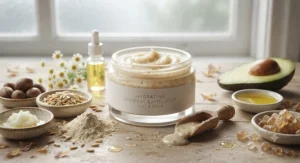
2. Tree Hut Shea Sugar Body Scrub — cane sugar crystals with a heavy shea butter payload
The standout feature is the sheer amount of shea butter packed into the formula, which keeps this sugar scrub from feeling as harsh as its coarse texture suggests. A single 510 g tub combines granulated cane sugar with shea butter, safflower and sweet almond oils, so even though the sugar crystals are noticeably bigger than a typical facial exfoliant, the oil content buffers the abrasion. That’s the key trade-off to understand: bigger granules mean more mechanical lift for rough, calloused zones like heels, elbows, and knees, but the same texture is genuinely too aggressive for a dry, sensitive face or thin-skinned areas like the inner arm. Reviewers overwhelmingly praise the scent range and the “melts into oil” sensation as it warms on skin, and this is consistently one of the better-selling body scrub lines in Canada and the US. A recurring complaint in aggregated reviews is that the oily residue can make the shower floor slippery and occasionally clog drains over repeated use, which is a real practical downside worth planning around.
Pros:
- ✅ Heavy shea butter content offsets the coarse sugar texture
- ✅ Excellent for genuinely rough patches on elbows and heels
- ✅ Wide scent range keeps the routine from feeling clinical
Cons:
- ❌ Granule size too coarse for facial or thin-skinned use
- ❌ Oily residue can leave the shower floor slippery
At around C$10-C$14 per tub, Tree Hut Shea Sugar Body Scrub is one of the better value-per-gram picks on this list, provided you keep it strictly to body use on the roughest zones.
3. Dove Exfoliating Body Polish (Oatmeal & Calendula) — micro-fine beads suspended in a moisturizing cream
The standout advantage is restraint: this is a cream-first formula with exfoliating beads mixed in, rather than a scrub-first formula with a bit of moisture added as an afterthought. A 298 g tub blends colloidal oatmeal and calendula oil into a dense, lotion-like base, so the micro-exfoliating beads do their job while the surrounding cream is actively re-depositing lipids as you rinse. Colloidal oatmeal in particular has decades of use as a soothing agent for irritated, dry, and eczema-prone skin, which is why this formula reads as the safest daily-use option on the list for genuinely sensitive or compromised skin. Based on the bead size and cream ratio, this is the product best suited to someone exfoliating a flare-prone area rather than someone chasing a dramatic “smooth for a week” result — it’s a maintenance tool, not a resurfacing treatment. Aggregated customer sentiment consistently flags this line as the gentlest of Dove’s exfoliating range, with reviewers specifically calling out that it doesn’t leave the tight, dry feeling common to soap-based scrubs, though a smaller group notes the exfoliation is almost too subtle to feel much difference on rough patches.
Pros:
- ✅ Cream base actively moisturizes while it exfoliates
- ✅ Colloidal oatmeal formula is safe for flare-prone, reactive skin
- ✅ Gentle enough for near-daily use without over-stripping
Cons:
- ❌ Too mild to meaningfully resurface rough, calloused patches
- ❌ Scent (calendula/oatmeal) isn’t unscented, which can matter for very reactive skin
Priced around C$9-C$12, Dove Exfoliating Body Polish is the budget pick for anyone whose main problem is fragile, easily irritated dry skin rather than genuinely rough texture.
4. Salux Nylon Japanese Beauty Cloth — a reusable woven cloth that adjusts to your own pressure
The standout feature is control: unlike a scrub with a fixed grit, this woven nylon cloth’s exfoliation level is entirely dictated by how hard you press, which makes it uniquely adaptable across different body zones in a single shower. The cloth itself is a long, flat woven nylon strip — no beads, no chemicals — designed to be lathered with your regular body wash and used with light pressure on the face or firmer pressure on the body. Because there’s no added grit or exfoliating agent, the abrasion comes purely from the weave of the fabric against skin, which is why estheticians in Japan and Korea have recommended this style of cloth for sensitive and dry skin for decades. What most buyers overlook about this tool is that it also builds a noticeably richer lather than a standard washcloth or loofah, meaning less body wash is needed per shower — a small but real cost offset over months of use. Aggregated reviews consistently describe the texture as “surprisingly gentle” for a woven fabric, with the most common criticism being that the nylon weave loosens and softens with repeated washing, typically needing replacement every few months with daily use.
Pros:
- ✅ Pressure-adjustable exfoliation works on both face and body
- ✅ No added beads or chemicals to irritate reactive skin
- ✅ Builds a richer lather, reducing body wash needed
Cons:
- ❌ Weave loosens with heavy use and needs periodic replacing
- ❌ Requires more technique than a pre-formulated scrub
At roughly C$6-C$9 for a single cloth, Salux Nylon Japanese Beauty Cloth is the cheapest genuinely gentle option on this list and a smart low-commitment starting point.
5. EcoTools Dry Body Brush — bamboo-handled bristle brush for pre-shower dry brushing
The standout feature is that this is used dry, before you shower, rather than mixed into a wet routine — a distinct exfoliation method from every other product on this list. The brush pairs a bamboo handle with dense, cruelty-free synthetic bristles, and the technique involves sweeping it over dry skin in long strokes toward the heart before rinsing off the loosened flakes in the shower. Dry brushing works through pure friction with no added moisture or oil to buffer it, which means the bristle firmness and your own pressure do all the work — a critical distinction for dry skin, since firm bristles on already-compromised skin can tip quickly from exfoliating into irritating. Based on the bristle density, this tool reads as better suited to less sensitive zones (thighs, arms, back) than to the face or any area that’s actively flaking or cracked. Aggregated reviews frequently mention a noticeable smoothness and temporary circulation boost right after use, alongside a genuine split in sentiment: some reviewers with dry skin find it too abrasive even with light pressure, while others specifically credit it with reducing ingrown hairs and rough texture on the legs.
Pros:
- ✅ Reusable tool with no ongoing product cost
- ✅ Long bamboo handle reaches the back easily
- ✅ Distinct pre-shower method that pairs well with a cream scrub routine
Cons:
- ❌ Bristles can feel too firm for actively flaking or cracked skin
- ❌ Requires learning correct pressure to avoid irritation
At around C$11-C$15, EcoTools Dry Body Brush is a reasonable one-time purchase, but it’s the product on this list that benefits most from starting with the lightest possible pressure.
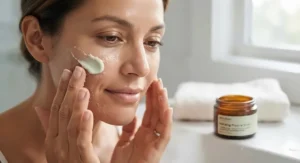
6. MY Konjac Sponge (French Red Clay) — plant-fibre sponge formulated specifically for dry or mature skin
The standout feature is the fibre itself: konjac sponges are made from the root of the konjac plant, and when saturated with water they turn remarkably soft — softer than almost any washcloth — while still providing genuine mechanical exfoliation through the fibre’s natural texture. This particular version is infused with French red clay, which is traditionally used for its mineral content and gentle absorbency rather than any additional grit, and the brand specifically markets this clay blend for dry or mature skin rather than its oilier, charcoal-infused counterpart. Because the sponge is essentially all fibre with no added beads, it’s one of the few facial exfoliation tools genuinely safe for daily use on thin, dry, or easily irritated skin, including around the eye area where most scrubs are a hard no. What most buyers overlook is that the sponge needs to be fully rehydrated in warm water for several minutes before each use — used dry or under-soaked, it loses most of its softness and can feel scratchy instead of gentle. Aggregated reviews consistently praise the “cloud-like” texture once soaked and the noticeable softness improvement after a few weeks of use, with the most common complaint being that the sponge develops mold if not hung to fully air-dry between uses.
Pros:
- ✅ Ultra-soft fibre safe for daily use on thin, dry skin
- ✅ French red clay formula specifically suited to dry or mature skin
- ✅ Fully natural, biodegradable, and free of added chemical irritants
Cons:
- ❌ Needs proper soaking and air-drying or it degrades quickly
- ❌ Typically needs replacing every 1-2 months with regular use
Priced around C$10-C$14, MY Konjac Sponge is the best low-cost entry point for anyone who wants facial exfoliation without any risk of over-scrubbing.
7. Fresh Sugar Face Polish — fine sugar crystals suspended in strawberry extract and nourishing oils
The standout feature is the sugar itself: unlike salt or synthetic beads, sugar crystals dissolve slightly as they’re worked into damp skin, which naturally softens the exfoliation as you massage rather than staying uniformly abrasive the whole time. The formula combines finely milled sugar with strawberry and rice extracts plus a blend of nourishing oils, positioning it specifically as a gentle, hydrating facial exfoliant rather than a resurfacing treatment. Based on the ingredient list and the self-softening nature of sugar as an abrasive, this reads as one of the more genuinely low-risk mechanical exfoliants for a dry, sensitive face, which is a large part of why it’s held its place as a bestseller in the facial exfoliant category for years across multiple retailers. Aggregated review sentiment is strongly positive on texture and finish, with reviewers repeatedly describing skin as “instantly softer” without the tightness that follows harsher facial scrubs, though the recurring criticism is squarely about price relative to how little product the jar actually contains.
Pros:
- ✅ Self-softening sugar texture is genuinely low-risk for dry skin
- ✅ Nourishing oil blend leaves skin hydrated, not stripped
- ✅ Long-standing bestseller with a large, consistent review base
Cons:
- ❌ Premium price for a relatively small amount of product
- ❌ Travel size (30 g) depletes quickly with regular use
Full-size jars run around C$58-C$65, with a smaller 30 g size around C$26-C$30 — Fresh Sugar Face Polish is a genuine splurge, but the honest verdict is that the gentleness justifies the price if your face reacts badly to nearly everything else on this list.
What Is a Physical Exfoliator?
A physical exfoliator is any product or tool that removes dead skin cells through direct friction — scrubs with beads or sugar, brushes, cloths, or sponges — rather than through acids or enzymes that dissolve cell bonds chemically. For dry skin specifically, the safest physical exfoliators use fine, self-softening, or fibre-based textures instead of sharp or coarse granules that can micro-tear an already fragile barrier.
That distinction between “fine” and “coarse” is doing most of the work when it comes to whether a physical exfoliator for dry skin helps or hurts. Sharp-edged particles (some older walnut-shell or apricot-pit scrubs) create microscopic tears under a microscope even when they feel smooth to the touch, while rounded beads, dissolving sugar, or soft fibres like konjac work through blunt friction that lifts cells without cutting them. This is also where a physical exfoliator with moisturiser built in earns its keep: products like the Dove Exfoliating Body Polish and Aveeno Tone + Texture Renewing Body Scrub are formulated so the same motion that exfoliates is simultaneously redepositing lipids, which meaningfully reduces the net stripping effect compared to a bare sugar-and-oil scrub rinsed off with nothing left behind.
Gentle Abrasives vs Built-In Moisture: The Features That Actually Matter
Two features separate a genuinely dry-skin-safe physical exfoliator from one that just claims to be gentle on the label, and it’s worth understanding both before you buy anything.
Gentle abrasives, explained. Not all exfoliating particles are created equal, and the raw material matters more than the marketing copy. Fine polyethylene-free beads, dissolving sugar crystals, colloidal oatmeal, and konjac fibre all count as gentle abrasives because their edges are rounded or they soften on contact with water. Coarser materials — cane sugar crystals at full size, sea salt, or stiff synthetic bristles — provide more mechanical lift but come with a real trade-off in irritation risk on thin or already-compromised skin. The table below breaks down common abrasive types by where they land on that spectrum.
| Abrasive Type | Grit Level | Best Suited To | Example From This List |
|---|---|---|---|
| Colloidal oatmeal | Very fine | Face and body, sensitive/eczema-prone skin | Dove Exfoliating Body Polish |
| Fine cream-suspended beads | Fine | Everyday body use | Aveeno Tone + Texture Renewing Body Scrub |
| Dissolving sugar crystals | Fine, softens on contact | Facial skin, dry and reactive | Fresh Sugar Face Polish |
| Cane sugar crystals (full-size) | Medium-coarse | Rough patches: elbows, heels, knees | Tree Hut Shea Sugar Body Scrub |
| Konjac plant fibre | Ultra-fine, soft when wet | Daily facial use, thin or mature skin | MY Konjac Sponge |
| Woven nylon fabric | Adjustable by pressure | Full body, technique-dependent | Salux Nylon Japanese Beauty Cloth |
| Synthetic bristle | Firm, texture-dependent | Less sensitive body zones only | EcoTools Dry Body Brush |
Reading this table against your own skin is more useful than reading any single product review in isolation: if your skin is flaking, cracked, or visibly irritated right now, stay in the top three rows regardless of price point, and save coarser options for maintenance once the barrier has calmed down.
Physical exfoliators with moisturiser built in. Cream-based scrubs like Dove Exfoliating Body Polish and Aveeno Tone + Texture Renewing Body Scrub suspend their exfoliating particles in an emollient or humectant base, so the same pass that lifts dead skin is also leaving behind oils or niacinamide rather than rinsing clean. For dry skin, this is close to a strict upgrade over a bare scrub-then-moisturize routine, because there’s less of a window between exfoliation and reapplying moisture where the barrier sits exposed. The honest caveat is that these formulas exfoliate more gently as a direct trade-off — you’re not going to resurface genuinely rough heels with a built-in-moisturizer cream scrub the way you would with something like Tree Hut Shea Sugar Body Scrub.
🧴 Not sure which grit level fits your skin? Scroll back up to the comparison table and match your current skin condition to the right row before you buy.
Physical Exfoliator vs Chemical Exfoliator for Dry Skin
This is the comparison most people searching for a physical exfoliator for dry skin actually need answered before anything else, because the two categories work through completely different mechanisms and aren’t always interchangeable.
| Factor | Physical Exfoliator | Chemical Exfoliator |
|---|---|---|
| Mechanism | Friction removes dead cells directly | Acids/enzymes dissolve cell bonds |
| Speed of visible result | Immediate smoothness after one use | Gradual, over days to weeks |
| Irritation risk on dry skin | Higher if grit is coarse or overused | Lower with correct concentration, but can sting on broken skin |
| Control over intensity | High — pressure and grit are adjustable in real time | Lower — reaction depends on formula strength and skin absorption |
| Best for | Immediate texture improvement, targeted rough patches | Gradual barrier-friendly resurfacing, sensitive full-face use |
Based on this comparison, the honest takeaway for dry skin is that physical exfoliation gives you more real-time control (you can literally feel and adjust pressure as you go), while chemical exfoliation is generally gentler for consistent full-face use because it doesn’t rely on your own hand pressure to stay within a safe range. Many dermatologists recommend combining both at low frequency rather than choosing one exclusively — for example, a gentle physical exfoliator for dry skin like the MY Konjac Sponge once or twice a week alongside an occasional mild chemical exfoliant, rather than either method used daily. If you’re only picking one to start with, physical exfoliation is the easier method to self-correct in the moment: if it stings, you stop immediately, whereas a chemical exfoliant’s effects can continue developing after you’ve rinsed it off.
How to Choose a Gentle Manual Exfoliator for Dry Skin
Picking the right gentle manual exfoliator for dry skin comes down to matching texture, frequency, and body zone rather than chasing whichever product has the most five-star reviews. Here’s the order of priority worth working through:
- Identify your actual skin state first. Actively flaking, cracked, or red skin needs the gentlest possible option — colloidal oatmeal or konjac fibre — regardless of how tempting a stronger scrub looks.
- Match grit to body zone, not to your whole body at once. Coarser sugar or bristle brushes belong on elbows, heels, and knees; fine cream scrubs or sponges belong on the face, chest, and inner arms.
- Check whether moisture is built in or separate. A physical exfoliator with moisturiser built in reduces the number of steps and the exposure window before you reapply lotion.
- Consider your water hardness and climate. Harder water and low-humidity Canadian winters both increase how much residual moisture your skin loses after any scrub, so err gentler in January than in July.
- Factor in how often you’ll realistically use it. A tool like the Salux Nylon Japanese Beauty Cloth that fits into a daily shower will do more for dry skin over a month than an intense scrub used once and abandoned.
- Read the ingredient list, not just the front label. “Gentle” and “sensitive skin” are unregulated marketing terms; colloidal oatmeal, niacinamide, and fine or self-softening particles are the actual signals worth trusting.
- Budget for a moisturizer to follow immediately. No physical exfoliator, however gentle, should be the last step in a dry-skin routine — a barrier-repairing cream applied within minutes closes the loop.
Soft Bead Face Exfoliators in Canada: What Sets Them Apart
Facial skin is thinner and generally drier than body skin, particularly through Canadian winters when indoor heating strips ambient humidity, which is exactly why soft bead face exfoliators in Canada tend to use a narrower, gentler range of ingredients than body scrubs sold at the same stores. Both facial picks on this list, Fresh Sugar Face Polish and the MY Konjac Sponge, avoid sharp or irregularly shaped particles entirely — one uses self-softening sugar, the other uses soft plant fibre — and neither is marketed or formulated for use anywhere on the body.
The practical difference shows up in how these products are sold and priced in the Canadian market specifically: facial exfoliants tend to come in much smaller quantities (30-60 g versus 300-500 g for body scrubs) because so little product is needed per use, which is part of why the per-gram price looks steep at first glance. It’s also worth knowing that Canadian retailers and Health Canada’s cosmetic labelling rules require ingredient lists on all sold formulas, so checking the INCI list on the back of any “soft bead” facial product before buying is a legitimate way to verify the gentleness claims on the front, rather than taking marketing language at face value. When shoppers search for a soft bead face exfoliator Canada retailers actually stock, this ingredient-list check is exactly the shortcut worth using before checkout.
Common Mistakes When Choosing and Using a Physical Exfoliator on Dry Skin
Even a genuinely gentle product can cause damage if it’s used the wrong way, and the mistakes below account for most of the “exfoliation made my skin worse” complaints found across retailer reviews and skincare forums.
Choosing based on scent or packaging instead of particle type. A scrub can smell incredible and still contain sharp-edged sugar or walnut particles unsuited to compromised skin — always check texture and ingredient list, not just the marketing copy or fragrance notes.
Exfoliating actively broken or cracked skin. Any visible cracking, especially on hands or heels in winter, means the barrier is already compromised; physical exfoliation at that point delays healing rather than helping, according to guidance from the Canadian Dermatology Association on dry skin.
Using body-strength grit on facial skin. This is the single most common mistake on this list’s product category — reaching for Tree Hut Shea Sugar Body Scrub or similar coarse sugar scrubs on the face, where skin is roughly 25% thinner than on the body.
Skipping moisturizer immediately after. Exfoliation temporarily thins the outermost skin layer; leaving that window unmoisturized for more than a few minutes accelerates water loss rather than the exfoliation itself causing the dryness.
Over-exfoliating out of impatience. More frequent use doesn’t compound benefits the way people assume — for dry skin, most dermatologists suggest capping mechanical exfoliation at two to three sessions per week even with the gentlest tools, since dead skin turnover simply doesn’t happen fast enough to justify daily aggressive scrubbing.
Protecting Your Moisture Barrier While You Exfoliate
The skin’s moisture barrier — technically the stratum corneum, the outermost layer made of skin cells held together by lipids — is what keeps water in and irritants out, and it’s also exactly what’s disrupted, even temporarily, by any form of exfoliation. Understanding this trade-off is the difference between exfoliating strategically and exfoliating recklessly on already-dry skin.
What the spec sheet won’t tell you is that barrier disruption isn’t inherently bad — it’s actually part of why exfoliation improves how well subsequent moisturizers absorb — the problem only arises when disruption outpaces repair. That’s a timing and frequency issue more than a product issue: even the gentlest tool on this list, the MY Konjac Sponge, can become a barrier problem if used aggressively multiple times a day. Peer-reviewed research on skin barrier repair mechanisms consistently points to lipid replenishment as the critical follow-up step, which is precisely why pairing any physical exfoliator with an occlusive or humectant moisturizer immediately afterward — not hours later — matters more than which specific scrub you chose.
A few concrete signs your moisture barrier needs a break from exfoliation entirely: persistent redness that doesn’t fade within an hour of use, a stinging or burning sensation with products that previously felt fine, visible flaking that worsens rather than improves over a week, or skin that feels tight and uncomfortable almost immediately after moisturizing. Any of those signals mean switching to plain moisturizer only for one to two weeks before reintroducing the gentlest option on this list, typically colloidal oatmeal or konjac fibre, at reduced frequency.
How to Use a Physical Exfoliator on Dry Skin Without Overdoing It
Getting the technique right matters as much as picking the right product, and this is where most of the real damage-versus-benefit difference actually happens.
Start with damp, not soaking-wet, skin — product adheres better and the exfoliating action is more controlled than on fully saturated skin at the end of a long shower. Apply with light, circular motions using only the pressure of your fingertips, never scrubbing with your palm or pressing a brush hard enough to leave visible marks; if you can see pink lines immediately after rinsing, that’s too much pressure, not too little product. Limit any single session to 30-60 seconds per body zone — dead skin cells lift quickly, and additional scrubbing time past that point is adding irritation risk without adding benefit. Rinse thoroughly with lukewarm, not hot, water, since hot water independently strips lipids and compounds whatever the scrub itself already removed. Pat, don’t rub, dry with a towel, then apply a barrier-repairing moisturizer within two to three minutes while skin is still slightly damp, which helps lock in more moisture than applying to fully dry skin. For the first two weeks with any new physical exfoliator, cap use at once weekly regardless of how gentle the product claims to be, then increase gradually to two or three times weekly only if skin shows no redness, tightness, or flaking increase.
Real-World Scenarios: Matching the Right Gentle Exfoliator to Your Dry Skin
The winter-cracked hands and shins scenario. If you’re dealing with visibly cracked skin on hands or shins by January, skip exfoliation entirely on active cracks and start with the Dove Exfoliating Body Polish on surrounding, intact skin only, twice weekly, paired with a thick occlusive moisturizer after every hand wash. Once cracking has healed, the Tree Hut Shea Sugar Body Scrub on shins alone, once weekly, helps prevent the buildup that led to cracking in the first place.
The dry, dull, flaky-around-the-nose face scenario. If foundation or moisturizer is clinging to flaky patches around the nose and mouth, the MY Konjac Sponge used daily with a gentle cleanser addresses the immediate flaking without the risk profile of a sugar or bead scrub on already-thin facial skin, and it’s gentle enough to use around the eyes where flaking is often worst.
The budget-conscious, whole-body dry skin scenario. If the goal is a full routine without spending much, the Salux Nylon Japanese Beauty Cloth covers daily gentle exfoliation everywhere from face to feet for under C$10, with the Dove Exfoliating Body Polish added twice weekly for zones needing extra attention — a combination that costs less over a year than a single jar of Fresh Sugar Face Polish.
Dry Skin Flaking? A Problem → Solution Guide
Dry skin flaking is the specific complaint that drives most people to search for a physical exfoliator in the first place, and it usually has one of a few identifiable causes worth matching to the right fix rather than reaching for whatever scrub is on sale.
Problem: Visible white flakes that reappear within days of moisturizing. This pattern usually means the barrier is shedding cells faster than moisture is being replenished. Solution: switch to the gentlest exfoliant on this list, the MY Konjac Sponge or Dove Exfoliating Body Polish, used at reduced frequency, and layer a humectant serum under your regular moisturizer rather than relying on the moisturizer alone.
Problem: Flaking concentrated on specific rough zones (elbows, knees, heels). This is typically simple buildup rather than barrier damage, and it responds well to a coarser tool. Solution: Tree Hut Shea Sugar Body Scrub or the EcoTools Dry Body Brush, used once or twice weekly specifically on those zones, followed immediately by a thick balm.
Problem: Flaking that worsens after exfoliating rather than improving. This is the clearest sign of over-exfoliation or too-coarse a product for current skin condition. Solution: stop all mechanical exfoliation for one to two weeks, moisturize only, then reintroduce with the Salux Nylon Japanese Beauty Cloth at its lightest pressure setting once weekly.
Problem: Facial flaking that makes makeup or sunscreen look patchy. Solution: the Fresh Sugar Face Polish two to three times weekly, focused only on flaky zones rather than the whole face, followed by a hydrating primer or moisturizer before makeup application.
Long-Term Cost & Maintenance of Manual Exfoliation Tools
Cost-per-use tells a very different story than sticker price on this list, and it’s worth running the numbers before assuming the cheapest option is actually the best value over a year of regular use.
Consumable scrubs like Aveeno Tone + Texture Renewing Body Scrub, Tree Hut Shea Sugar Body Scrub, and Dove Exfoliating Body Polish get used up and repurchased every one to three months depending on frequency, meaning their real annual cost is closer to C$40-C$70 depending on how often you exfoliate. Reusable tools like the Salux Nylon Japanese Beauty Cloth and EcoTools Dry Body Brush have a much lower long-term cost — a single Salux cloth typically lasts three to six months of daily use before the weave loosens, putting its effective annual cost around C$12-C$18, while the EcoTools brush, if kept clean and dry between uses, can last a year or more. The MY Konjac Sponge sits in between: it’s reusable but degrades faster than a nylon cloth, typically needing replacement every one to two months, bringing its annual cost to roughly C$60-C$120 depending on use frequency. Fresh Sugar Face Polish is the clear premium outlier — a single 125 mL jar used two to three times weekly for facial-only application can still last four to six months, which actually narrows the gap with cheaper daily body scrubs more than the sticker price suggests, though it remains the most expensive option on this list by a wide margin in absolute terms.
The maintenance side matters just as much as replacement cost. Tools that touch wet skin — the Salux Nylon Japanese Beauty Cloth, MY Konjac Sponge, and EcoTools Dry Body Brush — all need to be hung to fully air-dry between uses rather than left balled up in a damp shower corner, since retained moisture is the single biggest driver of bacterial and mold growth in reusable exfoliation tools. A quick monthly rinse in diluted vinegar or a gentle antibacterial soap extends the usable life of all three meaningfully, which is a small habit that changes the long-term cost math in the reusable tools’ favour.
Independent commentary on the beauty industry more broadly backs up a broader point worth keeping in mind here: as one CBC radio explainer on cosmetics spending notes, dermatologists consistently argue that Canadians spend far more on skincare products than is actually necessary for good skin outcomes — a useful reminder that a C$9 Dove Exfoliating Body Polish used consistently will typically outperform an expensive product used sporadically.

Frequently Asked Questions
❓ What is the best physical exfoliator for dry skin in Canada?
❓ Are physical exfoliators bad for dry skin?
❓ How often should you use a physical exfoliator on dry skin?
❓ Physical or chemical exfoliator — which is better for dry, flaking skin?
❓ Can you use a body scrub on your face if you have dry skin?
Conclusion
The right physical exfoliator for dry skin isn’t the one with the biggest granules or the prettiest packaging — it’s the one whose texture actually matches your skin’s current condition, used at a frequency your barrier can keep up with. Across the seven products here, the pattern holds: colloidal oatmeal, fine cream-suspended beads, konjac fibre, and self-softening sugar consistently outperform coarse grit for anyone dealing with flaking, tightness, or visible dryness, while coarser options like Tree Hut Shea Sugar Body Scrub and the EcoTools Dry Body Brush still earn a place for genuinely rough zones like heels and elbows.
If there’s one habit worth taking away from this guide, it’s pairing whichever product you choose with an immediate moisturizer application and capping frequency at two to three times weekly rather than daily, regardless of how gentle the label claims to be. Start with the gentlest option that matches your current skin state — the Salux Nylon Japanese Beauty Cloth or MY Konjac Sponge if you’re at all uncertain — and only move toward coarser tools once your skin has shown a few weeks of consistent, irritation-free tolerance.
Recommended for You
- 7 Best Chemical Exfoliators for Sensitive Skin Canada 2026
- Lactic Acid Exfoliator for Aging Skin: 7 Gentle Picks (2026)
- 7 Best Salicylic Acid Exfoliants for Oily Skin in 2026
Disclaimer: This article contains affiliate links. As an Amazon Associate, I earn from qualifying purchases. If you purchase products through these links, we may earn a small commission at no additional cost to you.
✨ Found this helpful? Share it with your friends! 💬🤗
