

In This Article
A chemical exfoliator for sensitive skin is a leave-on or rinse-off formula that uses mild acids or enzymes, rather than gritty scrub particles, to loosen dead skin cells while minimizing redness, stinging, or barrier damage. That single sentence sounds simple, but if you’ve ever slathered on a glycolic peel and watched your cheeks turn the colour of a stop sign twenty minutes later, you know the gap between “gentle” on a label and gentle on your actual face can be enormous.
Sensitive skin is not a niche complaint in Canada. Between the dry indoor heat that runs from October through April and the wide swings in humidity most provinces see across the year, a huge share of Canadians report that their skin reacts to products that never used to bother them. According to the Canadian Dermatology Association, choosing skincare that’s been formulated and reviewed with sensitivity in mind matters more than chasing the strongest active on the shelf — a philosophy that shapes every recommendation in this guide.
This article walks through seven real, currently available products, compares them head-to-head on formulation and price, and then goes deeper than any Amazon listing will: how to introduce an acid without wrecking your barrier, what actually happens to reactive skin week by week, and where patch testing fits into all of it. Every product below ships with the affiliate disclosure required by the Amazon.ca Associates Program, and every price is shown as a range in Canadian dollars rather than a fixed number, since retail pricing shifts constantly.
Quick Comparison Table: Chemical Exfoliators for Sensitive Skin at a Glance
| Product | Active Ingredient | Texture | Best For |
|---|---|---|---|
| The Ordinary Mandelic Acid 10% + HA | Mandelic acid (large molecule AHA) | Leave-on serum | First-time exfoliators on a budget |
| The Ordinary Lactic Acid 5% + HA | Lactic acid 5% | Leave-on serum | Dry, dehydrated sensitive skin |
| Naturium BHA Liquid Exfoliant 2% | Encapsulated salicylic acid | Leave-on liquid | Slow-release comfort, oily-sensitive |
| COSRX AHA/BHA Clarifying Treatment Toner | Betaine salicylate + glycolic blend | Low-pH toner | Daily-use maintenance step |
| Paula’s Choice Skin Perfecting 2% BHA Liquid Exfoliant | Salicylic acid 2% | Leave-on liquid | Texture, congestion, fine lines |
| First Aid Beauty Facial Radiance Pads | Glycolic + lactic acid blend | Pre-soaked pads | Reactive, barrier-compromised skin |
| Kate Somerville ExfoliKate Gentle Exfoliating Treatment | Fruit enzymes + low-dose AHA/BHA | Rinse-off treatment | Occasional-use splurge |
Looking across this table, a pattern emerges quickly: the gentlest options for sensitive skin tend to use either a lower percentage of acid, a larger acid molecule like mandelic acid, an encapsulated delivery system, or a rinse-off format that limits contact time. None of these seven products relies on a rough physical scrub, which matters because mechanical friction is one of the fastest ways to trigger reactive, easily-inflamed skin. Price and format vary widely, so the right pick often comes down to whether you want a leave-on serum you control the dose of, or a pre-measured pad or toner that takes the guesswork out.
💬 Just one click — help others make better buying decisions too!😊
Top 7 Chemical Exfoliators for Sensitive Skin: Expert Analysis
1. The Ordinary Mandelic Acid 10% + HA — gentlest bestseller for budget-conscious beginners
The standout here is molecule size: mandelic acid has a larger molecular structure than glycolic or lactic acid, which slows how quickly it penetrates the skin. That single chemistry fact is why so many estheticians point nervous first-timers toward this bottle. The formula pairs 10% mandelic acid with hyaluronic acid and a humectant complex, sitting at a pH low enough to exfoliate but buffered enough that most people don’t feel an intense sting on application. Based on the spec comparison with the brand’s own glycolic and lactic lines, this is consistently the mildest AHA option The Ordinary sells, and it’s fragrance-free and alcohol-free, both of which matter for reactive skin types. Who should reach for it: anyone brand new to acids, anyone with post-inflammatory hyperpigmentation who wants gentle cell turnover without triggering more redness, and budget shoppers who don’t want to gamble C$50+ on a first try. Reviewers consistently report a mild tingle rather than burning on first use, gradual improvement in texture and tone over four to six weeks, and a slightly tacky finish that some prefer to layer a moisturizer over rather than wear alone. A common complaint in user reviews is that results take longer to show than with stronger acids — which is, frankly, the entire point for sensitive skin.
Pros:
- ✅ Large acid molecule slows penetration for less irritation
- ✅ Fragrance-free, alcohol-free, and budget-friendly at 30 mL
- ✅ Widely available and easy to patch test cheaply
Cons:
- ❌ Slower visible results than stronger AHAs
- ❌ Sticky finish that some skin types dislike layering under
At the time of research, this sits in the mid-C$10s range for a 30 mL bottle, making it one of the lowest-risk ways to test whether your skin tolerates chemical exfoliation at all. Check current price before buying, since Deciem’s pricing shifts periodically.
2. The Ordinary Lactic Acid 5% + HA — humectant-rich pick for first-time exfoliators
The Ordinary Lactic Acid 5% + HA leads with hydration alongside exfoliation, which is exactly what dry, sensitive skin usually needs. Lactic acid is itself a humectant, meaning it draws moisture into the skin even as it dissolves the bonds holding dead cells on the surface — a dual action that glycolic acid, by comparison, doesn’t offer to the same degree. The 5% concentration is the lowest strength in this line (the brand also sells 10% and 30% versions for more tolerant skin), and it’s formulated with tasmanian pepperberry, an ingredient The Ordinary specifically added to reduce the irritation potential of its acid line. What most buyers overlook about this product is that the “HA” isn’t just there for hype: hyaluronic acid helps offset the transient dryness that any exfoliating acid can cause during the adjustment period. This makes it a strong match for anyone whose sensitivity shows up as tightness and flaking rather than redness and burning. Aggregated review sentiment across retailer and blog reviews points to a genuinely low irritation rate at this 5% strength, with most negative feedback coming from people who sized up to the 10% version too quickly rather than from the 5% itself.
Pros:
- ✅ Lowest-strength lactic acid formula in the line, very forgiving
- ✅ Built-in hydration reduces post-exfoliation tightness
- ✅ Tasmanian pepperberry added specifically to calm irritation
Cons:
- ❌ Noticeably slower results than higher-percentage lactic formulas
- ❌ Some users find the texture slightly tacky under makeup
Priced in a similar mid-C$10s bracket to the mandelic version, this is an easy add-on for anyone who wants to compare how their skin responds to lactic versus mandelic acid before committing to a pricier option.
3. Naturium BHA Liquid Exfoliant 2% — encapsulated salicylic acid for slow-release comfort
Naturium’s standout engineering choice is encapsulation: instead of delivering all 2% salicylic acid on contact, the formula uses a time-released delivery system that slows absorption. In practice, that means less of the sharp, immediate sting some BHA products cause on freshly cleansed skin. The formula also blends in PHA (gluconolactone) and willow bark extract, both of which add a secondary, gentler layer of exfoliation and mild antioxidant support. Based on the ingredient list, this reads as a formula deliberately engineered to bridge the gap between “does something” and “won’t provoke a reactive flare,” which is a genuinely useful middle ground for sensitive-but-oily or sensitive-but-congested skin types that plain hydrating acids don’t fully address. It’s fragrance-free and alcohol-free, two non-negotiables for anyone shopping this category with reactive skin. Reviewers frequently mention that this feels noticeably gentler than the brand’s non-encapsulated salicylic competitors, though a subset of users with very low BHA tolerance still report mild dryness with daily use, which is why most guidance suggests starting at two to three times a week.
Pros:
- ✅ Encapsulated salicylic acid slows release for less sting
- ✅ PHA and willow bark add gentle secondary exfoliation
- ✅ Fragrance-free, alcohol-free, vegan formula
Cons:
- ❌ Slower onset means less dramatic short-term results
- ❌ Still too active for daily use on very reactive skin
At the time of research, a 120 mL bottle typically falls in the mid-C$20s range, positioning it as a mid-tier value pick between The Ordinary’s budget lineup and pricier salicylic serums.
4. COSRX AHA/BHA Clarifying Treatment Toner — low-pH toner-step for daily use
What sets this toner apart is its blend of betaine salicylate, a gentler derivative of salicylic acid, alongside a low percentage of glycolic acid, formulated at a low pH that’s still buffered enough for regular use. Betaine salicylate is chemically related to standard salicylic acid but tends to be better tolerated, which is why Korean skincare formulators lean on it in daily-use toners rather than reserving it for weekly treatments. Here’s what to weigh: because this is a toner rather than a concentrated serum, the active percentage per application is lower, which trades some potency for a wider safety margin — a sensible trade for anyone building a routine around consistency rather than intensity. The formula is fragrance-free and includes botanical extracts like tea tree, licorice root, and burdock root, which read as soothing-adjacent ingredients rather than actives, though sensitive skin should still patch test given the extract blend. Aggregated reviewer feedback consistently highlights the lightweight, non-drying finish as the standout feature, with occasional reports of mild tingling immediately after application that fades within a minute.
Pros:
- ✅ Gentle betaine salicylate derivative, well-suited to daily use
- ✅ Lightweight, non-drying finish reported across reviews
- ✅ Fragrance-free with soothing botanical extracts
Cons:
- ❌ Botanical extract blend still warrants a patch test
- ❌ Lower active concentration than dedicated leave-on serums
This 150 mL toner generally sits in the low-to-mid-C$20s range, making it one of the more affordable daily-use options in this roundup.
5. Paula’s Choice Skin Perfecting 2% BHA Liquid Exfoliant — dermatologist-favourite pore refiner
The standout feature of this liquid exfoliant is oil solubility: salicylic acid can penetrate into the pore lining itself, not just the skin’s surface, which is why it’s the go-to acid for texture and congestion in a way lactic or mandelic acid generally isn’t. At 2% concentration, this sits at what’s widely considered the therapeutic sweet spot for salicylic acid — strong enough to work, without needing a prescription-strength percentage. Based on the spec comparison with drugstore salicylic toners, the fragrance-free, alcohol-free formulation here is a deliberate differentiator; Paula’s Choice has built its reputation partly on removing fragrance and other common irritants that show up in cheaper BHA products. What the spec sheet won’t tell you, but reviewer patterns suggest, is that this product performs noticeably better on blackheads and enlarged pores than on generalized redness, so anyone whose sensitivity centres on reactive flushing rather than congestion may get more mileage from a hydrating AHA instead. It’s one of the more frequently recommended over-the-counter exfoliants among skincare professionals, largely because the formulation choices minimize common irritant triggers while keeping the actual active ingredient at an effective dose.
Pros:
- ✅ Oil-soluble salicylic acid clears congestion inside pores
- ✅ Fragrance-free, alcohol-free formulation reduces common triggers
- ✅ Frequently cited among dermatologist-recommended BHA options
Cons:
- ❌ Less effective for pure redness-type sensitivity than for congestion
- ❌ Premium pricing compared to drugstore BHA alternatives
A 118 mL bottle typically runs in the C$45-C$55 range at the time of research, with a smaller 30 mL size available at a lower price point for anyone testing tolerance first.
6. First Aid Beauty Facial Radiance Pads — pre-soaked pads for sensitized, reactive skin
The advantage of a pre-soaked pad format is dose control: each pad delivers a consistent, pre-measured amount of glycolic and lactic acid, which removes the guesswork of pouring the “right” number of drops that leave-on serums require. First Aid Beauty built its entire brand identity around sensitive and reactive skin, and it shows in the formulation — this is fragrance-free, dermatologist-tested, and includes allantoin, an ingredient specifically chosen for its calming properties rather than any exfoliating function. Based on the ingredient list, the AHA blend here sits at a moderate strength, positioned between the gentlest options in this roundup and more aggressive glycolic treatments, making it a reasonable middle step for someone who has already tolerated a lower-strength product and wants to progress carefully. Reviewers consistently note that the pads feel soothing rather than stinging on application, and several mention using them as a maintenance step two to three times weekly rather than daily, which aligns with general guidance for sensitive skin. A common theme in feedback is appreciation for the compostable pad material as a secondary, non-performance-related benefit.
Pros:
- ✅ Pre-measured dosing removes guesswork for beginners
- ✅ Allantoin included specifically for its calming effect
- ✅ Fragrance-free and dermatologist-tested formulation
Cons:
- ❌ Pricier per-use than leave-on serum alternatives
- ❌ Single-use pads generate more packaging waste
At the time of research, a 28-count package generally falls in the C$45-C$55 range, putting it near the top of the mid-tier bracket in this comparison.
7. Kate Somerville ExfoliKate Gentle Exfoliating Treatment — splurge-worthy enzyme-acid hybrid
This is the one splurge pick in the lineup, and the standout feature is its hybrid approach: rather than relying on acid alone, it combines fruit enzymes with a lower-dose AHA/BHA blend than the brand’s original Intensive formula, which was never marketed toward sensitive skin in the first place. Enzymes work by breaking down keratin protein on the skin’s surface through a different mechanical pathway than acids, and blending the two allows the formula to deliver visible smoothing at a gentler overall acid concentration. Based on the spec comparison with the original ExfoliKate, this “Gentle” version is a genuine reformulation rather than a marketing relabel, with a meaningfully lower active percentage designed for more frequent, lower-intensity use. It’s a rinse-off treatment rather than a leave-on, which further limits contact time and gives sensitive skin an added safety margin. What most buyers overlook is that a rinse-off format like this one lets you control exposure precisely by timing how long it sits before washing off, something leave-on serums don’t offer. Reviewer feedback trends positive on smoothness and glow immediately after use, with occasional reports of mild warmth or tingling during the few minutes it’s left on, which fades on rinsing.
Pros:
- ✅ Enzyme-acid hybrid delivers results at lower acid concentration
- ✅ Rinse-off format limits contact time for added safety margin
- ✅ Reformulated specifically for sensitive, reactive skin types
Cons:
- ❌ Premium price point relative to daily-use alternatives
- ❌ Best suited to occasional rather than daily use
Expect to pay in the C$85-C$95 range for this treatment at the time of research — a meaningful jump from the rest of this list, but one that reflects both the brand positioning and the rinse-off dosing control built into the formula.
Your First 30 Days: A Practical Introduction Guide
Starting a new chemical exfoliator for sensitive skin is where most of the damage in this category actually happens — not from a bad product, but from a good product used too aggressively, too soon. Week one should be about establishing a baseline: apply your chosen exfoliant just once, at night, on fully dry skin, and skip it the following night regardless of how your skin looks the next morning. This isn’t overly cautious; it’s how you separate a normal, mild tingle from an early sign of overuse before it becomes visible irritation. Weeks two and three are where you can increase to every other night if the first week went smoothly, watching specifically for prolonged redness lasting more than twenty minutes, tightness that doesn’t resolve with moisturizer, or any flaking beyond light, fine texture. A common mistake in the first thirty days is introducing a new moisturizer or serum at the same time as the exfoliant, which makes it impossible to identify what’s actually causing a reaction if one occurs. Keep everything else in your routine unchanged during this window. By day thirty, most sensitive skin types on a well-matched, low-strength product like mandelic or 5% lactic acid can tolerate three to four uses per week, always followed by a fragrance-free moisturizer and, the next morning, broad-spectrum sunscreen, since every acid in this article increases sun sensitivity to some degree.
Real-World Scenarios: Matching the Right Exfoliant to Your Skin Story
Consider three different readers working through this guide. The first is a 24-year-old who has never used an acid before, has mild congestion but no redness, and wants something forgiving to start with on a student budget — The Ordinary Mandelic Acid 10% + HA fits cleanly here, since the large molecule size and low price make it a genuinely low-risk entry point. The second is someone in their late thirties managing rosacea-adjacent flushing who wants smoother texture without triggering a flare; for this profile, First Aid Beauty Facial Radiance Pads or the rinse-off Kate Somerville ExfoliKate Gentle Exfoliating Treatment make more sense than any leave-on serum, since both offer built-in dose control and calming ingredients rather than an open-ended concentration the user has to self-regulate. The third is a 30-something with combination skin, occasional congestion around the nose and chin, and a moderate tolerance already built up from a mild retinoid — Naturium BHA Liquid Exfoliant 2% or Paula’s Choice Skin Perfecting 2% BHA Liquid Exfoliant both suit this profile well, with the encapsulated Naturium formula the gentler of the two starting points. None of these scenarios are prescriptive; they’re a starting framework. The core variable that should drive your choice isn’t how strong a product claims to be, it’s how your specific sensitivity presents — dryness and tightness call for lactic acid and hydration-forward formulas, while congestion and enlarged pores respond better to salicylic acid, and generalized reactivity does best with the lowest-contact-time, most buffered option you can find.
When Things Go Wrong: Troubleshooting Redness, Stinging, and Peeling
Even a well-matched chemical exfoliator for sensitive skin can cause problems if the surrounding routine isn’t right, and most issues fall into a handful of predictable categories with specific fixes. Persistent redness lasting more than an hour after application usually means the frequency is too high for your current tolerance — drop back to once or twice weekly rather than switching products entirely, since the active is likely fine and the schedule isn’t. Stinging on application that doesn’t fade within a minute or two often points to a compromised barrier, frequently from over-cleansing or layering too many actives at once; pausing all exfoliation for a week while using only a bland, fragrance-free moisturizer typically resolves this before you reintroduce the acid slowly. Visible flaking or peeling, especially around the mouth and nose, is a classic sign of using a leave-on serum like the lactic or mandelic acid options too frequently before the skin has adjusted — cutting back to every third night and adding a richer moisturizer on off-nights usually corrects it within one to two weeks. If you experience burning, swelling, or hives rather than mild tingling, stop the product immediately and don’t reintroduce it; that reaction pattern suggests a true sensitivity or allergy to a specific ingredient rather than simple acid intolerance, and it’s worth discussing with a healthcare provider if it recurs across multiple product categories.
How to Choose a Chemical Exfoliator for Sensitive Skin
Picking the right chemical exfoliator for sensitive skin comes down to matching formulation choices to how your specific sensitivity shows up, rather than picking whatever has the highest percentage on the label. Sensitive skin itself isn’t one uniform condition — research on self-declared sensitive skin prevalence suggests a substantial share of adults report some form of skin reactivity, and the underlying triggers vary widely from person to person, which is exactly why a one-size-fits-all recommendation doesn’t work in this category. Use this framework instead:
- Identify your sensitivity type first. Dryness and flaking respond best to lactic acid; congestion and enlarged pores respond best to salicylic acid; generalized flushing or reactivity does best with the lowest-concentration, shortest-contact-time option available.
- Choose acid type by molecule size. Mandelic acid’s larger molecule penetrates slower than glycolic acid, making it a safer starting point even at a higher listed percentage.
- Prioritize fragrance-free formulas. Added fragrance is one of the most common triggers for contact irritation, independent of the exfoliating acid itself.
- Check the delivery format. Rinse-off treatments and pre-dosed pads offer more built-in safety margin than leave-on serums, which put dosing control entirely in your hands.
- Start at the lowest available concentration. You can always increase strength later; reversing an irritated barrier takes weeks.
- Confirm sunscreen compatibility with your routine. Every acid in this category increases photosensitivity, so a broad-spectrum SPF isn’t optional.
- Patch test before full-face application, every time. Even a reformulated or “gentle” version of a product you’ve used before can behave differently on compromised skin.
Common Mistakes When Buying and Using Chemical Exfoliants
The single most common mistake is buying based on marketing language like “gentle” or “sensitive-skin-friendly” without checking the actual active ingredient and its percentage — those words aren’t regulated claims, and a “gentle” 10% glycolic peel can still be far more aggressive than an unmarketed 5% lactic acid serum. A close second is stacking multiple exfoliating steps in one routine, like a BHA toner followed by an AHA serum, which multiplies irritation risk without necessarily multiplying benefit. Skipping sunscreen the morning after exfoliating is another frequent error; acids thin the outermost layer of dead skin cells, leaving fresher skin more exposed to UV damage, and this risk doesn’t disappear just because your skin looks fine that day. Buyers also commonly increase frequency too quickly after a good first week, mistaking the absence of visible irritation for a green light to use the product daily rather than gradually working up to that frequency. Finally, many people abandon a well-matched product after a single mildly uncomfortable use rather than distinguishing normal adjustment tingling from an actual adverse reaction — the first week of any new acid, even a gentle one, often comes with some sensation that fades as your skin builds tolerance.
Chemical Exfoliation vs Physical Scrubs for Reactive Skin
| Factor | Chemical Exfoliation | Physical Scrubs |
|---|---|---|
| Mechanism | Dissolves bonds between dead skin cells | Mechanically abrades surface cells |
| Micro-tear risk | Low, when formulated and used correctly | Higher, especially with coarse particles |
| Even coverage | Consistent across the whole application area | Uneven, depends on pressure applied by hand |
| Best for reactive skin | Generally yes, with low-concentration formulas | Generally not recommended |
| Visible sensation | Mild tingling possible, no abrasion | Immediate friction and pressure |
For genuinely reactive skin, chemical exfoliation is almost always the safer starting point, and the reasoning comes down to consistency and control. A liquid, toner, or serum spreads evenly and dissolves cellular bonds at a predictable rate, while a physical scrub’s effectiveness depends entirely on how much pressure your hand applies in the moment, which is nearly impossible to standardize and easy to overdo on inflamed or thin skin. That said, physical exfoliation isn’t inherently bad for every skin type; it’s specifically the risk of micro-tears and uneven pressure that makes it a poor match once skin is already reactive, sensitized, or barrier-compromised. If you’ve relied on scrubs for years without issue and your skin has recently become more reactive, switching to one of the leave-on or rinse-off chemical options in this guide is usually the first change worth making.
What to Expect: Real-World Performance Week by Week
Translating spec sheets into a lived timeline helps set realistic expectations. In week one, expect subtle changes at most — skin may feel slightly smoother to the touch, but visible texture or tone improvements are rarely dramatic yet, and this is normal rather than a sign the product isn’t working. By weeks two to three, most users on a well-tolerated product notice a more even skin tone and reduced visible pore congestion, particularly with salicylic-based options like Naturium BHA Liquid Exfoliant 2% or Paula’s Choice Skin Perfecting 2% BHA Liquid Exfoliant. Weeks four through six is typically when hydrating AHA options like The Ordinary Lactic Acid 5% + HA show their clearest results, since lactic acid’s humectant properties compound over consistent use, gradually improving both texture and moisture retention. Beyond six weeks, most sensitive skin routines settle into a maintenance rhythm — three to four applications weekly for leave-on formulas, or two to three for stronger rinse-off treatments like Kate Somerville ExfoliKate Gentle Exfoliating Treatment — where the goal shifts from dramatic transformation to sustained, gradual upkeep. Patience matters more in this category than in almost any other corner of skincare, precisely because the lower concentrations that make these products safe for sensitive skin also make them slower.
Fragrance-Free Formulas: Why They Matter for Sensitive Skin
Fragrance is one of the most frequently reported triggers of contact irritation in skincare, and it’s worth understanding why a fragrance-free chemical exfoliator is treated as close to non-negotiable for reactive skin types in this category. Added fragrance, whether from a synthetic blend or a “natural” essential oil, introduces additional chemical compounds that have nothing to do with exfoliation and everything to do with scent — compounds your skin has to tolerate on top of whatever acid is already doing its job. When a product causes irritation, fragrance is difficult to rule out as the cause unless the formula excludes it entirely, which is exactly why every product recommended in this article is fragrance-free. Research into polyhydroxy acids and related gentle-exfoliation formulas has similarly found that minimizing additional irritant ingredients alongside the active acid produces comparable exfoliating benefits with a meaningfully lower irritation profile than heavier, more heavily fragranced formulations. If you’re shopping outside this list, checking the ingredient panel for “parfum,” “fragrance,” or specific essential oil names near the top of the list is one of the fastest ways to screen out products likely to cause problems, regardless of how gentle the marketing claims to be.

Chemical Exfoliant for Reactive Skin: Rosacea, Eczema, and Barrier Considerations
Reactive skin conditions like rosacea and eczema-prone skin add another layer of consideration beyond general sensitivity, since both involve a compromised or thinner skin barrier that’s more vulnerable to any active ingredient, not just fragrance. For rosacea-prone skin specifically, the goal with any chemical exfoliant for reactive skin is minimizing both concentration and contact time — which is why rinse-off formats and pre-dosed pads tend to outperform leave-on serums for this group, even when the underlying acid percentage looks similar on paper. Eczema-prone skin presents a different challenge: the barrier disruption common in eczema means acids can penetrate more deeply and unpredictably than they would on non-eczema skin, so timing exfoliation to periods when skin is calm rather than actively flaring is essential, and testing on a small, non-facial patch first becomes even more important than usual. Lactic acid tends to be the best-tolerated option across both conditions because of its humectant properties, while stronger acids and anything containing alcohol or fragrance should generally be avoided outright. If you have a diagnosed skin condition rather than general sensitivity, it’s worth discussing any new exfoliating acid with a dermatologist before adding it to your routine, since individual presentations vary enough that generic guidance can only go so far.
The Case for Patch Testing Every New Exfoliant
Patch testing is the single most effective, lowest-cost way to avoid a bad reaction, and yet it’s the step most commonly skipped, usually because a product seems “gentle enough” to trust from the label alone. The process itself takes almost no effort: apply a small amount of the new exfoliant to an inconspicuous area, like behind the ear or on the inner forearm, and wait 24 to 48 hours before applying it to your face, watching for redness, swelling, itching, or bumps that go beyond mild, brief tingling. This matters even for products marketed specifically toward sensitive skin, because “sensitive-skin-friendly” formulation reduces risk rather than eliminating it entirely — no product in this category is universally safe for every reactive skin type. Patch testing matters just as much when switching between two products with similar-sounding actives; a 2% salicylic acid liquid and a 2% salicylic acid toner can behave differently depending on the rest of their formulation, delivery system, and pH. Building patch testing into your routine as a default step, rather than something you only remember after a reaction, is the most reliable habit separating people who build a successful long-term exfoliation routine from those who end up with a drawer full of half-used bottles they gave up on after one bad week.
Low-Irritation Chemical Exfoliants Available in Canada: What to Check on the Label
Shopping for a low-irritation chemical exfoliant in Canada comes with a regulatory advantage worth knowing about: Health Canada maintains a Cosmetic Ingredient Hotlist that restricts or prohibits ingredients considered unsafe for use in cosmetics sold in Canada, including concentration limits on certain acids. This doesn’t mean every product sold here is automatically gentle, but it does mean the baseline safety floor is higher than in markets with looser cosmetic regulation. Beyond regulatory compliance, a few label details consistently correlate with lower irritation risk in this category: fragrance-free labelling (rather than “unscented,” which can still contain masking fragrance), a listed pH on the packaging or brand website that falls in the 3.5-4.5 range rather than lower, and acid concentrations at or below 5% for AHAs and 2% for BHAs for anyone just starting out. Canadian winters add a practical wrinkle too — indoor heating regularly drops relative humidity well below comfortable skin-barrier levels, which means many people who tolerate a given exfoliant fine in summer find it more irritating from December through March, simply because their skin is already more compromised by the dry air. Adjusting frequency downward during peak heating season, rather than assuming a product has stopped working for you, is a small seasonal habit worth building in.
Long-Term Cost & Maintenance of a Chemical Exfoliation Routine
| Product | Approx. Price Range (CAD) | Typical Use Frequency | Est. Bottle Lifespan |
|---|---|---|---|
| The Ordinary Mandelic Acid 10% + HA | C$11-C$14 | 3-4x weekly | 2-3 months |
| Naturium BHA Liquid Exfoliant 2% | C$24-C$28 | 2-3x weekly | 3-4 months |
| COSRX AHA/BHA Clarifying Treatment Toner | C$22-C$26 | Daily | 2-3 months |
| Paula’s Choice Skin Perfecting 2% BHA Liquid Exfoliant | C$45-C$55 | 2-3x weekly | 3-5 months |
| Kate Somerville ExfoliKate Gentle Exfoliating Treatment | C$85-C$95 | 1-2x weekly | 5-6 months |
Cost-per-use tells a different story than sticker price alone. The Ordinary Mandelic Acid 10% + HA looks cheapest upfront, and it generally stays that way even accounting for frequent use, making it the clear value leader for anyone budget-conscious. Kate Somerville ExfoliKate Gentle Exfoliating Treatment has the highest upfront price, but because it’s used only once or twice weekly and a bottle lasts five to six months, its true cost-per-use lands closer to the mid-range products than the sticker price suggests. Daily-use formats like the COSRX AHA/BHA Clarifying Treatment Toner trade a lower per-bottle price for faster consumption, so factor your realistic usage frequency into the total cost of ownership rather than comparing bottle prices in isolation.
✨ Don’t Miss These Exclusive Deals! 🔍
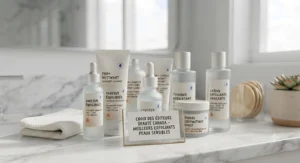
Take your skincare routine to the next level with these carefully selected products. Click on any highlighted item to check current pricing and availability. These formulas will help you build a gentle, effective exfoliation routine your skin will actually thank you for!
Frequently Asked Questions
❓ What is the best chemical exfoliator for sensitive skin?
❓ Can I use a chemical exfoliant if I have rosacea or eczema?
❓ How often should sensitive skin use a chemical exfoliant?
❓ Is glycolic acid or lactic acid better for sensitive skin?
❓ Do I need to patch test every new exfoliant, even from a trusted brand?
Conclusion
Choosing a chemical exfoliator for sensitive skin isn’t about finding the strongest formula on the shelf — it’s about matching molecule size, concentration, and delivery format to how your specific skin actually reacts. Across the seven products in this guide, the clearest pattern is that gentler isn’t a marketing word so much as a set of concrete formulation choices: larger acid molecules like mandelic acid, encapsulated or time-released delivery, fragrance-free ingredient lists, and rinse-off or pre-dosed formats that limit contact time all measurably reduce irritation risk while still delivering real exfoliating benefit. Whether you start with the budget-friendly The Ordinary Mandelic Acid 10% + HA, work up to the pore-clearing power of Paula’s Choice Skin Perfecting 2% BHA Liquid Exfoliant, or land on the calming, rinse-off approach of Kate Somerville ExfoliKate Gentle Exfoliating Treatment, the fundamentals stay the same: start low, patch test first, introduce slowly, and always follow up with sunscreen the next morning. Sensitive skin and effective exfoliation aren’t mutually exclusive — they just require more deliberate choices than skin that can tolerate anything you throw at it.
Recommended for You
- Lactic Acid Exfoliator for Aging Skin: 7 Gentle Picks (2026)
- 7 Best Salicylic Acid Exfoliants for Oily Skin in 2026
- Glycolic Acid Toner: 7 Best Picks for Glowing Skin (2026)
Disclaimer: This article contains affiliate links. As an Amazon Associate, I earn from qualifying purchases. If you purchase products through these links, we may earn a small commission at no additional cost to you.
✨ Found this helpful? Share it with your friends! 💬🤗
