
In This Article
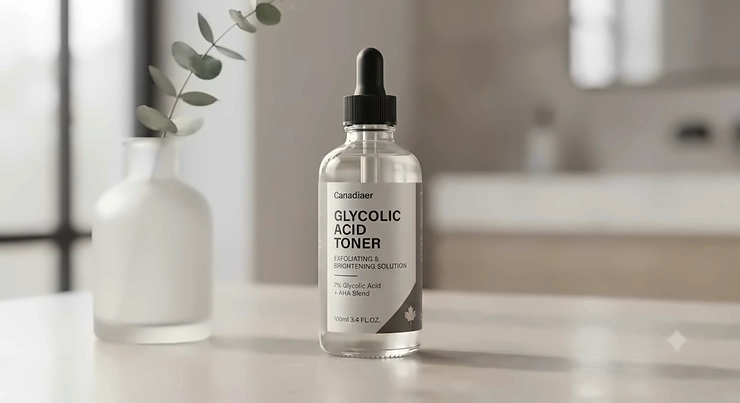
Somewhere between “my skin looks tired” and “why does my foundation sit weird by 2 p.m.,” most of us land on the same conclusion: dead skin cells are piling up faster than we’re clearing them. That’s the exact problem a glycolic acid toner is built to solve. It’s a thin, cotton-pad-friendly liquid — not a scrub, not a peel you book with a esthetician — that you sweep across clean skin to dissolve the glue holding dull, flaky surface cells in place.

Canadians have a particular love-hate relationship with this category. Our winters are dry enough to make skin feel like sandpaper, and our summers bring UV exposure that a chemical exfoliant can make you more sensitive to if you’re careless with sunscreen. So the “best” toner here isn’t just whichever bottle has the highest percentage printed on the label — it’s the one that matches your skin’s tolerance, your budget, and how consistently you’ll actually use it (a fantastic toner sitting half-full in a drawer helps nobody).
Below, we’ve broken down seven genuinely available options — from cult drugstore staples to a higher-strength splurge — with honest, spec-grounded commentary on where each one shines and where it falls short. No invented reviews, no manufactured hype, just a clear-eyed comparison built for Canadian skin, Canadian winters, and Canadian budgets.
Quick Comparison Table
| Product | Glycolic % | Alcohol-Free | Best For |
|---|---|---|---|
| The Ordinary Glycolic Acid 7% Exfoliating Toner | 7% | Yes | Best budget pick for beginners |
| Good Molecules Glycolic Exfoliating Toner | ~5-7%* | Yes | Most affordable brightening option |
| Pixi Glow Tonic | 5% | Yes | Cult-favourite glow booster |
| Mario Badescu Glycolic Acid Toner | ~2-3%* | Yes | Best for dry, sensitive-leaning skin |
| La Roche-Posay Effaclar Clarifying Solution | 2% (+ 0.5% salicylic) | No | Best dual-acid for oily/acne-prone skin |
| Paula’s Choice Skin Perfecting 8% AHA Gel Exfoliant | 8% | Yes | Best gel-liquid hybrid for texture |
| Youth To The People Kombucha + 11% AHA Power Toner | 11% | Yes | Best high-strength splurge |
*Brands that don’t publish an exact percentage on the label are marked with an asterisk — see the product breakdowns below for what’s verifiable.
Reading this table, the spread tells its own story: The Ordinary and Good Molecules dominate the value end, while Youth To The People sits at the top of the strength curve for skin that’s already acid-tolerant. Notice that only La Roche-Posay Effaclar Clarifying Solution isn’t alcohol-free — worth flagging up front if that’s a dealbreaker for you, since it’s otherwise one of the more clinically credible dual-acid options on this list. Percentage alone doesn’t predict how a toner will feel on your face; pH, supporting ingredients, and formulation style matter just as much, which is exactly what the product breakdowns below unpack.
💬 Just one click — help others make better buying decisions too!😊
Top 7 Glycolic Acid Toners: Expert Analysis
1. The Ordinary Glycolic Acid 7% Exfoliating Toner — best budget pick for beginners
The standout here is simple: nowhere else on this list do you get a legitimate 7% glycolic concentration for this little money. That alone explains why it’s become the default entry point for anyone Googling “glycolic acid toner” for the first time.
The formula pairs glycolic acid with Tasmanian pepperberry (an anti-irritant), aloe, and ginseng, which is a smart move — straight glycolic at 7% without buffering ingredients can sting on first use, and the pepperberry extract exists specifically to soften that. It comes in 100 ml and 240 ml sizes, so you’re not committing to a huge bottle before knowing how your skin reacts.
Based on the spec comparison, this sits squarely in “serious but beginner-approachable” territory: strong enough to visibly change texture within a few weeks, but formulated with enough soothing support that most normal-to-oily skin types tolerate nightly use. Dry or reactive skin should start at two to three nights a week. Reviewers consistently note visible smoothing and brightening within two to four weeks, alongside a real minority reporting stinging or redness on first application — consistent with using a 7% acid without a gradual buildup period.
Pros:
- ✅ High 7% concentration at a genuinely low price point
- ✅ Soothing extracts help offset glycolic acid’s sting
- ✅ Available in two sizes to test before committing
Cons:
- ❌ No published pH on packaging, making tolerance harder to predict
- ❌ Too strong for first-time exfoliant users to jump into nightly
Typically priced in the under-C$20 range, this remains one of the best value-per-percentage exfoliating toners available on amazon.ca — hard to beat if budget is the deciding factor.

2. Good Molecules Glycolic Exfoliating Toner — most affordable brightening option
What stands out about this one is how unapologetically no-frills it is: a straightforward glycolic acid exfoliating liquid built around cell turnover and glow, without the ingredient-list theatrics some brands lean on.
The formula combines glycolic acid with galactomyces ferment, an ingredient borrowed from K-beauty essences that’s associated with supporting a more even-looking, radiant complexion. It’s positioned for night use, with daytime SPF explicitly recommended on the label — a good sign the brand isn’t glossing over photosensitivity.
What most buyers overlook about budget-tier acids like this is that the supporting cast (ferments, humectants, soothing agents) often matters more day-to-day than the headline acid percentage. Good Molecules leans into that “gentle glow” positioning rather than maximum strength, which makes it a sensible option for someone whose main complaint is dullness rather than deep texture or visible pores. Aggregated customer sentiment for the brand’s toner line skews toward praise for affordability and gentle daily wear, with some users noting the results are more gradual than higher-percentage alternatives — which tracks with a formula prioritizing tolerability over intensity.
Pros:
- ✅ Very low cost of entry for a glycolic-based formula
- ✅ Galactomyces ferment adds a brightening, glow-focused angle
- ✅ Explicitly labelled for gentle night use with SPF reminder
Cons:
- ❌ Exact glycolic percentage isn’t published on the label
- ❌ Slower, gentler results than higher-strength options on this list
At a price generally in the mid-C$10s to around C$20, it’s one of the cheapest ways to add glycolic acid exfoliation to a routine focused on dull skin brightening.
3. Pixi Glow Tonic — cult-favourite glow booster
The standout feature is longevity: this is the toner that arguably built the “glycolic glow” trend over a decade ago, and it’s still one of the most reformulated-and-refined options on shelves today.
At 5% glycolic acid, it’s positioned between The Ordinary’s 7% and Mario Badescu’s gentler formula, and it pairs the acid with aloe vera, ginseng, and witch hazel extract. The witch hazel inclusion is worth flagging: it’s a mild astringent that helps with oil control but can be slightly drying for very parched skin types, so it’s a detail the marketing copy tends to skip over.
Here’s what to weigh: 5% is a genuine middle ground — strong enough to visibly refine texture and pore appearance over weeks of use, gentle enough that most combination and normal skin types can work up to nightly application within a couple of weeks. Reviewers consistently describe brighter, smoother-feeling skin with regular use, and a recurring theme in aggregated feedback is that a little goes a long way — a few swipes with a soaked cotton pad, not a full saturation, tends to be enough.
Pros:
- ✅ Balanced 5% strength suits a wide range of skin types
- ✅ Long track record and widely available in multiple sizes
- ✅ Witch hazel adds light oil control for combination skin
Cons:
- ❌ Fragrance in the formula may bother fragrance-sensitive users
- ❌ Witch hazel can feel slightly drying on very dry skin
Prices generally land in the C$25-C$45 range depending on size, positioning it as a solid mid-tier pick between the ultra-budget options and the premium end of this list.
4. Mario Badescu Glycolic Acid Toner — best for dry, sensitive-leaning skin
The defining feature here is gentleness by design: this formula skews toward a lower glycolic concentration than most on this list, making it the pick for people whose skin reacts badly to stronger exfoliants.
Grapefruit extract and aloe vera do most of the supporting work, with grapefruit contributing lycopene and antioxidants alongside the glycolic acid’s exfoliating action. It’s alcohol-free, which matters for a brand whose core audience often has combination-to-dry or aging skin rather than oily, acid-hungry skin.
The spec sheet won’t tell you this, but user reports suggest the actual glycolic percentage sits closer to 2-3% based on ingredient-list positioning — meaningfully gentler than the 7-8% tier. That’s not a weakness so much as a different use case: this is a toner for daily maintenance and gradual smoothing rather than aggressive resurfacing. Aggregated review sentiment consistently praises the “fresh, non-greasy” finish and a soothing feel post-application, with a recurring theme that results build gradually rather than dramatically — again, exactly what you’d expect from a lower-concentration formula.
Pros:
- ✅ Alcohol-free and grapefruit-based for a gentler daily feel
- ✅ Well suited to dry, combination, or aging-prone skin
- ✅ Long-standing brand reputation with accessible sizing options
Cons:
- ❌ Lower glycolic concentration means slower visible texture change
- ❌ Fragrance from grapefruit extract may not suit sensitive noses
Generally available in the C$15-C$30 range across sizes, it’s a reasonable value pick specifically for skin that can’t tolerate the stronger formulas above.
5. La Roche-Posay Effaclar Clarifying Solution — best dual-acid for oily/acne-prone skin
What sets this apart is that it isn’t a pure glycolic acid exfoliating liquid at all — it’s a dual-acid toner pairing 2% glycolic acid with 0.5% salicylic acid, aimed squarely at oily and blemish-prone skin.
Backed by La Roche-Posay’s dermatologist-oriented formulation approach, the combination targets both surface dullness (via glycolic’s AHA action) and clogged pores (via salicylic’s oil-soluble BHA action). It’s worth noting upfront that this formula does contain alcohol denat, so anyone specifically shopping for an alcohol-free glycolic toner in Canada should look to the other six options on this list instead.
Based on the spec comparison, the dual-acid approach makes practical sense for genuinely oily or breakout-prone skin, where a glycolic-only toner might smooth texture but leave excess oil and clogged pores untouched. What most buyers overlook is that the alcohol content, while a downside for dry skin, actually helps this formula feel less residue-heavy on very oily skin types — a genuine trade-off rather than a straightforward flaw. Reviewers consistently report it as effective for reducing blackhead appearance and evening out oily-skin texture, alongside a subset noting it can feel drying with frequent use, consistent with the alcohol content.
Pros:
- ✅ Dual AHA + BHA action targets both texture and clogged pores
- ✅ Backed by a dermatologist-focused, clinically tested brand
- ✅ Widely available and priced accessibly for a dermo-cosmetic brand
Cons:
- ❌ Contains alcohol denat — not an alcohol-free option
- ❌ Can be too drying for normal-to-dry skin with regular use
Typically found in the C$20-C$30 range, it’s a strong value pick specifically for oily and acne-prone skin, though not the right fit if alcohol-free is non-negotiable for you.
6. Paula’s Choice Skin Perfecting 8% AHA Gel Exfoliant — best gel-liquid hybrid for texture
The standout feature is texture, literally and figuratively: this is a lightweight gel rather than a watery liquid, sitting at a strong 8% glycolic concentration with a formulation built specifically around skin-texture concerns.
Green tea and chamomile provide antioxidant and soothing support, while a touch of hyaluronic acid helps offset the drying potential that comes with an 8% AHA concentration. Paula’s Choice is known for publishing pH and percentage data more transparently than most brands, which is a genuine trust signal in a category where “glycolic acid” claims aren’t always backed by specifics.
On paper this means predictable performance: an 8% concentration formulated at an effective exfoliating pH should produce visible smoothing and brightening within two to four weeks for most users, provided it’s introduced gradually. What the spec sheet does confirm — and reviewers consistently echo — is that the gel texture absorbs cleanly without the tackiness some liquid toners leave behind, making it layer well under serums and moisturizer. A recurring theme in aggregated feedback is that this formula can cause noticeable purging or irritation if introduced too quickly, which is standard advice for any 8% AHA regardless of brand.
Pros:
- ✅ Published, verifiable 8% concentration and formulation transparency
- ✅ Gel texture absorbs cleanly and layers well with other products
- ✅ Hyaluronic acid helps offset AHA-related dryness
Cons:
- ❌ Strong enough to require a genuine gradual introduction period
- ❌ Not technically a liquid toner, which may not suit toner-pad routines
Prices generally sit in the C$35-C$50 range, positioning it toward the premium end but with formulation transparency that helps justify the jump.
7. Youth To The People Kombucha + 11% AHA Exfoliation Power Toner — best high-strength splurge
The headline feature is strength: at 11% AHA, this sits noticeably above every other product on this list, making it the pick for skin that’s already comfortable with regular acid exfoliation and wants a more dramatic resurfacing effect.
The formula blends glycolic acid with fermented kombucha and superfood antioxidants, following Youth To The People’s clean-beauty, vegan formulation approach. At this concentration, the toner is positioned less as a daily-use product and more as a periodic resurfacing step — closer in intensity to an at-home peel-adjacent treatment than a nightly maintenance toner.
Here’s what to weigh: an 11% AHA concentration delivers genuinely visible texture and tone improvement faster than the 5-8% tier, but it also meaningfully raises the risk of over-exfoliation, especially in Canada’s dry winter months when the skin barrier is already under stress. This is not the toner to hand a first-timer. Reviewers consistently describe strong, fast results on rough or congested texture, paired with a recurring caution theme — several note needing to scale back to two to three uses weekly rather than nightly, which lines up with the concentration on paper.
Pros:
- ✅ Highest glycolic concentration on this list for fast texture change
- ✅ Clean, vegan formulation with antioxidant-rich kombucha ferment
- ✅ Well suited to acid-experienced skin wanting a stronger reset
Cons:
- ❌ Too strong for beginners or reactive, barrier-compromised skin
- ❌ Premium price relative to the modest bottle size
Expect a price generally in the C$40-C$55 range — the most expensive pick here, and one that only makes sense once your skin has already proven it can handle regular AHA exfoliation.
How to Introduce a Glycolic Acid Toner Without Wrecking Your Skin Barrier
The single biggest mistake we see with glycolic acid toner adoption isn’t picking the “wrong” product — it’s going from zero to nightly use overnight. Week one should mean two to three applications, always at night, always followed the next morning by a broad-spectrum SPF 30+. That sun-sensitivity warning isn’t marketing caution; Health Canada’s own guidance on alpha-hydroxy acid labelling reflects genuine photosensitivity data behind AHA products sold here.
By week three or four, most tolerant skin types can move to alternate nights, then nightly if there’s no persistent redness, tightness, or flaking. A common early mistake: layering a glycolic toner under a retinol or another exfoliating acid on the same night, which stacks irritation risk fast. Pick one active per evening until your skin proves it can handle more. Store your bottle away from direct sunlight and heat — glycolic acid can degrade in efficacy if left on a bright windowsill for months, which is a maintenance detail most listings never mention.
Real-World Scenarios: Matching a Toner to Your Skin Story
If you’re a university student on a tight budget dealing with post-breakout texture and dullness from irregular sleep, The Ordinary Glycolic Acid 7% Exfoliating Toner or Good Molecules Glycolic Exfoliating Toner make the most financial and practical sense — both deliver real exfoliation without asking you to commit a week’s grocery budget to one bottle.
If you’re managing oily, breakout-prone skin through humid Toronto or Montreal summers and want pore-clearing alongside brightening, La Roche-Posay Effaclar Clarifying Solution‘s dual-acid approach solves two problems in one swipe, even with the alcohol trade-off.
If you’re in your late 30s or 40s dealing with dry, thinning skin that reacts badly to anything aggressive, Mario Badescu Glycolic Acid Toner offers gentle, cumulative smoothing without the sting. And if you’ve already been exfoliating consistently for a year or more and want to push texture improvement further before a big event, Youth To The People‘s 11% formula is built for exactly that acid-tolerant, results-focused use case.
✨ Don’t Miss These Exclusive Deals!
🔍 Take your skincare routine to the next level with these carefully selected picks. Click on any highlighted product to check current pricing and availability — these formulas can help you build the smoother, brighter skin texture you’re after.
Problem → Solution: Common Glycolic Acid Toner Complaints
Problem: stinging or redness on first use. This usually means the acid was applied to skin that wasn’t fully dry, or applied too frequently too soon. Solution: wait a full minute after cleansing before applying, and drop to two nights a week for the first two weeks.
Problem: skin feels tight and flaky instead of smooth. This is a sign of over-exfoliation, not under-exfoliation — a common misread. Solution: pause the acid entirely for three to five days, lean on a bland moisturizer, then reintroduce at a lower frequency.
Problem: no visible change after a month. Lower-percentage formulas like Mario Badescu genuinely take longer to show results than 8-11% options. Solution: give gentler formulas six to eight weeks before judging, or step up to a stronger product like Paula’s Choice Skin Perfecting 8% AHA Gel Exfoliant if your skin has proven tolerant.
Problem: breakouts after starting a new toner. This can be genuine purging (temporary, as cell turnover speeds up) or a reaction to a specific ingredient. Solution: give it two to three weeks; if breakouts worsen past that point or come with persistent burning, discontinue and consult a dermatologist.
Problem: sunburn or increased sun sensitivity. This is a documented AHA effect, not bad luck. Solution: daily SPF 30+ isn’t optional while using any product on this list — full stop.
What Is a Glycolic Acid Toner?
A glycolic acid toner is a liquid skincare product containing glycolic acid — the smallest alpha-hydroxy acid (AHA), derived from sugar cane — applied after cleansing to chemically loosen and remove dead surface skin cells. Unlike a physical scrub, it works by breaking down the bonds holding dull cells to the skin’s surface, which is why it’s associated with smoother texture, more even tone, and reduced dullness with consistent use.
How to Choose a Glycolic Acid Toner
- Check the concentration. Start around 5-7% if you’re new to chemical exfoliation; save 8-11% formulas for skin that’s already proven tolerant.
- Confirm it’s alcohol-free if you have dry or reactive skin. Alcohol denat can compound dryness on top of the acid’s own exfoliating effect.
- Look for supporting soothing ingredients. Aloe, chamomile, and green tea help offset irritation without diluting effectiveness.
- Match it to your primary concern. Dullness and uneven tone lean toward glycolic-only formulas; clogged pores and oiliness benefit from dual acid options like glycolic plus salicylic.
- Consider format. Liquid toners suit cotton-pad routines; gel exfoliants like Paula’s Choice‘s absorb differently and may layer better under heavier products.
- Read the fine print on percentage. Brands that publish exact concentration and pH, like Paula’s Choice, let you predict performance more reliably than vague “glycolic acid” claims.
- Buy travel or smaller sizes first. Most brands on this list offer smaller formats specifically so you can test tolerance before committing to a full-size bottle.
Glycolic Acid Toner vs. Other Exfoliating Toners
Glycolic acid toners aren’t the only AHA exfoliation option on shelves, and the differences matter more than marketing copy suggests. Lactic acid, another AHA, is a larger molecule than glycolic acid, meaning it penetrates less deeply — generally gentler, and often better tolerated by dry or sensitive skin chasing hydration alongside exfoliation. Salicylic acid (a BHA, not an AHA) is oil-soluble rather than water-soluble, letting it work inside pores rather than just on the skin’s surface — which is why La Roche-Posay Effaclar Clarifying Solution pairs it with glycolic acid specifically for oily, congestion-prone skin.
Where glycolic acid pulls ahead is speed and intensity of visible texture change, thanks to its small molecular size and deep penetration. Where it falls behind gentler options is tolerability — someone with rosacea-prone or very reactive skin is often better served starting with a PHA (polyhydroxy acid) or a lactic acid formula before working up to glycolic. The Wikipedia entry on glycolic acid is a reasonable starting point if you want the underlying chemistry behind why molecular size drives so much of this behaviour.

Alcohol-Free Glycolic Toners in Canada: Why It Matters
Five of the seven products on this list are alcohol-free, and that’s not a coincidence — it reflects genuine demand from Canadian shoppers dealing with cold, dry winters and forced-air heating that already strips moisture from skin. Alcohol denat (the ingredient to watch for) evaporates quickly and can feel refreshing in the moment, but it also accelerates water loss from the skin’s outer layer, which compounds the drying effect glycolic acid already has on its own.
If you’re shopping specifically for an alcohol-free glycolic toner in Canada, The Ordinary, Good Molecules, Pixi Glow Tonic, Mario Badescu, and Youth To The People all qualify. La Roche-Posay Effaclar Clarifying Solution is the one exception on this list, and it’s a legitimate trade-off rather than a flaw — the alcohol content helps it perform better specifically on oily, blemish-prone skin, where a purely alcohol-free formula might feel heavier or less mattifying. The right call depends entirely on whether your skin runs dry or oily, not on which ingredient sounds “cleaner.”
Features That Actually Matter (And Those That Don’t)
What actually matters: published percentage and pH, alcohol content, supporting soothing ingredients, and packaging that protects the formula from light (glycolic acid can lose potency in clear bottles left in direct sun). What doesn’t matter nearly as much as marketing suggests: “botanical extract” laundry lists where each individual ingredient appears at trace amounts too low to meaningfully affect the skin, and vague claims like “detoxifying” that have no real basis in how AHA chemistry works. Reviewers consistently note that the difference between a good and mediocre glycolic toner comes down to how it feels the morning after consistent use — smoother and calmer, not tight or reactive — which tracks with formulation quality over marketing language.
Safety, Regulations, and Sun Protection in Canada
Glycolic acid and other alpha-hydroxy acids are specifically addressed on Health Canada’s Cosmetic Ingredient Hotlist, which sets maximum permitted concentrations for consumer-use cosmetic products and requires cautionary labelling around sun sensitivity. This isn’t a red flag — it’s the same regulatory oversight that governs sunscreen actives and most active skincare ingredients sold here, and it’s part of why every product on this list carries some form of “use sunscreen” guidance.
Practically, that means daily broad-spectrum SPF 30 or higher isn’t optional while using any glycolic acid toner, and the Canadian Dermatology Association’s sunscreen guidance is a solid reference for choosing one that won’t irritate already-exfoliated skin. If you’re pregnant, breastfeeding, or managing a diagnosed skin condition like rosacea or eczema, a quick check-in with a dermatologist or pharmacist before starting any AHA product is worth the ten minutes it takes.
Buyer’s Decision Framework
If your main concern is dullness and uneven tone on a tight budget, choose The Ordinary or Good Molecules — both deliver real glycolic exfoliation without a premium price tag. If your skin is dry, sensitive, or new to acids, choose Mario Badescu for its gentler concentration and soothing formulation. If you’re dealing with oily or acne-prone skin, choose La Roche-Posay Effaclar Clarifying Solution for its dual-acid approach. If you want a proven, moderate-strength daily driver, choose Pixi Glow Tonic. If you’re chasing visible texture change with formulation transparency, choose Paula’s Choice Skin Perfecting 8% AHA Gel Exfoliant. And if you’re already acid-tolerant and want maximum results, choose Youth To The People‘s 11% formula — but only after your skin has proven it can handle regular exfoliation without complaint.

Frequently Asked Questions
❓ What is the best glycolic acid toner for beginners in Canada?
❓ Can I use a glycolic acid toner every day?
❓ Is glycolic acid toner good for dull skin?
❓ What's the difference between glycolic acid and salicylic acid toners?
❓ Where can I buy glycolic acid toner in Canada?
Conclusion
There’s no single “best” glycolic acid toner — there’s only the best one for your specific skin, budget, and tolerance. If this is your first time trying a chemical exfoliant, start gentle and budget-friendly with The Ordinary or Mario Badescu, and give your skin real time to adjust before chasing higher percentages. If you already know your skin handles acids well, the jump to Paula’s Choice or Youth To The People will get you faster, more dramatic texture results. And if oil control matters as much as brightening, La Roche-Posay Effaclar Clarifying Solution‘s dual-acid formula solves both at once.
Whichever bottle ends up on your counter, the fundamentals stay the same across every option on this list: introduce it slowly, never skip sunscreen the next morning, and judge results over weeks, not days. Consistency — not concentration — is what actually turns dull, uneven-textured skin into the smoother, brighter complexion glycolic acid promises.
Recommended for You
- Face Scrub For Blackheads: 7 Picks Canadians Trust (2026)
- Best Exfoliating Pads Canada 2026: 7 Real Picks, No Guesswork
- Lip Care for Canadian Winter: 7 Balms That Survive -30°C (2026)
Disclaimer: This article contains affiliate links. As an Amazon Associate, I earn from qualifying purchases. If you purchase products through these links, we may earn a small commission at no additional cost to you.
✨ Found this helpful? Share it with your friends! 💬🤗
