In This Article
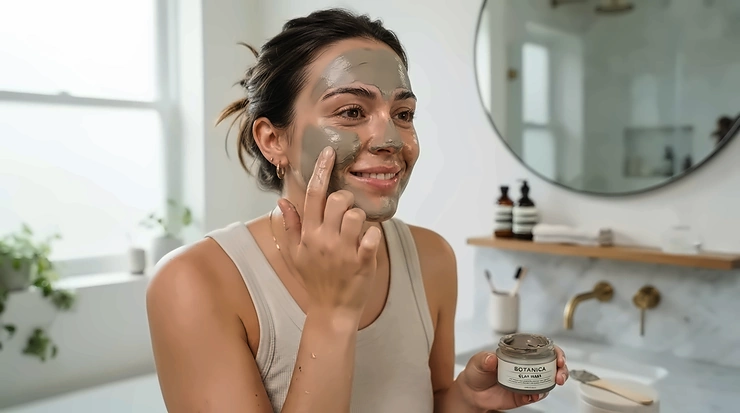
A purifying mask for acne-prone skin is a wash-off or leave-on treatment, usually built on absorbent clays such as kaolin or bentonite, that soaks up excess sebum, lifts surface debris and visibly refines clogged pores. It is a weekly support step for oily, breakout-prone complexions, not a cure for acne itself.

Here is why that distinction matters. Acne starts when pores clog with dead skin cells and oil. The Canadian Dermatology Association’s acne guidance describes it in much the same terms. It also steers shoppers toward products that are gentle, fragrance-free and labelled oil-free or non-comedogenic. A good mask doesn’t rewrite that script. It gives your skin a weekly reset while your everyday routine does the heavy lifting.
Shelves in 2026 are crowded with jars promising to “detox” your face. Volcanic ash, charcoal and Amazonian clay all make big claims, and the marketing often outruns the evidence. This guide cuts through it with seven real masks you can look for through amazon.ca (availability varies by seller). You’ll see what each ingredient list means in practice and who each mask actually suits. I focus on pore congestion, the stuffed-but-not-yet-erupted stage, because that’s where masks earn their keep.
Maybe you want a detoxifying mask for breakouts. Maybe you need a purifying mask for congested skin, or an acne-prone skin mask Canada’s dry winters won’t punish. Either way, the answers are below.
How these picks were chosen: I used published ingredient lists, brand-stated directions and the aggregated review sentiment I could verify. There are no invented reviews and no claims of hands-on testing. Where review data was thin, I say so. Prices appear as CAD ranges at the time of research, so check current price before you buy.
Quick Comparison: 7 Best Picks at a Glance
| Product | Main Purifying Agents | Contact Time | Best For |
|---|---|---|---|
| Aztec Secret Indian Healing Clay | 100% calcium bentonite | 5–20 min (shorter if sensitive) | Budget DIY maskers with resilient skin |
| Innisfree Super Volcanic Pore Clay Mask 2X | Volcanic ash, bentonite, kaolin, mild exfoliants | 10–15 min | Blackheads and texture on oily skin |
| La Roche-Posay Effaclar Purifying Clay Mask | Kaolin, magnesium aluminum silicate, panthenol | 5 min | Sensitive, oily skin |
| Origins Clear Improvement Active Charcoal Mask | Kaolin, bentonite, montmorillonite, bamboo charcoal | Until dry, then rinse | Oily, congested skin that tolerates strong masks |
| Kiehl’s Rare Earth Deep Pore Cleansing Masque | Amazonian white clay, aloe | About 10 min | Normal-to-oily skin; towel-off fans |
| The Body Shop Tea Tree Skin Clearing Clay Mask | Clay, tea tree oil, salicylic acid (Canadian listing) | Per pack directions | Blemish-prone skin wanting an acid boost |
| Cetaphil DermaControl Purifying Clay Mask | Kaolin, bentonite, shea butter | Per pack directions | Sensitive or winter-dry acne-prone skin |
Looking at the table, Aztec Secret Indian Healing Clay is the budget leader, but its single-ingredient strength also makes it the likeliest to overdo things. La Roche-Posay Effaclar Purifying Clay Mask and Cetaphil DermaControl Purifying Clay Mask trade raw power for comfort, which is smart if your barrier is already cranky. Innisfree Super Volcanic Pore Clay Mask 2X and Origins Clear Improvement Active Charcoal Mask sit in the middle for oily, pore-congested skin. The Body Shop Tea Tree Skin Clearing Clay Mask is the only one whose Canadian listing adds salicylic acid.
💬 Just one click — help others make better buying decisions too!😊
Top 7 Purifying Mask for Acne-Prone Skin Picks: Expert Analysis
Each pick below is analysed from its ingredient list, the brand’s own directions and the review chatter I could verify. Where reviews were sparse, I’ll say so rather than fill the gap with fiction.
1. Aztec Secret Indian Healing Clay — cheapest per use, no frills
This is the budget heavyweight. A big 454 g tub of nothing but calcium bentonite goes a long way.
The formula is a single ingredient, 100% calcium bentonite, which you mix into a paste with water or apple cider vinegar. The brand suggests a thin layer, roughly 3–6 mm (1/8 to 1/4 inch). In practice you control the strength, but you also own the mess. Bentonite swells when wet and grabs oil hard, which is why it’s a favourite among fans of the detoxifying mask for breakouts style.
Based on the ingredient list, this suits oily, resilient skin that tolerates a tight, tugging feel. The brand itself shortens contact time to 5–10 minutes for delicate skin. Water is the gentler mixer than vinegar, because acid plus strong clay on irritated breakouts is a fast route to redness.
Aggregated review summaries commonly praise its effect on pore appearance and whiteheads. The recurring complaints are powder dust, a drying feel, redness afterwards and the fiddly mixing.
Pros:
- ✅ Single-ingredient formula with no added fragrance
- ✅ Huge tub should last many months
- ✅ Adjustable strength through your mixing ratio
Cons:
- ❌ Messy mixing and powder fallout
- ❌ Can leave skin tight and red
Price: roughly C$15–C$30 at the time of research (check current price). It is the best value here, as long as you respect its strength.

2. Innisfree Super Volcanic Pore Clay Mask 2X — volcanic ash plus a gentle exfoliating kick
Think of it as a clay mask with a built-in polish. It’s aimed squarely at blackheads and rough texture.
The 100 mL jar blends Jeju volcanic ash with bentonite and kaolin. It also contains walnut shell powder and a lactic/glycolic acid copolymer for exfoliation. The brand’s directions call for 10–15 minutes on a dry face, then a lukewarm rinse with gentle circular motions, once or twice a week. That multi-action design is handy for texture. The catch is that walnut shell is a physical scrub, and the American Academy of Dermatology warns that scrubbing can irritate skin and flare acne.
My read: this is a purifying mask for congested skin that is blackhead-heavy, not skin with angry, inflamed pimples. Reviewers often say it feels less drying than typical clay masks. They also report that it soaks up T-zone oil on first use and dries quickly if you keep the layer thin.
Pros:
- ✅ Volcanic ash, bentonite and kaolin in one jar
- ✅ Creamy texture spreads easily
- ✅ Mild exfoliation helps rough texture
Cons:
- ❌ Walnut shell grains may irritate inflamed skin
- ❌ Formulas and names vary by market
Price: in the mid-C$20s to mid-C$30s. It’s good value for oily, blackhead-prone skin.
3. La Roche-Posay Effaclar Purifying Clay Mask — the gentle five-minute option
If strong clays have ever left your face feeling like a drum skin, this is the soft landing.
The 100 mL tube is built on kaolin and magnesium aluminum silicate. It adds panthenol and glycerin, and some markets cite 5% panthenol. The directions call for a thin layer once or twice a week, left on for five minutes before a thorough rinse. Kaolin is the mildest of the common clays, and the humectants and short contact time help protect your barrier. Ingredient lists vary by market, and some versions list fragrance, so read your pack.
This one suits sensitive, oily or combination skin, and anyone new to masking. The trade-off is that it’s less aggressive. Blackhead-heavy skin may want something stronger.
Reviews are the weak spot. I couldn’t verify a large, consistent pool for the Canadian listing. Retail-site feedback leans toward “gentle” and “comfortable”, but the samples were small, so treat that as a soft signal.
Pros:
- ✅ Kaolin base is kind to sensitive skin
- ✅ Short five-minute contact time
- ✅ Panthenol and glycerin soften the clay’s pull
Cons:
- ❌ Milder pore-clearing than bentonite masks
- ❌ Costs more per mL than clay powder
Price: around C$30–C$40. Value is solid if comfort is your priority.
4. Origins Clear Improvement Active Charcoal Mask — fragrance-free charcoal-and-clay classic
This charcoal mask launched in 2013 and helped define the whole category.
The 75 mL jar combines kaolin, bentonite and montmorillonite with bamboo charcoal powder. Retail information cites roughly 1% charcoal and about 18% clay. The directions are simple: apply, let dry, rinse, and use weekly. Three clays make this a serious oil absorber. Ingredient analysts note that charcoal at around 1% likely plays a supporting role, so the clays do the real work. That makes it more clay mask than “magnet for toxins”.
It suits oily, congested skin that can take a strong mask. The fragrance-free ingredient list is a quiet bonus for reactive complexions. If winter has your cheeks flaking, though, this triple-clay blend may be too much.
The review signal I could verify was thin. Long-term users call it a dependable weekly step, but I couldn’t find a large, consistent pool to aggregate.
Pros:
- ✅ Fragrance-free ingredient list
- ✅ Triple-clay blend absorbs oil well
- ✅ Compact jar suits a weekly rhythm
Cons:
- ❌ Clay-heavy formula may dry winter skin
- ❌ Low charcoal percentage adds modest extra benefit
Price: around C$35–C$45. It’s fair value for oily skin and weaker value for dry-leaning skin.
5. Kiehl’s Rare Earth Deep Pore Cleansing Masque — Amazonian white clay with aloe
This is the most “spa-like” pick on the list. It’s applied to damp skin and removed with a warm towel.
The 125 mL jar pairs Amazonian white clay with aloe. You smooth a thin layer onto damp, clean skin, wait about ten minutes, then wipe it off with a warm, wet towel, once or twice a week. Damp application and towel removal mean less scrubbing and tugging, which is a quiet win for acne-prone skin. The brand cites a 46.7% drop in surface oil two hours after use, but that comes from its own testing, so treat it as a brand claim. The line is also being renamed and reformulated in some markets (a “Pore-Minimizing Clay Mask” version adds bentonite), so check the pack name.
It’s best for normal-to-oily skin and anyone willing to pay for a gentler routine.
Shoppers often call it a deep clean, but a recurring comment is that the price feels high. One retailer showed 71% recommending it, from only 14 reviews, which is a small sample.
Pros:
- ✅ Aloe softens the clay’s pull
- ✅ Generous 125 mL jar
- ✅ Damp-skin, towel-off method is gentle
Cons:
- ❌ Premium price tag
- ❌ Oil-control statistic is self-reported
Price: roughly C$45–C$60. It’s worth it only if you value the experience.

6. The Body Shop Tea Tree Skin Clearing Clay Mask — tea tree plus salicylic acid
This is the pick for people who want a clay mask that also nudges pores from the inside.
The 75 mL jar is clay-based and uses Community Fair Trade tea tree oil from Kenya. It’s certified vegan, and the brand cites 97% natural-origin ingredients. The Canadian listing also mentions added salicylic acid, a beta-hydroxy acid that dissolves oil and dead skin inside pores. That gives it an edge on pore congestion that clay alone can’t match. Formulas differ by country, so check your label. The brand suggests using it once or twice a week.
Don’t layer it with other exfoliants on the same night. Availability through amazon.ca depends on third-party sellers, so check who’s selling it and look closely at the packaging.
I couldn’t verify aggregated reviews for the Canadian formula, so I won’t pretend to summarize them. The brand positions it for sensitive, blemished skin.
Pros:
- ✅ Adds salicylic acid for clogged pores
- ✅ Vegan-certified with high natural-origin share
- ✅ Compact 75 mL jar
Cons:
- ❌ Formulas vary by country
- ❌ amazon.ca availability isn’t guaranteed
Price: around C$20–C$30. It’s good value if your listing matches the Canadian formula.
7. Cetaphil DermaControl Purifying Clay Mask — creamy clay that stays creamy
Not every mask has to harden into a cracking plaster shell. This one is designed not to.
The 85 g mask pairs kaolin and bentonite with shea butter and apple fruit extract. It’s marketed as fragrance-free, hypoallergenic, non-comedogenic and gentle enough for sensitive skin. The brand says it stays creamy rather than hardening. That lowers the “tight, cracked” risk that makes some clay masks harsh. The ingredient list also includes emollients such as petrolatum and shea butter. Some oily complexions dislike a richer base, even when the label says non-comedogenic.
It suits sensitive, combination or winter-dry acne-prone skin. It also works for anyone wanting an acne-prone skin mask Canada’s heated indoor air won’t punish.
The review pool I could verify was small. One reviewer called it a strong clay that needed a gradual start, which is a useful reminder to patch-test.
Pros:
- ✅ Fragrance-free formula
- ✅ Stays creamy, with no cracking
- ✅ Kaolin plus bentonite for oil control
Cons:
- ❌ Emollient base feels richer than gel-clays
- ❌ Thin verified review pool
Price: around C$20–C$30. It’s a comfortable all-rounder for sensitive skin.
| Product | Size | Texture | Price Range (CAD) | Best For |
|---|---|---|---|---|
| Aztec Secret Indian Healing Clay | 454 g | Powder you mix | C$15–C$30 | Budget and customizable strength |
| Innisfree Super Volcanic Pore Clay Mask 2X | 100 mL | Creamy with fine grains | Mid-C$20s–mid-C$30s | Blackheads and texture |
| La Roche-Posay Effaclar Purifying Clay Mask | 100 mL | Smooth cream-clay | C$30–C$40 | Sensitive, oily skin |
| Origins Clear Improvement Active Charcoal Mask | 75 mL | Dense clay-charcoal | C$35–C$45 | Oily, congested skin |
| Kiehl’s Rare Earth Deep Pore Cleansing Masque | 125 mL | Creamy, towel-off | C$45–C$60 | Normal-to-oily, comfort seekers |
| The Body Shop Tea Tree Skin Clearing Clay Mask | 75 mL | Silky clay | C$20–C$30 | Blemish-prone skin wanting BHA |
| Cetaphil DermaControl Purifying Clay Mask | 85 g | Creamy, non-hardening | C$20–C$30 | Sensitive and winter-dry skin |
Reading across the rows, the cheapest mask isn’t automatically the best deal. Aztec Secret Indian Healing Clay gives you volume, while La Roche-Posay Effaclar Purifying Clay Mask and Cetaphil DermaControl Purifying Clay Mask give you gentleness. Kiehl’s Rare Earth Deep Pore Cleansing Masque is the one you pay extra for in experience rather than in extra pore-clearing power.
Pore Congestion: Why Skin Clogs Before It Breaks Out
Pore congestion is the quiet stage before a breakout. Sebum, dead skin cells and debris pack into the follicle, forming blackheads and whiteheads long before a red pimple appears. Think of it as a traffic jam. A breakout is the pile-up that follows.
Clay works at the surface. It adsorbs oil and loosens debris, which is why pores look smaller and skin looks matte for a few hours after rinsing. What it can’t do is dissolve a plug packed deep in the follicle. That job belongs to leave-on actives such as salicylic acid, retinoids or prescription options a dermatologist recommends. So the realistic role of any purifying mask for acne-prone skin is maintenance. It tidies the surface while your nightly routine works underneath.
Because pore congestion builds slowly, consistency beats drama. A once-weekly mask plus a gentle cleanser and a non-comedogenic moisturizer will usually do more than a heroic Sunday-night mask marathon. Canadian seasons add a twist. Winter heating dries the surface and can trick oily skin into producing even more oil. Summer humidity amplifies shine. Your pore congestion strategy may need two settings, a gentler winter mode and a more active summer mode.

Purifying Mask for Congested Skin: Clay, Charcoal or Volcanic Ash?
The three big ingredient families do roughly the same job with different personalities. Bentonite is a swelling, highly absorbent clay, and it’s the powerhouse in Aztec Secret Indian Healing Clay. Kaolin is a finer, milder clay, and it’s the backbone of La Roche-Posay Effaclar Purifying Clay Mask. Volcanic ash brings porous mineral particles and often arrives paired with exfoliants, as in Innisfree Super Volcanic Pore Clay Mask 2X.
Charcoal gets the most hype and probably deserves the least. In Origins Clear Improvement Active Charcoal Mask, the charcoal sits at a low percentage and the clays do most of the work. If you want a purifying mask for congested skin, pick the clay profile first. Choose the colour of the jar last.
How do masks compare with other pore-care options?
| Option | What It Does | Main Risk | Best For |
|---|---|---|---|
| Clay mask | Absorbs surface oil, lifts debris | Dryness if overused | Origins Clear Improvement Active Charcoal Mask for oily skin |
| Sheet mask | Hydrates; little oil control | Won’t clear congestion | Dehydrated, oily skin needing comfort |
| Salicylic acid leave-on | Works inside the pore | Irritation if stacked | Persistent pore congestion |
| Adhesive pore strips | Lifts surface blackheads briefly | Can irritate or tug skin | Occasional cosmetic touch-ups |
| Clay-plus-BHA mask | Surface absorption plus acid | Overlapping exfoliants | The Body Shop Tea Tree Skin Clearing Clay Mask |
The table shows why masks are a maintenance tool rather than a standalone fix. A leave-on acid does the deep work, while a mask handles the surface. Combining both carefully, such as The Body Shop Tea Tree Skin Clearing Clay Mask on mask night and a gentler routine the rest of the week, is usually smarter than stacking everything at once.
How to Choose a Purifying Mask for Acne-Prone Skin
Choose a purifying mask for acne-prone skin by matching clay strength to your skin’s tolerance, avoiding abrasive grains and fragrance, and respecting contact time. Here are the steps:
- Match the clay to your tolerance. Kaolin is gentle and bentonite is strong. Sensitive skin should start with kaolin-led formulas like La Roche-Posay Effaclar Purifying Clay Mask or Cetaphil DermaControl Purifying Clay Mask.
- Check for scrubby extras. Physical grains such as walnut shell can irritate inflamed skin, so reserve Innisfree Super Volcanic Pore Clay Mask 2X for blackhead days rather than flare days.
- Prefer fragrance-free or low-fragrance. The CDA’s acne guidance points to gentle, fragrance-free, non-pore-clogging products.
- Consider texture and drying behaviour. A cream that stays creamy is kinder than a mask that cracks.
- Look for non-comedogenic or oil-free wording. It’s helpful but not a guarantee, so patch-test anyway.
- Verify the seller and label. On amazon.ca, favour listings sold and shipped by the brand or Amazon, and check seals and expiry dates.
- Set a budget per use, not per jar. A big tub of Aztec Secret Indian Healing Clay and a small jar of Origins Clear Improvement Active Charcoal Mask price very differently once you count applications.
Detoxifying Mask for Breakouts: What “Detox” Really Means
Here’s the awkward truth. Your skin doesn’t store “toxins” that a jar can pull out. When a product promises a detoxifying mask for breakouts, what it actually does is absorb oil, loosen debris and, in some cases, gently exfoliate. That’s genuinely useful for pore congestion, but it isn’t a purge.
What matters in a detoxifying mask for breakouts:
- Clay type and strength: gentler clays suit reactive skin.
- Contact time: longer isn’t better. Many dermatology-minded routines avoid letting a mask dry to cracking.
- Fragrance and irritants: acne-prone skin is easier to upset.
- Rinse-ability: a mask you can remove without scrubbing protects your barrier.
What doesn’t matter: black colour, glitter, or the word “detox” itself.
The AAD’s list of habits that worsen acne is a good reality check. It flags scrubbing and dry, irritated skin as common ways routines backfire. A mask that leaves you tight and red is working against that advice, no matter how satisfying the “pull” feels. Detox skincare, done sensibly, is really just disciplined cleansing with a weekly absorbent treatment.
Detox Skincare Routine: How to Use Your Mask Step by Step
Detox skincare works best as a predictable weekly ritual rather than a panic response to a breakout. Here’s a practical blueprint.
Before the first use: Patch-test a small area along your jawline. Wait a day. Redness, itching or burning means stop.
Mask night, step by step:
- Cleanse with a gentle, non-comedogenic cleanser.
- For most clay masks, apply a thin, even layer to dry skin, avoiding eyes and lips. For Kiehl’s Rare Earth Deep Pore Cleansing Masque, the brand calls for damp skin instead.
- Set a timer. Respect each brand’s contact time, for example five minutes for La Roche-Posay Effaclar Purifying Clay Mask.
- Rinse with lukewarm water, using gentle motions, or remove with a warm towel.
- Follow with a non-comedogenic moisturizer. Next morning, wear sunscreen.
For powder masks: Mix Aztec Secret Indian Healing Clay with water rather than vinegar if you’re sensitive, and use a non-metal bowl and spoon as the brand advises.
The first 30 days: Start once a week. Move to twice weekly only if your skin stays calm. Common mistakes include leaving masks on until they crack, stacking exfoliating acids on the same night, and skipping moisturizer because skin “feels oily”.
Maintenance: Scoop jar masks with a clean spatula, keep lids tight, and watch expiry dates. Treat any change in smell or texture as a signal to toss it.
Real-World Scenarios: Matching a Mask to Your Life
Specs only matter when they fit a real routine. Here are three profiles.
The Winnipeg student in January. Dry indoor heat, a budget around C$25, and skin that’s oily in the T-zone but tight everywhere else. Cetaphil DermaControl Purifying Clay Mask is the sensible match. Its creamy base suits dry air, and once a week is plenty.
The Vancouver professional with humid-season blackheads. Mixed skin, a budget up to C$45, and visible blackheads across the nose. Innisfree Super Volcanic Pore Clay Mask 2X or Origins Clear Improvement Active Charcoal Mask fits, used weekly in the humid months. Dial back to every other week once winter indoor heating starts.
The Toronto shift worker on a tight budget. Irregular sleep, oily skin, and maybe C$20 to spend. Aztec Secret Indian Healing Clay stretches furthest, but shorten contact time and mix with water. If skin feels tight, switch to a gentler option rather than powering through.
In all three cases, the best acne-prone skin mask Canada’s seasons allow is the one used consistently at a tolerable strength.

Problem → Solution: When a Mask Backfires
Problem 1: Skin feels tight and looks red. Solution: Shorten contact time, switch to water instead of vinegar with Aztec Secret Indian Healing Clay, or move to a kaolin-led option like La Roche-Posay Effaclar Purifying Clay Mask.
Problem 2: More breakouts after masking. Solution: You may be over-exfoliating. Drop to once weekly, remove grains by dropping Innisfree Super Volcanic Pore Clay Mask 2X from your rotation, and keep moisturizing.
Problem 3: Flaking around the nose. Solution: Apply masks only to oily zones, and use a richer base like Cetaphil DermaControl Purifying Clay Mask on drier areas.
Problem 4: Sting when applying. Solution: Stop and rinse. If the product contains acids, as the Canadian listing for The Body Shop Tea Tree Skin Clearing Clay Mask does, avoid layering other actives that night.
If you see persistent cysts, scarring or pain, skip the DIY loop and book a dermatologist.
Acne-Prone Skin Mask Canada: Rules, Labels and Smart Shopping
Buying an acne-prone skin mask Canada’s regulatory framework covers is slightly different from buying south of the border. Health Canada regulates cosmetics under the Food and Drugs Act and the Cosmetic Regulations. It doesn’t pre-approve them, and it uses tools such as the Cosmetic Ingredient Hotlist to flag restricted or prohibited substances. Health Canada explains how it determines cosmetic ingredient safety, and it can act if a product presents a hazard.
Claims matter too. Products that claim to treat or prevent acne are generally treated as drugs rather than cosmetics, so look for a DIN or NPN on those. Cosmetic masks stick to words like “purifying” or “clarifying”. Notice the wording differences across markets. An Australian retailer lists La Roche-Posay Effaclar Purifying Clay Mask with “Anti-Acne” in the name, while a Canadian retailer lists it as “Sebo-Controlling”. I can’t tell you why, but it’s a reminder to read your own pack, because formulas and wording vary by country.
Smart-shopping tips for amazon.ca:
- Favour listings sold and shipped by the brand or Amazon.
- Check for a sealed jar and an expiry date.
- Expect bilingual labelling.
- Avoid products stored in extreme heat or cold, since Canadian winters can stress shipments.
Winter use calls for restraint. Heated indoor air and cold outdoor air dry skin quickly, so many Canadians drop to every other week from December to March.
Long-Term Cost and Value: What You Really Pay Per Use
Sticker price tells only half the story. Application count matters, and so does how often you actually use the jar.
| Product | Price Range (CAD) | Value Tier | Best For |
|---|---|---|---|
| Aztec Secret Indian Healing Clay | C$15–C$30 | Lowest cost per use | Budget-first buyers |
| Cetaphil DermaControl Purifying Clay Mask | C$20–C$30 | Low-to-moderate | Sensitive, winter-dry skin |
| The Body Shop Tea Tree Skin Clearing Clay Mask | C$20–C$30 | Low-to-moderate | Blemish-prone skin wanting BHA |
| Innisfree Super Volcanic Pore Clay Mask 2X | Mid-C$20s–mid-C$30s | Moderate | Blackheads and texture |
| La Roche-Posay Effaclar Purifying Clay Mask | C$30–C$40 | Moderate | Sensitive, oily skin |
| Origins Clear Improvement Active Charcoal Mask | C$35–C$45 | Moderate-to-premium | Oily, congested skin |
| Kiehl’s Rare Earth Deep Pore Cleansing Masque | C$45–C$60 | Premium | Comfort and experience seekers |
Assuming a thin layer of roughly 2–3 mL per application, most 75–125 mL jars should last a couple of months of weekly use, though yours will vary. Aztec Secret Indian Healing Clay is in a league of its own on volume.
The analysis is simple. If you’ll use a mask weekly for a year, Aztec Secret Indian Healing Clay or Cetaphil DermaControl Purifying Clay Mask wins on cost, while Kiehl’s Rare Earth Deep Pore Cleansing Masque only makes sense if the towel-off ritual keeps you consistent. The cheapest mask you actually tolerate beats the fanciest one you abandon after two tries.
Common Mistakes When Buying a Purifying Mask for Acne-Prone Skin
Even experienced shoppers fall into predictable traps.
Buying by colour. A jet-black jar doesn’t mean a stronger mask. Read the ingredient list, because the clays usually carry the work.
Ignoring physical exfoliants. A mask with walnut shell powder, like Innisfree Super Volcanic Pore Clay Mask 2X, can be wonderful for blackheads and wrong for inflamed skin.
Stacking actives. Pairing The Body Shop Tea Tree Skin Clearing Clay Mask with a retinoid and an acid on the same night is a recipe for irritation. If you’re on prescription acne treatment, especially oral isotretinoin, ask your prescriber before using exfoliating or drying masks.
Skipping the label check. Formulas change by market, and fragrance can appear in some versions. Always read your own pack.
Expecting a cure. A purifying mask for acne-prone skin supports your routine and doesn’t replace treatment. If acne is moderate to severe or leaving scars, the CDA recommends professional care.
Overusing it. More often isn’t better. Once or twice weekly is the norm in most brand directions.

Frequently Asked Questions
❓ Can I use a detoxifying mask for breakouts every day?
❓ Is a purifying mask for congested skin safe in a Canadian winter?
❓ Can a mask permanently fix pore congestion?
❓ How can I avoid fake skincare when shopping for an acne-prone skin mask Canada has available online?
❓ Can I use a purifying mask for acne-prone skin with retinoids or acne medication?
Conclusion
A great purifying mask for acne-prone skin isn’t the strongest one. It’s the one your skin tolerates every week without complaint. For a pure budget play, Aztec Secret Indian Healing Clay is hard to beat, as long as you mix it with water and keep contact time short. For sensitive, oily skin, La Roche-Posay Effaclar Purifying Clay Mask and Cetaphil DermaControl Purifying Clay Mask are the comfortable choices. Innisfree Super Volcanic Pore Clay Mask 2X is the blackhead specialist. Origins Clear Improvement Active Charcoal Mask suits oily, congested skin. Kiehl’s Rare Earth Deep Pore Cleansing Masque is the polished, premium option. The Body Shop Tea Tree Skin Clearing Clay Mask suits anyone who wants clay with a salicylic acid boost.
Keep the bigger picture in view. Pore congestion responds best to consistency, gentle cleansing and sensible detox skincare habits, not weekly punishment. If you ever see persistent cysts, scarring or pain, the Canadian Dermatology Association’s acne page is a good next stop, and a dermatologist is the best next step.
✨ Ready to Try One?
🔍 Pick the mask that matches your skin and your budget, then click the highlighted product name to check current pricing and availability. Your clearer-looking, calmer complexion starts with one smart weekly habit!
Recommended for You
- Hydrating Sheet Mask: 7 Best Picks In Canada For 2026
- Overnight Mask For Dry Skin: 7 Ultimate Picks For Canada 2026
- Collagen Face Mask For Anti-Aging: 7 Honest Picks (2026)
Disclaimer: This article contains affiliate links. As an Amazon Associate, I earn from qualifying purchases. If you purchase products through these links, we may earn a small commission at no additional cost to you.
✨ Found this helpful? Share it with your friends! 💬🤗
