In This Article
Your face by 2 p.m. has opinions, and none of them are polite. That telltale sheen across your forehead, the way foundation seems to slide off your nose like it’s late for a meeting, the pores that look less like pores and more like tiny punctuation marks — this is oily skin doing what oily skin does. It isn’t a flaw. It’s a sebaceous gland working overtime, and the fix that’s stuck around for literally thousands of years, from Cleopatra’s Nile mud to your grandmother’s medicine cabinet, is clay.

A clay mask for oily skin works on a simple principle: certain minerals carry a negative electrical charge, and when mixed with water, they pull positively charged particles — oil, dirt, dead skin cells — toward them like a very polite magnet. That’s the whole trick behind a wash-off mask built from a single mineral ingredient like bentonite, and it’s the same logic scaled up in fancier formulas with charcoal, acids, and volcanic minerals folded in.
This guide breaks down seven real clay masks available to Canadian shoppers, from a $15 tub that could outlive a relationship to a $90 jar with acids strong enough to make your face tingle. We’ll cover oil absorption, pore tightening, and mattifying skincare — plus the mistakes that turn a good clay mask into a dry, flaky regret. Everything here is sourced from real product formulations and aggregated reviewer sentiment, never invented testimonials, because your skin deserves facts, not fan fiction.
Quick Comparison Table
| Product | Clay Type | Best For | Price Range (CAD) |
|---|---|---|---|
| Aztec Secret Indian Healing Clay | Bentonite | Deepest oil extraction, budget | Under C$20 |
| Freeman Feeling Beautiful Mint & Lemon Clay Mask | Kaolin/Bentonite blend | Everyday shine control | Under C$12 |
| L’Oréal Paris Pure Clay Detox & Brighten | 3 clays + charcoal | Drugstore all-rounder | C$15-20 |
| Innisfree Super Volcanic Pore Clay Mask | Volcanic clusters + kaolin | Gentle daily-ish exfoliation | C$25-32 |
| Origins Clear Improvement Active Charcoal Mask | Kaolin/bentonite + charcoal | Fragrance-free sensitivity | C$45-55 |
| Kiehl’s Rare Earth Deep Pore Cleansing Masque | Amazonian white clay | Clinically-backed oil control | C$55-68 |
| GlamGlow Supermud Clearing Treatment | Kaolin + 6-acid blend | Acne-prone, occasional deep treatment | C$78-92 |
Looking at the spread, the price and the punch don’t always move together. Aztec Secret Indian Healing Clay sits at the bottom of the price scale but arguably the top of the intensity scale, because pure bentonite doesn’t dilute its extraction power with anything else. GlamGlow Supermud Clearing Treatment, on the other hand, charges premium money for acids working alongside the clay rather than the clay working alone — you’re paying for a formula, not just a mineral. If your budget caps out under C$20, L’Oréal Paris Pure Clay Detox & Brighten or Freeman Feeling Beautiful Mint & Lemon Clay Mask deliver real oil control without the splurge.
💬 Just one click — help others make better buying decisions too!😊
What Is a Clay Mask for Oily Skin?
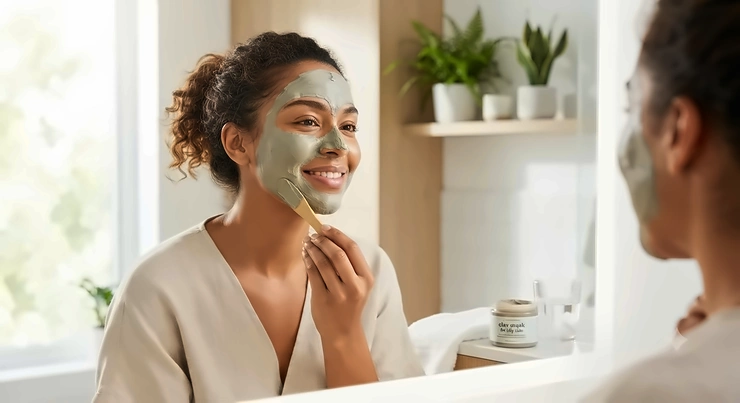
A clay mask for oily skin is a skincare treatment made from mineral-rich earth clays — most commonly bentonite, kaolin, or volcanic ash — that dries on the skin and physically absorbs excess sebum, dirt, and dead skin cells before being rinsed away. Most people leave one on for 10 to 15 minutes, once or twice a week, as a targeted step rather than a daily habit.
The clay itself is old news, geologically speaking. Cleopatra reportedly used clay from the Nile and the Arabian desert as part of her beauty routine over 1,800 years ago, and the bentonite clay used in many modern formulas hasn’t changed its basic chemistry since. What has changed is everything around it — the acids, the charcoal, the soothing botanicals brands now blend in to stop a mask from turning your face into the Sahara.
Top 7 Clay Masks for Oily Skin: Expert Analysis
Here’s the lineup, budget to blowout, with the honest trade-offs nobody prints on the label.
1. Aztec Secret Indian Healing Clay — the one-ingredient extraction powerhouse
There’s something almost stubborn about a product that refuses to add a single extra ingredient, and that’s exactly what you get here. This is a wash-off mask made from a single ingredient — bentonite, sourced from Death Valley, California, where it’s sun-dried for up to six months in temperatures that sometimes reach 134 degrees Fahrenheit.
Mixed with equal parts water or apple cider vinegar into a spreadable paste, the clay’s job is straightforward: bentonite is excellent at absorbing sebum and grime, and its negative ionic charge lets it attract positively charged particles like bacteria and built-up gunk sitting in your pores. For genuinely oily, congested skin, that’s not marketing fluff — it’s basic clay chemistry doing exactly what it’s built to do.
Based on the spec comparison, this is the mask for people who find “gentle” clay masks a little pointless. Reviewers consistently note strong pore-tightening and a noticeably smoother, less shiny finish within a few uses, and aggregated feedback on Walmart’s listing shows an average rating of 4.5 out of 5 stars across 77 reviews, with 83% giving it five stars. What most buyers overlook is that this intensity is a double-edged sword: because bentonite is such a good absorbent, it can pull out more than excess sebum if used too often, leaving skin dry — so restraint matters more here than with gentler formulas.
Pros:
- ✅ Pure bentonite delivers maximum oil and impurity extraction
- ✅ One 1-2 lb tub lasts many months, incredible cost-per-use
- ✅ Mixable with vinegar or water to adjust intensity
Cons:
- ❌ Can over-dry skin if used more than 1-2 times weekly
- ❌ Powder format requires mixing, less convenient than a jar
Priced under C$20 for a container that lasts the better part of a year, this is arguably the best value entry point into bentonite clay mask territory for oily skin — check current price before buying, since powder tub sizes vary between retailers.

2. Freeman Feeling Beautiful Mint & Lemon Clay Mask — best everyday shine-control pick
If Aztec Secret is the intense weekend treatment, this is the mask you reach for on a random Tuesday. The formula blends kaolin and bentonite clay with lemon fruit extract and peppermint leaf extract, aiming for a lighter, more wearable experience than straight bentonite.
Here’s what to weigh: the mint delivers a genuine cooling sensation on application, which reviewers repeatedly single out as the mask’s signature feature, while the lemon extract is positioned for brightening rather than deep exfoliation. The spec sheet won’t tell you this, but aggregated review sentiment suggests the appeal is really about texture and sensory experience — people describe it as feeling fresh rather than aggressively drying, which matters if you’ve been burned by masks that leave your face feeling stretched and tight. One long-running community reviewer thread describes trying most of Freeman’s clay mask lineup and rating this lemon-mint version as their favourite of the bunch, largely for how it balances oil control with a non-punishing finish.
Pros:
- ✅ Cooling mint sensation without harsh, tight after-feel
- ✅ Dual clay blend (kaolin + bentonite) balances gentleness and grip
- ✅ Widely available and genuinely budget-friendly
Cons:
- ❌ Contains synthetic dyes and fragrance, a concern for sensitive skin
- ❌ Less potent extraction than single-ingredient bentonite masks
At under C$12, this is one of the most accessible entries into affordable clay mask Canada shopping — the kind of mask you can restock without a second thought.
3. L’Oréal Paris Pure Clay Detox & Brighten — the drugstore all-rounder
This is the mask most likely sitting on a shelf at your local pharmacy right now, and for good reason. Formulated as the number-one clay mask brand in Canada, featuring three mineral clays — kaolin, montmorillonite, and Moroccan lava clay — plus charcoal, it’s built to hit multiple oily-skin concerns in one jar rather than specializing in just one.
What most buyers overlook about this model is how the charcoal changes the mask’s behaviour versus a plain clay: charcoal acts as a magnet that clings to dirt and toxins pulled from deep within the pores, while the clay blend sweeps away excess sebum and helps replenish moisture to maintain the skin’s natural balance. That moisture-replenishing angle is the practical difference between this and Aztec Secret — it’s designed to detox without leaving skin stripped. Reviewer sentiment backs this balance up: on one retailer’s listing, the mask holds a 4.5-star average across 5,680 ratings, with commonly cited positives including a fresh, clean after-feel and an even, spreadable texture that glides on rather than clumping like some thicker charcoal masks.
Pros:
- ✅ Triple-clay plus charcoal blend tackles oil and dullness together
- ✅ Widely available at Canadian drugstores and mass retailers
- ✅ Creamy texture spreads evenly, minimal product waste
Cons:
- ❌ Contains fragrance, which may irritate reactive skin
- ❌ Some formulas in the range run on the small side for the price
Sitting in the C$15-20 range, this is the safest first clay mask for anyone dipping a toe into shine control without committing to a specialty brand.
4. Innisfree Super Volcanic Pore Clay Mask — the K-beauty pick for gentle daily-ish use
Korean skincare built its reputation on multitasking formulas, and this mask leans hard into that identity. It’s marketed as an 8-in-1 product that absorbs excess sebum, provides gentle exfoliation, improves skin texture, cleans fine dust and impurities, deep-cleans pores, removes blackheads and whiteheads, brightens, and delivers a cooling sensation, built around volcanic clusters sourced from Jeju along with lactic acid (AHA).
Here’s what that combination actually means in practice: the volcanic ash absorbs oil the way any mineral clay does, but the added lactic acid gives it a mild exfoliating edge that plain kaolin or bentonite masks don’t have — so you’re getting light chemical exfoliation layered on top of physical oil absorption. Based on an independent consumer study cited by the brand, 93% of participants felt their pores looked cleaner after use, and 83% felt their skin was less oily after a 14-day trial period. Reviewers consistently frame this as a “non-drying” clay experience — a real point of differentiation, since the formula is designed to purify pores and improve texture without stripping moisture, which the reviewer community seems to genuinely notice compared to harsher bentonite-only options.
Pros:
- ✅ AHA-clay combo adds gentle exfoliation to oil absorption
- ✅ Cooling, non-drying finish reported across most reviews
- ✅ Suitable for more frequent use than pure bentonite
Cons:
- ❌ Some sensitive-skin users report it’s not tolerant enough for reactive skin
- ❌ Pricier per use than basic drugstore clay masks
In the C$25-32 bracket, this is a smart mid-range pick if pore tightening matters as much to you as oil absorption.
5. Origins Clear Improvement Active Charcoal Mask — best for sensitive-but-oily skin
Launched over a decade ago and still holding its own, this mask made bamboo charcoal a household clay-mask ingredient before most competitors caught on. The formula pairs 1% purifying bamboo charcoal with 18% oil-absorbing clay, designed to draw out deep-dwelling pore-cloggers, reduce excess oils that lead to blemishes, and improve the appearance of skin’s texture and pores.
What most buyers overlook about this one is its ingredient discipline: it’s genuinely fragrance-free in its base formulation, which is a meaningful advantage if oily skin also happens to be reactive skin — a combination more common than skincare marketing usually admits. According to independent third-party analysis, the mask’s triple-clay system at 18% concentration provides genuine, substantial oil absorption, and it remains completely fragrance-free — rare and valuable in the charcoal mask category. The same analysis notes a real trade-off worth knowing before you buy: it can feel overly drying on non-oily skin types even with glycerin included, and the dark charcoal tint requires thorough rinsing since it can stain washcloths.
Pros:
- ✅ Fragrance-free formula suits reactive, oily-sensitive skin
- ✅ High 18% clay concentration for genuine oil absorption
- ✅ Vegan, cruelty-free, no parabens or sulfates
Cons:
- ❌ Dark tint can stain light-coloured towels and washcloths
- ❌ Premium price relative to similarly concentrated drugstore options
At roughly C$45-55, it’s the pick for buyers who’ve been burned by fragranced masks before and want a clean-list alternative that still performs.

6. Kiehl’s Rare Earth Deep Pore Cleansing Masque — the clinically-backed premium option
Few clay masks come with an actual clinical figure attached, which makes this one stand out on paper. Formulated around Amazonian white clay, a mineral-rich Brazilian ingredient, blended with kaolin and bentonite plus aloe vera for soothing, the brand states the formula is clinically proven to reduce skin’s surface oil production by 46.7%, measured two hours after use versus untreated skin.
Here’s what that number means in practice: a 46.7% reduction isn’t a subjective “feels less oily” claim, it’s a measured before-and-after comparison — which is unusually specific for a category that leans heavily on vibes and Instagram lighting. What most buyers overlook is the aloe vera’s role here: it’s not just a soothing afterthought, it’s doing real work to offset the potential dryness that comes with that level of oil reduction, which explains why reviewers describe this as effective without the tightness some competitors leave behind. On one retailer’s aggregated reviews, the product holds a strong rating, with customer reviews weighted heavily toward five stars and repeated mentions of the formula being suitable for daily use after cleansing.
Pros:
- ✅ Independently notable clinical oil-reduction figure (46.7%)
- ✅ Aloe vera offsets dryness better than most intense clay masks
- ✅ Cream texture is gentle enough for frequent application
Cons:
- ❌ Premium price point compared to similarly performing options
- ❌ 125ml jar is smaller than some budget tubs at a higher cost-per-ounce
In the C$55-68 range, this is the mask for buyers who want data behind the claims and don’t mind paying a premium for it.
7. GlamGlow Supermud Clearing Treatment — the acid-clay hybrid for acne-prone oily skin
This is the mask that tingles, and that tingling is doing something. Rather than relying on clay alone, the formula layers a blend of six acids — lactic, salicylic, glycolic, mandelic, tartaric, and pyruvic — with activated-X charcoal and K-17 clay to attract and lift away dirt and skin congestion while supporting the skin’s natural oil balance.
What sets this apart from the rest of the list is that it isn’t really “just” a clay mask — it’s a resurfacing treatment that happens to use clay as its delivery mechanism, which is why buyers describe results closer to a mini chemical peel than a simple absorption mask. Based on brand-published consumer testing, 94% of participants felt their skin looked renewed after just one day, and after three uses over a week, 98% reported their skin looked renewed and 97% saw improved skin clarity. Aggregated independent reviews are more mixed on value: one reviewer platform’s ingredient-compatibility breakdown found the formula scored five ingredients good and zero bad for oily skin specifically, while individual reviewer feedback repeatedly flags the price as the sticking point, with one reviewer describing it as a great cleaning mask that deeply cleans pores and leaves blackheads noticeably reduced, despite the cost being their only real complaint.
Pros:
- ✅ Six-acid blend adds real exfoliation beyond clay’s oil pull
- ✅ Strong reviewer consensus on visible pore and clarity results
- ✅ Tingling sensation signals active ingredients working, not irritation for most users
Cons:
- ❌ Highest price point on this list by a wide margin
- ❌ Acid blend may be too strong for very sensitive or reactive skin
At C$78-92, this is a splurge — but for acne-prone oily skin specifically, the acid-plus-clay combination does more heavy lifting than clay alone ever could.
Top 7 Clay Masks: Full Spec Comparison
| Product | Key Actives | Skin Sensitivity | Leave-On Time | Best For |
|---|---|---|---|---|
| Aztec Secret Indian Healing Clay | Calcium bentonite | Low tolerance, use sparingly | 5-20 min | Deep extraction budget hunters |
| Freeman Feeling Beautiful Mint & Lemon Clay Mask | Kaolin, bentonite, mint, lemon | Moderate | 10-15 min | Everyday oil control |
| L’Oréal Paris Pure Clay Detox & Brighten | 3 clays, charcoal | Moderate | 10-15 min | Balanced all-rounder |
| Innisfree Super Volcanic Pore Clay Mask | Volcanic clusters, lactic acid | Moderate-high | 5-10 min | Pore tightening + light exfoliation |
| Origins Clear Improvement Active Charcoal Mask | Kaolin, bentonite, bamboo charcoal | High (fragrance-free) | 10 min | Sensitive-oily combination |
| Kiehl’s Rare Earth Deep Pore Cleansing Masque | Amazonian white clay, aloe | High | 10 min | Clinically-measured oil reduction |
| GlamGlow Supermud Clearing Treatment | Kaolin, 6-acid blend, charcoal | Low-moderate | 5-20 min | Acne-prone, occasional deep treatment |
The clearest pattern in this table is the inverse relationship between sensitivity tolerance and raw extraction power: Aztec Secret Indian Healing Clay and GlamGlow Supermud Clearing Treatment sit at opposite price points but share the lowest sensitivity tolerance, because both prioritize intensity over gentleness. If your skin reacts easily but still runs oily, Origins Clear Improvement Active Charcoal Mask and Kiehl’s Rare Earth Deep Pore Cleansing Masque are built to soften that trade-off with soothing additions like aloe.
Practical Usage Guide: How to Use a Clay Mask for Oily Skin
Buying the right mask is half the job. Using it wrong undoes most of the benefit, so here’s how to actually get oil absorption and pore tightening without wrecking your skin barrier in the process.
Start with clean, slightly damp skin — applying clay to a bone-dry face makes it dry out faster and unevenly, pulling moisture from skin rather than just excess oil. Apply a thin, even layer with a brush or clean fingers, avoiding the eye area and any active breakouts you don’t want to aggravate. Most clay masks are designed to dry to a matte, slightly cracked finish within 10 to 15 minutes — that’s your cue to rinse, not to leave it on longer for “better results.” A common first-30-days mistake is treating clay masks like sheet masks and leaving them on until fully hard and tight; that overextraction is exactly what leads to the dryness and irritation that makes people swear off clay masks entirely.
Rinse with lukewarm water, working in circular motions to help lift the dried clay without scrubbing. Follow immediately with a lightweight, oil-free moisturizer — skipping this step because “my skin is already oily enough” is the single most common mistake in the category, and it backfires by triggering rebound oil production as skin tries to compensate for lost moisture. For most oily skin types, one to two sessions a week is the sweet spot; daily use, even with a gentle formula, tends to over-strip the skin barrier over a 30-day window and can actually increase shine rather than control it.
Real-World Scenarios: Which Clay Mask Fits Your Life
The budget-conscious student with a shine problem. Living on a tight schedule and a tighter budget, weekly deep cleans aren’t optional when lectures and part-time shifts leave skin looking perpetually greasy by 3 p.m. Aztec Secret Indian Healing Clay or Freeman Feeling Beautiful Mint & Lemon Clay Mask deliver real oil absorption for under C$20, and a single tub or tube realistically lasts a full semester of weekly use.
The sensitive-but-oily professional. Oily T-zone, reactive cheeks, and a low tolerance for fragrance or harsh acids after a bad reaction to a trendy mask years back — this is a genuinely common combination, not a contradiction. Origins Clear Improvement Active Charcoal Mask solves for exactly this: a fragrance-free formula that still delivers meaningful clay concentration without triggering redness.
The acne-prone gym-goer. Sweat, friction from workout gear, and hormonal breakouts stack up fast for anyone training several times a week. GlamGlow Supermud Clearing Treatment‘s acid-clay hybrid targets both the oil and the congestion driving those breakouts, making it worth the splurge for someone who’ll actually use the exfoliating boost regularly rather than letting a jar go stale in a drawer.
How to Choose a Clay Mask for Oily Skin
- Identify your actual oil level, not your perceived one. Genuinely very oily skin — shiny within two hours of cleansing — tolerates and benefits from stronger bentonite formulas. Moderately oily or combination skin usually does better with kaolin-forward blends.
- Check for soothing additions if you’re sensitive. Aloe vera, chamomile, or oat extracts in the ingredient list signal a formula built to offset clay’s drying tendency.
- Match frequency to formula strength. Intense bentonite masks like Aztec Secret call for once or twice weekly use; gentler blends with AHAs, like Innisfree’s, can sometimes handle more frequent application.
- Decide if you want acids layered in. Acne-prone oily skin benefits from acid-clay hybrids; simple oiliness without breakouts often does fine with clay alone.
- Factor in fragrance sensitivity. Reactive skin should scan for fragrance-free formulas specifically, since synthetic fragrance is one of the more common irritant triggers in mask formulas.
- Consider cost-per-use, not just sticker price. A C$90 jar used monthly can cost less over a year than a C$12 tube used weekly.
- Patch test before a full-face application, especially with acid-forward or bentonite-heavy formulas, since reaction risk is higher with these more active ingredients.
Bentonite Clay Mask for Oily Skin vs Kaolin and Charcoal Alternatives
Not all clay is created equal, and the difference matters more than most drugstore shelves let on. A bentonite clay mask for oily skin is the heavyweight option: it has a strong negative charge that bonds to the positive charge in toxins and heavy metals, making it the go-to choice for acne-prone and genuinely oily skin. It pulls hard, works fast, and needs a lighter touch in terms of frequency.
Kaolin sits at the gentler end of the spectrum. Independent skincare analysis describes it as finer-grained and physically milder, absorbing surface-level excess oil without bentonite’s deeper extraction effect, which makes it the better daily-maintenance clay for mild-to-moderate oiliness, first-time clay mask users, and combination skin. Reviewers pick kaolin-forward masks when they want oil control without the risk of overdoing it — it’s a much smaller margin for error than bentonite.
Charcoal isn’t technically a clay at all, but it’s almost always blended with one because the two work through different mechanisms. Charcoal is porous and adsorbs surface debris and pollutants, while clay handles the oil-pulling. That’s why most mid-range and premium masks on this list — L’Oréal Paris Pure Clay Detox & Brighten, Origins Clear Improvement Active Charcoal Mask, and GlamGlow Supermud Clearing Treatment — pair charcoal with clay rather than using either alone. Independent formulation analysis notes that many premium tube-format clay masks blend both kaolin and bentonite with additional volcanic minerals for a balanced, calibrated approach, which explains why hybrid formulas tend to sit in the middle of both the price and intensity spectrum.
Common Mistakes When Using a Clay Mask for Shine Control
Even a great clay mask for shine control fails when the routine around it is off. The most frequent misstep is over-application — using an intense bentonite mask daily “because it works so well” until skin starts overproducing oil to compensate for the dryness, ironically worsening the exact problem the mask was meant to solve.
A second common error is applying clay masks over active breakouts or broken skin, which can irritate already-inflamed areas rather than calm them; spot-treating around active blemishes, not directly on them, tends to work better. A third mistake, flagged consistently by dermatologists at the American Academy of Dermatology, is skipping moisturizer afterward under the assumption that oily skin doesn’t need it — applying moisturizer daily is still important even for oily skin, since it helps maintain the skin’s natural moisture balance and prevents the rebound oiliness that comes from stripped, dehydrated skin trying to protect itself.
Letting clay dry completely hard and tight before rinsing is another frequent misstep — that fully cracked, stiff feeling isn’t a sign the mask is “working harder,” it’s a sign it’s pulled more moisture than intended. Rinse at the matte stage, not the concrete stage.
What to Expect: Real-World Oil Absorption and Pore Tightening Results
Specs are one thing; what actually happens on your face is another. Immediately after rinsing a clay mask, expect a visibly matte finish and a genuine, if temporary, reduction in pore appearance — pores look smaller mostly because they’re clean and the surrounding skin is slightly tightened, not because they’ve physically shrunk. That pore-tightening effect typically fades within a day or two as skin returns to its normal texture, which is why consistent weekly use matters more than a single dramatic session before an event.
Oil absorption results are more immediate and more durable through the day: a good clay mask session can meaningfully cut down midday shine for 12 to 24 hours, particularly with bentonite or high-concentration formulas like Origins’ 18% clay blend. Longer-term, consistent use over four to six weeks tends to show gradual improvement in overall oil balance and breakout frequency, especially when paired with a properly matched cleanser and a non-comedogenic moisturizer — the mask is one piece of a routine, not a stand-alone miracle fix.
Affordable Clay Mask Canada: Best Picks by Budget
Finding an affordable clay mask in Canada doesn’t mean settling for a weaker formula — some of the most cost-effective options on this list punch well above their price tag. Aztec Secret Indian Healing Clay remains the strongest value proposition: a single-ingredient bentonite clay that, priced under C$20, can realistically deliver dozens of applications from one tub, working out to pennies per use once mixed with water or vinegar at home.
Freeman Feeling Beautiful Mint & Lemon Clay Mask and L’Oréal Paris Pure Clay Detox & Brighten round out the accessible tier, both widely stocked at Canadian drugstores and mass retailers like Shoppers Drug Mart and Walmart, typically priced under C$20. For shoppers specifically hunting affordable clay mask Canada options without sacrificing multi-clay complexity, the L’Oréal formula’s three-clay-plus-charcoal blend offers more formulation depth than most products in its price bracket. The general rule holds across the category: affordability tracks with simpler formulas and larger packaging, while premium pricing usually buys you acids, clinical testing, or specialty sourcing rather than dramatically different clay chemistry.
Mattifying Skincare Routine: Building Around Your Clay Mask
A clay mask is a weekly reset, not a daily habit, which means the rest of your mattifying skincare routine carries most of the day-to-day shine control. Start with a gentle, gel-based cleanser rather than a foaming, stripping one — counterintuitively, harsh cleansers trigger more oil production as skin overcompensates for the lost moisture. Follow with an alcohol-free toner or essence containing niacinamide, which has a track record of helping regulate visible oil without the drying side effects of older-generation astringents.
Moisturizer is non-negotiable, even on oily skin days — reach for an oil-free, non-comedogenic gel formula rather than skipping this step entirely. Sunscreen matters just as much; a mattifying, oil-control sunscreen finish prevents the classic midday shine spiral that happens when SPF sits on top of already-oily skin. Your clay mask slots in once or twice weekly as the deep-clean anchor of this routine, working alongside — not instead of — daily mattifying products.
Long-Term Cost & Maintenance
Thinking beyond the sticker price changes which mask actually makes financial sense. Aztec Secret Indian Healing Clay, at roughly C$15-20 for a pound of powder, can realistically stretch across 30-plus applications when mixed fresh each use, landing well under C$1 per session. GlamGlow Supermud Clearing Treatment, at C$78-92 for a jar typically used for 15-20 applications given its thin-layer application style, lands closer to C$4-5 per session — a meaningfully different long-term cost despite the enormous gap in upfront price.
Mid-range options like Innisfree Super Volcanic Pore Clay Mask and Origins Clear Improvement Active Charcoal Mask land in between, generally working out to C$1.50-3 per application depending on layer thickness and usage frequency. The takeaway: sticker price is a poor predictor of actual value here — a bulk bentonite tub can be cheaper per use than a “budget” drugstore tube, simply because of how differently they’re portioned and priced per gram.
Safety, Regulations & Compliance Guide
Cosmetic safety in Canada runs through Health Canada, not the brand’s own marketing copy. Every cosmetic sold here, clay masks included, falls under the Food and Drugs Act, and manufacturers must disclose all cosmetic ingredients to Health Canada through a Cosmetic Notification Form, which lets the department monitor ingredients and keep a record of every cosmetic sold in the country. If you want to double-check an ingredient you’re unsure about, Health Canada’s Cosmetic Ingredient Hotlist is the actual government reference for substances that are prohibited or restricted for use in cosmetics sold in Canada.
For product-specific reassurance, the Canadian Dermatology Association’s recognized products program highlights skincare that’s been vetted against dermatologist-set criteria, which is a useful cross-check if a particular clay mask claims dermatologist approval but doesn’t specify by whom. Beyond regulation, understanding why oily skin behaves the way it does helps set realistic expectations for any mask: sebum production is critical for maintaining skin homeostasis, lubrication, and physiological defense against environmental and infectious threats, according to peer-reviewed dermatological literature — meaning the goal of a good clay mask routine is balance, not elimination. Stripping oil production entirely isn’t the objective, and isn’t achievable with topical products regardless of what packaging promises.
✨ Don’t Miss These Exclusive Deals! 🔍
Take your oily-skin routine to the next level with a clay mask that actually fits your skin type and budget. Click on any highlighted pick above to check current pricing and availability!

FAQ
❓ Can I use a clay mask every day if I have oily skin?
❓ Which clay is best for oily skin, bentonite or kaolin?
❓ Do clay masks actually shrink pores?
❓ Is a clay mask enough for mattifying skincare, or do I need more products?
❓ What's the most affordable clay mask option in Canada?
Conclusion
Oily skin isn’t a problem to solve once and forget — it’s a texture to manage, week after week, with tools that actually understand how sebum works. A clay mask for oily skin earns its place in that toolkit because the chemistry is genuinely sound: minerals with a negative charge pulling out what your pores don’t need, whether that’s a C$15 tub of pure bentonite or a C$90 jar layering in acids and charcoal.
What matters more than the price tag is the match — matching clay intensity to your actual oil level, matching frequency to formula strength, and matching your post-mask routine to what your skin needs to stay balanced rather than stripped. Whether you land on the no-frills reliability of Aztec Secret Indian Healing Clay or the clinical precision of Kiehl’s Rare Earth Deep Pore Cleansing Masque, the goal is the same: fewer 2 p.m. shine check-ins, more skin that just quietly behaves.
✨ Ready to build your ideal oily-skin routine? Check current prices on the picks above and see which one earns a spot in your bathroom cabinet! 🧴✅
Recommended for You
- LED Light Therapy Mask: 7 Best Proven Picks For Canada (2026)
- Peeling Gel vs Face Scrub For Beginners: 7 Picks Ranked (2026)
- AHA vs BHA Exfoliator For Acne-Prone Skin: 7 Picks (2026)
Disclaimer: This article contains affiliate links. As an Amazon Associate, I earn from qualifying purchases. If you purchase products through these links, we may earn a small commission at no additional cost to you.
✨ Found this helpful? Share it with your friends! 💬🤗
