
In This Article
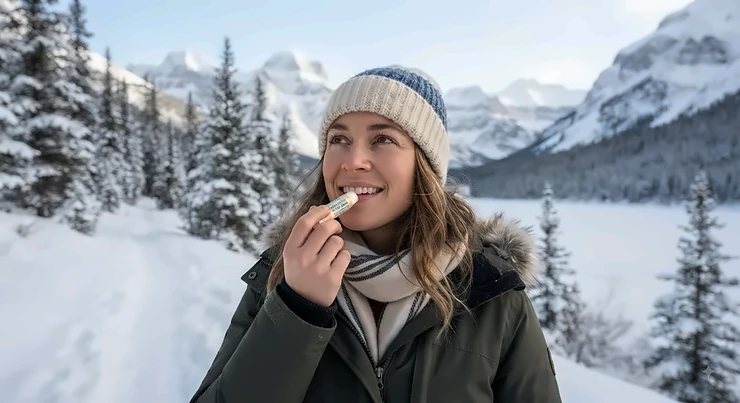
Your face gets sunscreen. Your arms get sunscreen. Your lips? They usually get nothing but a swipe of plain balm and a prayer. That’s a problem, because the skin on your lips is thinner, has almost no melanin, and sits in a spot that catches sun from basically every angle — including bouncing straight up off snow in February. Finding the best SPF lip balm isn’t a vanity project; it’s the same logic as sunscreen on your cheeks, just shrunk down to stick-sized.
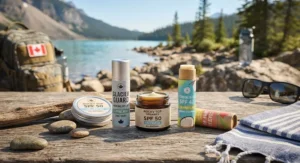
Canadian winters and summers both throw UV at your mouth in ways most people never think about. A lip balm with sunscreen solves a specific problem that a jar of plain beeswax never will: it actually blocks or absorbs UVA and UVB rays before they reach the thin skin of your lower lip, the spot dermatologists watch most closely for early sun damage. According to Health Canada’s sunscreen guidance, a broad-spectrum sunscreen of SPF 30 or higher is the baseline recommendation for any exposed skin — lips included.
This guide breaks down seven real, currently available products across every price tier, from a C$6 drugstore stick to a C$28 Canadian-made primer. We’ll get into ingredients, texture, who each one actually suits, and where the marketing claims hold up versus where they don’t. No invented five-star reviews, no fluff — just honest analysis you can use before your next trip to the trail, the beach, or just the grocery store parking lot in July.
Quick Comparison Table
| Product | SPF | Type | Price Range (CAD) | Best For |
|---|---|---|---|---|
| ATTITUDE SPF 15 Lip Balm Duo | 15 | Mineral | C$12-C$16 | Clean-beauty, everyday wear |
| Sun Bum SPF 30 Sunscreen Lip Balm | 30 | Chemical | C$6-C$9 | Budget all-rounder, flavour variety |
| Burt’s Bees SPF 30 Lip Balm | 30 | Chemical | C$16-C$20 | No white cast, smooth glide |
| Banana Boat Sport Performance SPF 50 | 50 | Chemical | C$8-C$12 | Highest SPF, athletes |
| Neutrogena Lipcare SPF 20 | 20 | Chemical | C$5-C$8 | Everyday drugstore basic |
| Blistex Five Star SPF 30 | 30 | Mineral | C$10-C$15 | Balanced mineral performer |
| Nudestix Nudescreen Lip Primer SPF 30 | 30 | Mineral | C$24-C$28 | Prestige, makeup-skincare hybrid |
Scanning the table, the split between mineral and chemical filters matters more than the SPF number alone — mineral options like ATTITUDE SPF 15 Lip Balm Duo and Blistex Five Star SPF 30 sit on top of the skin rather than absorbing into it, which tends to suit sensitive lips better. Meanwhile Banana Boat Sport Performance SPF 50 wins on raw SPF but trades away some of the moisturizing polish you get from Burt’s Bees SPF 30 Lip Balm. If budget is the deciding factor, Sun Bum SPF 30 Sunscreen Lip Balm and Neutrogena Lipcare SPF 20 both land comfortably under C$10.
💬 Just one click — help others make better buying decisions too!😊
Top 7 SPF Lip Balms: Expert Analysis
1. ATTITUDE SPF 15 Lip Balm Duo — Canada’s clean-beauty mineral option
ATTITUDE SPF 15 Lip Balm Duo stands out immediately because ATTITUDE is a Canadian company, and this is one of the only EWG Verified mineral lip balms sold in a two-pack on amazon.ca. The active ingredient is non-nano zinc oxide, which sits on the surface of your lips and physically deflects UV rays rather than absorbing them chemically. That distinction matters for anyone whose lips react to chemical sunscreen filters with tingling or peeling — a mineral barrier tends to be gentler. Based on the spec comparison, SPF 15 is the lightest protection factor on this list, so it suits daily commuting and errands more than an afternoon at the lake. Reviewers consistently note the duo pack format is practical for keeping one in a bag and one at a desk, and the vegan, unscented formula avoids the coconut-and-vanilla saturation common in this category. What most buyers overlook is that mineral formulas like this one start working the moment they’re applied, unlike some chemical filters that need roughly 15-20 minutes to activate.
Pros:
- ✅ Non-nano zinc oxide is gentle on reactive or sensitive lips
- ✅ EWG Verified formula with a transparent ingredient list
- ✅ Two-pack format means a spare is always on hand
Cons:
- ❌ SPF 15 falls short of the SPF 30 dermatologists generally recommend
- ❌ Mineral formulas can leave a faint white cast on darker lip tones
At around C$12-C$16 for the duo, this is solid value if you’re layering it under lipstick for daily low-intensity sun exposure, though it isn’t the pick for a full day outdoors.
2. Sun Bum SPF 30 Sunscreen Lip Balm — best all-rounder for everyday carry
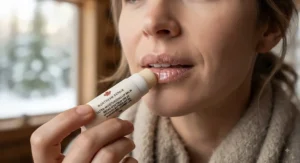
Sun Bum SPF 30 Sunscreen Lip Balm is the bestseller on Amazon.ca’s lip sunscreen category for a reason: it hits SPF 30, the Health Canada-recommended threshold, at a price that barely registers on a grocery run. The formula leans on chemical UV filters combined with aloe vera and vitamin E, aiming to hydrate while it protects rather than just sitting as a barrier. Here’s what to weigh: chemical filters like these need a short window to bind with skin before they’re fully effective, so applying it the moment you step outside isn’t ideal — a few minutes ahead works better. This is the balm for people who lose lip balms constantly, since at roughly C$6-C$9 a stick, replacing one isn’t a financial event. Reviewers across flavour variants (coconut, pineapple, banana, pomegranate) consistently mention the scent and taste as pleasant rather than medicinal, which genuinely matters for compliance — a balm nobody wants to reapply doesn’t protect anyone.
Pros:
- ✅ Hits the SPF 30 broad-spectrum benchmark at a low price
- ✅ Vegan, cruelty-free, and available in several appealing flavours
- ✅ Small stick size fits easily in any bag or pocket
Cons:
- ❌ Chemical filters (oxybenzone included in some variants) aren’t ideal for reef-conscious travellers
- ❌ Smaller 4.25g size means more frequent repurchasing than larger tubes
In the C$6-C$9 range, it’s genuinely hard to beat for cost-per-use, making it the balm most people should just keep in every bag, car, and coat pocket.
3. Burt’s Bees SPF 30 Lip Balm — smooth glide with no white residue
Burt’s Bees SPF 30 Lip Balm takes a different formulation route: avobenzone, octisalate, and octocrylene as the active trio, none of which leave the chalky cast that mineral balms sometimes do. On paper this means it’s a stronger pick for anyone applying balm over or under lip colour, since there’s no visible film to fight with. The tube format (versus a stick) also changes the application feel — more like a gloss than a crayon — which some people find easier to apply evenly along the lip line. Aggregated reviewer sentiment points to this being one of the longer-lasting SPF balms in liquid or gel-type format, with testers noting it held up better than competitors through hours of wear without melting or separating. The trade-off dermatologists and reviewers both flag is a slightly shiny, sometimes sticky finish, which not everyone loves for daily makeup-free wear.
Pros:
- ✅ No visible white cast, ideal for wearing under lipstick
- ✅ Longer wear time than most stick-format competitors
- ✅ Pleasant scent without a chemical aftertaste
Cons:
- ❌ Finish can feel sticky or heavy for some users
- ❌ Premium pricing relative to similar-SPF stick balms
At roughly C$16-C$20, it sits in the mid-range, and the value case is strongest for people who specifically dislike the chalky look of mineral formulas.
4. Banana Boat Sport Performance SPF 50 — highest protection factor on this list
Banana Boat Sport Performance SPF 50 is built for one job: maximum coverage during long outdoor stretches, and it delivers the highest SPF of any product here. The formula is broad-spectrum and water-resistant, with vitamin E and aloe folded in to offset the drying effect that high-SPF chemical filters can sometimes have. What most buyers overlook about SPF 50 versus SPF 30 is diminishing returns — SPF 30 blocks about 97% of UVB rays, while SPF 50 blocks roughly 98%, a small but real difference for people spending six-plus hours outside. This is genuinely the pick for runners, cyclists, and anyone doing sustained activity where sweat and reapplication timing matter more than cosmetic finish. It’s typically sold in multi-packs, which lowers the effective cost-per-stick and makes it easy to stash extras in a gym bag, glovebox, and backpack simultaneously.
Pros:
- ✅ Highest SPF rating in this roundup for serious sun exposure
- ✅ Water-resistant formula holds up through sweat
- ✅ Multi-pack pricing lowers cost per stick
Cons:
- ❌ Sportier scent profile, less appealing for everyday casual wear
- ❌ Heavier texture than lighter gel-type balms
Multi-packs typically land in the C$8-C$12 range, which — split across the pack — makes this one of the most cost-effective high-SPF options available.
5. Neutrogena Lipcare SPF 20 — the reliable drugstore basic
Neutrogena Lipcare SPF 20 is the balm most Canadians have already tried without thinking twice, and that familiarity is part of the appeal — it’s stocked in nearly every pharmacy and grocery store nationwide. The Norwegian Formula moisturizing base targets dry, chapped lips first and sun protection second, which is an honest way to frame it: SPF 20 covers daily low-exposure situations like a walk to transit or lunch on a patio, but it isn’t the pick for a beach day. Based on the spec comparison, this sits below the SPF 30 baseline Health Canada and the Canadian Dermatology Association both recommend for meaningful protection, so treat it as a maintenance product rather than a dedicated sun-defense tool. It’s frequently sold in multi-packs of four, which suits households that lose lip balm at a rate rivaling socks in a dryer.
Pros:
- ✅ Widely available in pharmacies and grocery stores across Canada
- ✅ Strong moisturizing base for genuinely chapped lips
- ✅ Multi-pack bundles offer excellent value per stick
Cons:
- ❌ SPF 20 is below the SPF 30 minimum experts recommend
- ❌ Less broad-spectrum coverage than higher-SPF competitors
At roughly C$5-C$8 for a multi-pack, it’s an easy stocking-stuffer for a junk drawer, glovebox, or backpack — just don’t rely on it alone for a full day in direct sun.
6. Blistex Five Star Lip Protection SPF 30 — the balanced mineral middle ground
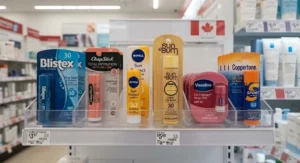
Blistex Five Star Lip Protection SPF 30 uses zinc oxide (5.5%) and titanium dioxide (4%) as its active duo, making it a mineral formula that splits the difference between the ultra-clean ATTITUDE option and the high-SPF chemical formulas elsewhere on this list. Reviewers describe it, almost universally, as unremarkable in the best way: it didn’t melt in a hot car, didn’t feel greasy in a pocket, and didn’t provoke complaints either way. That consistency is genuinely valuable — a lip balm that performs identically in July heat and a January commute is doing its job. The formula carries a very slight tint but avoids the heavier white cast some pure-mineral balms produce, a small but noticeable win for anyone applying it without a mirror handy.
Pros:
- ✅ Mineral formula with minimal white cast compared to competitors
- ✅ Consistent, predictable performance across hot and cold conditions
- ✅ Pocket-sized stick that holds up structurally in heat
Cons:
- ❌ Some reviewers report a mild chemical aftertaste
- ❌ Contains aluminum-based compounds some clean-beauty shoppers avoid
Priced around C$10-C$15, it’s a dependable middle-tier choice for anyone who wants mineral protection without paying prestige-brand pricing.
7. Nudestix Nudescreen Lip Primer SPF 30 — the Canadian prestige hybrid
Nudestix Nudescreen Lip Primer SPF 30 comes from a Toronto-founded beauty brand and blurs the line between skincare and makeup — it’s marketed as a lip primer that happens to carry SPF 30 mineral protection, meant to sit underneath lipstick or gloss rather than stand alone as a bare-lip balm. This is the premium pick on the list, and the price reflects a hybrid-use formula rather than a single-purpose stick. What the spec sheet won’t tell you, but the brand’s own positioning suggests, is that this product is designed for people already building a multi-step lip routine, not for someone who just wants a quick SPF swipe before leaving the house. For that specific buyer — someone layering colour products daily and wanting sun protection baked into the base layer — it solves two problems in one product, which can offset the higher cost over time versus buying a primer and a separate SPF balm.
Pros:
- ✅ Dual-purpose formula: lip primer plus SPF 30 mineral protection
- ✅ Canadian-founded prestige brand with polished packaging
- ✅ Suits layering under lipstick without disrupting colour
Cons:
- ❌ Premium price point compared to single-purpose SPF balms
- ❌ Less practical for people who don’t wear lip colour daily
At roughly C$24-C$28, it’s the priciest option here, best suited to shoppers who already view lip care as part of a broader makeup routine rather than a standalone sun-protection step.
SPF Skincare Essentials: Building a Practical Daily Routine
Treating lip balm as part of your SPF skincare essentials — not an afterthought — changes how you shop for one. Start by keeping a balm in every bag, coat pocket, and car console, because the products above only work if they’re actually within reach when you need them. Apply generously about 15 minutes before heading outside if you’re using a chemical-filter formula like Sun Bum SPF 30 Sunscreen Lip Balm or Burt’s Bees SPF 30 Lip Balm, since those need a short window to bind properly. Mineral options like ATTITUDE SPF 15 Lip Balm Duo and Blistex Five Star SPF 30 work immediately on application, which makes them a better grab-and-go choice for last-minute exits.
Reapplication is where most people fail, not selection. A balm reapplied every two hours — or immediately after eating, drinking, or swimming — does more for lip health than switching between SPF 30 and SPF 50 products. Store balms away from direct heat; a stick left in a hot car glovebox all July can degrade faster than the label suggests, weakening the UV filters before the expiry date arrives. Finally, rotate a higher-SPF option like Banana Boat Sport Performance SPF 50 into your kit specifically for long outdoor stretches, keeping a lighter everyday formula for routine wear.
Real-World Scenarios: Matching the Best SPF Lip Balm to Your Lifestyle
The daily transit commuter: Someone walking 10-15 minutes to a bus stop or train twice a day doesn’t need SPF 50 sport protection — Neutrogena Lipcare SPF 20 or ATTITUDE SPF 15 Lip Balm Duo covers that low-intensity, repeated exposure without feeling like overkill, and both fit easily in a coat pocket for quick reapplication.
The weekend trail runner: Long stretches outdoors with sweat and sustained UV exposure call for Banana Boat Sport Performance SPF 50, whose water resistance and higher SPF hold up through hours of activity better than a lighter daily formula would.
The lipstick-wearing professional: Someone applying colour products daily benefits most from Nudestix Nudescreen Lip Primer SPF 30, since it builds sun protection into the base layer without disrupting the finish of lipstick applied on top — solving two steps in one product.
What Is Sun Protection for Lips?
Sun protection for lips means applying a broad-spectrum SPF product specifically to the lips to block UVA and UVB radiation, since ordinary lip balm offers moisture but zero UV defense. The skin on lips is thinner and has less melanin than facial skin, making it more vulnerable to burning and long-term sun damage even on cloudy days.
Unlike facial sunscreen, most lip products need frequent reapplication — every one to two hours, or immediately after eating or drinking — because normal lip movement wears the product away far faster than skin elsewhere on the body. Health Canada’s guidance on sunscreens specifically calls out lips as a commonly missed area, alongside ears and the tops of feet, when people apply sun protection.
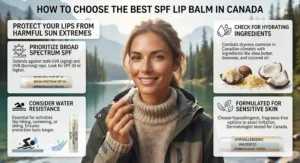
How to Choose the Best SPF Lip Balm
- Check the SPF number first. Anything below SPF 15 offers minimal meaningful protection; SPF 30 or higher is the benchmark most dermatologists recommend for daily use.
- Confirm broad-spectrum coverage. A product needs to block both UVA (aging) and UVB (burning) rays — check the label rather than assuming SPF alone covers both.
- Decide between mineral and chemical filters. Mineral formulas like zinc oxide work immediately and suit sensitive lips; chemical filters need roughly 15 minutes to activate but often feel less waxy.
- Factor in your activity level. Water-resistant, higher-SPF formulas suit swimming or sweating; lighter daily formulas suit commuting and errands.
- Read the ingredient list for known irritants. Fragrance, menthol, and certain chemical filters can cause tingling or peeling on sensitive lips.
- Weigh format and feel. Sticks glide on fast; tubes and gels apply more like gloss — pick whichever you’ll actually reapply without thinking twice.
- Match price to frequency of use. If you lose lip balm constantly, a budget multi-pack like Sun Bum SPF 30 Sunscreen Lip Balm beats a premium single tube you’ll misplace within a week.
Lip Balm with Sunscreen vs Regular Lip Balm
A lip balm with sunscreen and a regular lip balm solve two entirely different problems, even though they often sit on the same drugstore shelf. Regular balm — think plain beeswax or petroleum jelly sticks — moisturizes and creates a temporary barrier against wind and cold, but it does nothing to block UV radiation and can, in some formulations, actually increase how much light reflects onto the lip surface. SPF-formulated options like Burt’s Bees SPF 30 Lip Balm or Blistex Five Star SPF 30 add active UV filters on top of moisturizing ingredients, meaning they’re doing double duty rather than a single job.
The practical difference shows up over years, not days. Reviewers and dermatological literature both point to plain balm users developing dry, chapped lips that keep returning regardless of how often they reapply, because the underlying UV exposure was never addressed. Comparatively, consistent SPF balm use is linked to lower rates of actinic cheilitis — the precancerous, scaly-patch condition that chronic lip sun exposure can cause. If your current routine is “just” a plain balm, switching to any of the seven SPF options above is a low-effort upgrade with a meaningfully different long-term outcome.
UV Damage Lips Can Suffer Without Protection
UV damage lips experience without protection ranges from short-term sunburn and peeling to long-term conditions like actinic cheilitis, a precancerous change to the lip’s surface caused by cumulative sun exposure. The lower lip catches more direct UV than the upper lip simply because of its angle and position, which is why dermatologists watch it more closely during skin checks.
Problem: Chronic dryness that never fully heals. Solution — swap a plain balm for an SPF option like ATTITUDE SPF 15 Lip Balm Duo, since unprotected UV exposure is often the underlying cause of dryness that keeps returning no matter how much moisturizer is applied.
Problem: Visible scaly or rough patches on the lower lip. Solution — this can be an early sign of actinic cheilitis, and Melanoma Canada specifically lists lips among the commonly overlooked areas that need daily SPF, alongside ears and the backs of hands; persistent patches also warrant a dermatologist visit.
Problem: Sunburned lips after a day outside, even in winter. Solution — UV reflects strongly off snow, so a higher-SPF option like Banana Boat Sport Performance SPF 50 is worth using year-round, not just June through August.
Problem: Premature discolouration or thinning of the lip border. Solution — this is a sign of cumulative UV damage; consistent daily use of any SPF 30+ balm on this list going forward can slow further change, though it won’t reverse existing damage.
Common Mistakes When Buying SPF Lip Balm
One frequent mistake is choosing SPF purely by the number, ignoring whether the product is actually broad-spectrum — a balm can carry a high SPF against UVB rays while offering weak UVA coverage, which still leaves lips vulnerable to aging and deeper damage. Another is buying based on scent or flavour alone, which is understandable but risks ending up with a product like Neutrogena Lipcare SPF 20 whose SPF sits below the recommended threshold for genuine sun-day protection.
A third mistake is assuming one balm covers every situation. Reviewers who buy a single high-SPF sport formula and expect it to feel light enough for daily makeup wear are often disappointed, since sport formulas like Banana Boat Sport Performance SPF 50 prioritize durability over cosmetic finish. Finally, many buyers skip checking expiry dates on lip SPF products specifically, even though active UV filters lose potency over time — a balm bought two summers ago and left in a glovebox likely offers less protection than its label claims today.
SPF Lip Balm for Summer: Seasonal Sun Care Essentials
SPF lip balm for summer needs different priorities than the version you’d carry in January. Longer daylight hours, higher UV index readings, and more time spent outdoors near water or pavement (both of which reflect UV back up at the face) all push toward higher-SPF, water-resistant formulas. This is where Banana Boat Sport Performance SPF 50 earns its spot, particularly for beach days, patio afternoons, or hiking trips where reapplication windows stretch longer than ideal.
Summer also changes storage considerations. A stick left in a hot car or beach bag can soften, separate, or lose potency faster than the same product stored at room temperature, so Canada’s sun safety guidance specifically recommends avoiding direct heat exposure for sunscreen products, lip balm included. For lighter summer days — a walk, a patio lunch, running errands — a mid-SPF everyday option like Blistex Five Star SPF 30 covers routine exposure without the heavier feel of a full sport formula. The general rule: match the SPF and format to how long you’ll actually be outside, not just the season on the calendar.
Benefits vs Traditional Lip Balm: Comparison Table
| Factor | Traditional Balm | SPF Lip Balm |
|---|---|---|
| UV protection | None | Yes (SPF 15-50) |
| Moisture barrier | Yes | Yes, in most formulas |
| Long-term lip health | No sun-damage defense | Reduces actinic cheilitis risk |
| Best For | Cold-weather wind protection only | Year-round daily protection |
The table makes the case plainly: traditional balm and SPF balm aren’t competitors, they’re solving different problems, and only one of them addresses the cumulative UV exposure linked to lip aging and precancerous changes. For anyone currently relying on plain balm, products like ATTITUDE SPF 15 Lip Balm Duo or Sun Bum SPF 30 Sunscreen Lip Balm offer the same moisture benefit plus the protection traditional balm was never designed to provide.
✨ Ready to make the switch?
Check today’s pricing on the pick that fits your routine!
Long-Term Cost & Value Analysis
| Product | Approx. Price | Est. Cost Per Month* | Value Notes |
|---|---|---|---|
| Sun Bum SPF 30 Sunscreen Lip Balm | C$6-C$9 | ~C$3-C$5 | Lowest entry cost, frequent replacement fine |
| Nudestix Nudescreen Lip Primer SPF 30 | C$24-C$28 | ~C$8-C$12 | Higher upfront cost, dual-purpose reduces total products bought |
*Estimated assuming typical daily use and standard tube/stick lifespan; actual mileage varies by application frequency.
Looking purely at sticker price, budget options like Sun Bum SPF 30 Sunscreen Lip Balm win easily, but the real value equation shifts once you factor in what else you’re buying. Someone who already purchases a separate lip primer and a separate lip balm might find Nudestix Nudescreen Lip Primer SPF 30 cost-neutral or even cheaper overall, since it replaces two products with one. For most people without an existing multi-step lip routine, though, a budget SPF 30 stick reapplied consistently delivers more real-world protection per dollar than a premium option used sparingly to make it last.
Frequently Asked Questions
❓ Does SPF lip balm actually work?
❓ What SPF is best for lip balm?
❓ Can I use regular sunscreen on my lips instead?
❓ How often should I reapply SPF lip balm?
❓ Is mineral or chemical SPF lip balm better?
Conclusion
Picking the best SPF lip balm really comes down to matching the product to how you actually spend your day, not chasing the highest SPF number on the shelf. Someone commuting a few minutes to transit has very different needs than someone spending a Saturday on a trail, and the seven options covered here — from the budget-friendly Sun Bum SPF 30 Sunscreen Lip Balm to the prestige Nudestix Nudescreen Lip Primer SPF 30 — span that entire range honestly, without pretending one product fits every situation.
What matters most, based on everything covered above, is consistency over perfection: a lower-SPF balm reapplied regularly beats a high-SPF stick that sits forgotten in a drawer. Whether you land on the Canadian-made ATTITUDE SPF 15 Lip Balm Duo, the balanced Blistex Five Star SPF 30, or the high-coverage Banana Boat Sport Performance SPF 50, the underlying goal is the same: treat lip protection as part of your daily sun routine, not an afterthought reserved for beach days. Your lips take the same UV hit as the rest of your face — they just rarely get asked about it.
Recommended for You
- Best Lip Balm 2026: 7 Honest Picks for Chapped Canadian Lips
- Best Eye Masks 2026: 7 Top Picks You’ll Actually Love
- Eye Cream for Puffiness: 7 Top Picks to Fix Tired Eyes Fast (2026)
Disclaimer: This article contains affiliate links. As an Amazon Associate, I earn from qualifying purchases. If you purchase products through these links, we may earn a small commission at no additional cost to you.
✨ Found this helpful? Share it with your friends! 💬🤗
