In This Article
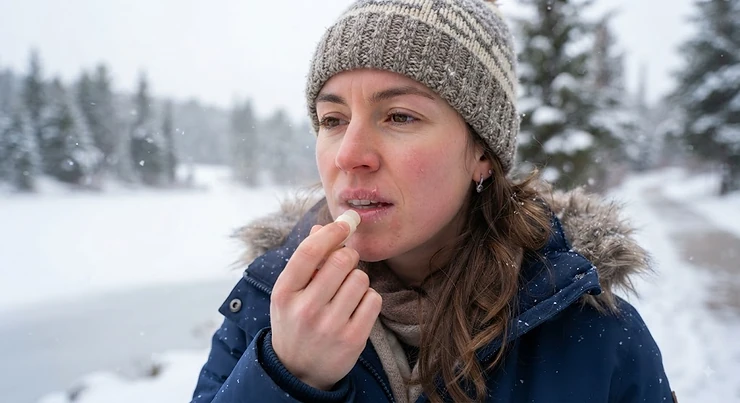
Somewhere between the first November cold snap and the moment your furnace clicks on for the season, your lips stage a quiet rebellion. They crack at the corners. They peel when you smile too wide. They sting the second you bite into anything with citrus in it. If you’re hunting for the best lip balm to survive a Canadian winter — or just to stop absent-mindedly gnawing on your bottom lip during a Zoom call — you’re in the right place. A good lip balm is a simple product with one job: seal moisture into skin that, unlike the rest of your face, has no oil glands of its own to defend itself. That’s the whole story, and yet the drugstore aisle somehow stocks forty variations on it.
We dug through real product specs, real ingredient lists, and the aggregated sentiment from thousands of genuine customer reviews to find seven lip balms actually worth your money — not just the ones with the loudest packaging. You’ll get budget picks, splurge-worthy natural options, a tinted balm that pulls double duty as light makeup, and the medicated stuff dermatologists reach for when lips are properly cracked. Whether your priority is a beeswax lip balm that survives a ski hill or a fragrance-free option for sensitive skin, there’s a match on this list. Let’s get into it.
Quick Comparison Table
Before the deep dive, here’s the shape of the field. Every product below earned its spot for a specific reason — budget value, SPF protection, ingredient purity, or sheer healing power — and the table gives you the 30-second version.
| Lip Balm | Best For | Key Ingredient | Price Range (CAD) |
|---|---|---|---|
| Burt’s Bees Original Beeswax Lip Balm | Classic everyday hydration | Beeswax | Under C$6 |
| Burt’s Bees Tinted Lip Balm SPF 30 | Sheer colour with sun protection | Mineral SPF + shea butter | C$10-C$14 |
| ATTITUDE Lip Balm SPF 15 | Canadian-made natural sun care | Zinc oxide, coconut oil | C$8-C$11 |
| Carmex Classic Lip Balm (3-Pack) | Budget-conscious medicated relief | Camphor, menthol, cocoa butter | Under C$8 |
| EOS Natural & Organic Lip Balm (3-Pack) | Shea-butter softness, fun formats | Shea butter, jojoba oil | C$10-C$13 |
| Aquaphor Lip Repair | Severely cracked, bleeding lips | Petrolatum, panthenol | C$7-C$10 |
| Green Beaver Natural Lip Balm Trio | Premium Canadian natural formula | Beeswax, sunflower oil | C$14-C$18 |
Look at that spread for a second: three balms sit comfortably under C$10, two flirt with the mid-teens, and none of them require you to spend like you’re buying skincare from a spa counter. The real differentiator isn’t price — it’s formulation. Aquaphor Lip Repair and Carmex Classic Lip Balm lean medicinal and occlusive, built for lips that are already cracked and need a barrier, fast. Burt’s Bees Original Beeswax Lip Balm, ATTITUDE Lip Balm SPF 15, EOS Natural & Organic Lip Balm, and Green Beaver Natural Lip Balm Trio take the preventive, ingredient-conscious route, which matters if you’re the type who reads the back label before the front. If you’re shopping specifically for the best lip balm for chapped lips in winter, weight your decision toward the occlusives; if daily maintenance and clean ingredients are the goal, the natural picks pull ahead.
💬 Just one click — help others make better buying decisions too!😊
Top 7 Best Lip Balm Picks: Expert Analysis
Here’s the full breakdown, product by product, with the honest trade-offs nobody puts on the packaging.
1. Burt’s Bees Original Beeswax Lip Balm — the beeswax benchmark everyone measures against
If you’ve ever borrowed a lip balm from a stranger’s purse, there’s a decent chance it was this one, and there’s a reason it’s stuck around for decades. The tube leans on 100% natural-origin ingredients, with beeswax as the star that forms a physical seal over the lip’s surface rather than trying to soak in and disappear.
Key specs and what they mean: The formula blends beeswax with peppermint oil, vitamin E, and coconut oil — no petrolatum, no synthetic fragrance. Beeswax is occlusive rather than humectant, meaning it locks existing moisture in instead of pulling new moisture from the air, which is exactly what you want when the air itself is bone-dry all winter. It also melts at body temperature, so it glides on without dragging at cracked skin.
Who it’s for: Based on the spec comparison against pricier natural balms, this is the entry point — the one to hand a first-timer or a kid old enough to stop eating their lip balm. It’s not medicated, so it won’t sting on broken skin, and the minty tingle is mild enough for sensitive users who find stronger mint balms irritating.
Reviewers consistently report that a single tube lasts weeks with regular use and that the texture feels less waxy than competing beeswax formulas, though a small but vocal minority finds the peppermint oil too tingly for cracked, actively peeling lips.
Pros:
- ✅ Recognizable, minimal ingredient list
- ✅ Long-lasting per tube with regular use
- ✅ Gentle enough for daily, all-day reapplication
Cons:
- ❌ No SPF, so it won’t protect against winter sun glare
- ❌ Peppermint oil can sting already-cracked skin
Priced under C$6 at the time of research, it’s one of the easiest “just add to cart” decisions on this list — the value verdict here is simple: it’s the reliable default, not the specialist.
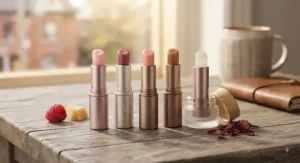
2. Burt’s Bees Tinted Lip Balm SPF 30 — best tinted lip balm with real sun protection
This is where the “best tinted lip balm” search and the “best lip balm for chapped lips winter” search actually overlap, because SPF 30 doesn’t take a break just because it’s snowing.
Key specs and what they mean: The mineral-based SPF 30 formula uses zinc oxide as its active sunscreen ingredient rather than chemical filters, paired with a sheer wash of colour and shea butter for slip. In Canada, any lip product making an SPF claim is regulated as a drug and requires a Drug Identification Number, not just a cosmetic listing — so the sun-protection claim on this one has actually cleared a formal approval bar, unlike a plain cosmetic balm.
Who it’s for: What most buyers overlook about tinted SPF balms is that winter sun exposure off snow and ice can be more intense than summer exposure at ground level, thanks to reflection. This balm suits anyone who spends time outdoors — skiing, dog walking, commuting — and wants a hint of colour without switching to a full lipstick.
Aggregated review sentiment points to strong praise for the sheer, buildable tint across a range of natural lip tones, alongside a recurring complaint that the SPF formulas feel slightly thicker and more matte than Burt’s Bees’ non-SPF tinted lines.
Pros:
- ✅ Genuine mineral SPF 30 with a DIN behind it
- ✅ Sheer tint flatters most skin tones
- ✅ Shea butter softens the mineral-sunscreen texture
Cons:
- ❌ Slightly thicker feel than fragrance-free balms
- ❌ Tint shade range is narrower than makeup-brand tinted balms
Expect to pay in the C$10-C$14 range, which is fair once you factor in that you’re buying a regulated sunscreen product and a cosmetic in one tube.
3. ATTITUDE Lip Balm SPF 15 — best Canadian-made natural pick
Made in Canada and EWG Verified, this one is squarely aimed at the natural-ingredient crowd who still wants sun protection without synthetic UV filters.
Key specs and what they mean: The zinc oxide-based SPF 15 sits in a base of shea butter, coconut oil, and castor oil, and the packaging is plastic-free — a detail that matters if you’re trying to trim your household’s plastic footprint. SPF 15 is lower than the dermatologist-recommended SPF 30 baseline, so it’s better framed as daily incidental protection than a substitute for a proper sunscreen on a bright ski day.
Who it’s for: Here’s what the spec sheet won’t tell you outright, but ingredient-list readers will appreciate: this formula skips the synthetic fragrance and mineral-oil fillers found in many drugstore balms, which makes it a solid fit for anyone managing sensitivities or simply trying to buy Canadian-made where they can.
Reviewers frequently mention the coconut scent as pleasant rather than overpowering, and several note the balm melts a touch faster than petroleum-based competitors in a warm coat pocket — a texture trade-off of using plant oils and butters instead of mineral oil.
Pros:
- ✅ Manufactured in Canada with EWG Verified status
- ✅ Plastic-free packaging
- ✅ Fragrance-free, naturally derived base
Cons:
- ❌ SPF 15 is lower than the SPF 30 dermatologists suggest
- ❌ Softer texture melts faster in warm pockets
Typically priced in the C$8-C$11 range, it lands as a mid-tier natural pick that rewards ingredient-conscious shoppers without premium-brand pricing.
4. Carmex Classic Lip Balm Stick (3-Pack) — best budget medicated pick
Carmex has the kind of cult following usually reserved for candy bars, and the medicated tingle is either loved or avoided depending on who you ask.
Key specs and what they mean: The stick formula combines camphor, menthol, and salicylic acid with cocoa butter and lanolin. Camphor and menthol create a cooling sensation that many find soothing on sore lips, though dermatologists note that “tingle” ingredients can be genuinely irritating on lips that are already cracked or bleeding, since they’re technically mild irritants rather than healing agents.
Who it’s for: Based on the spec comparison against gentler natural balms, this is best suited to lips that are dry but intact — not actively split — and to buyers who specifically like the tingling, medicated sensation as a signal that “it’s working.”
A common theme in aggregated reviews is loyalty bordering on habit: people report reaching for Carmex reflexively for decades, while a smaller subset of reviewers with sensitive lips report stinging on cracked skin, consistent with dermatological guidance to avoid tingle ingredients on broken skin.
Pros:
- ✅ Extremely low cost per tube across a 3-pack
- ✅ Widely available and instantly recognizable
- ✅ Cooling sensation many find genuinely soothing
Cons:
- ❌ Camphor and menthol can sting cracked or bleeding lips
- ❌ Lanolin may irritate anyone with a wool-related sensitivity
At under C$8 for three sticks, this is the cheapest-per-use option on the list, and the value case is strong provided your lips aren’t in full crisis mode.
5. EOS 100% Natural & Organic Lip Balm Stick (Variety Pack) — best shea-butter natural pick with everyday appeal
Best known for its egg-shaped dome balms, EOS also sells a more traditional stick format built around shea butter and a genuinely natural ingredient deck.
Key specs and what they mean: The stick leans on shea butter and jojoba oil as its primary moisturizers — shea butter functions as an emollient that softens skin texture, while jojoba oil closely mimics the skin’s natural sebum, which lips can’t produce on their own. The variety pack rotates through mild, fruit-derived flavours rather than synthetic fragrance oils.
Who it’s for: What most buyers overlook here is that the stick format, not just the ingredients, matters for consistency — a stick applies an even layer swipe after swipe, where dome-shaped balms can apply unevenly if you’re not careful. This makes the stick format a better everyday-routine choice for anyone building consistent habits, while the variety pack suits households where more than one person shares the lip balm drawer.
Reviewers frequently praise the smooth, non-waxy glide and the fact that flavours read as genuinely fruity rather than artificial, with occasional feedback that the balm softens quickly in hot cars — consistent with a formula that skips harder waxes in favour of butters and oils.
Pros:
- ✅ Shea butter and jojoba oil base feels notably smooth
- ✅ Genuinely natural-tasting, non-synthetic flavours
- ✅ Stick format applies more evenly than dome balms
Cons:
- ❌ Softens and can melt in warm environments
- ❌ No SPF included in this format
Expect to pay in the C$10-C$13 range for a multi-pack, which is reasonable given you’re effectively buying two or three balms’ worth of coverage in one purchase.
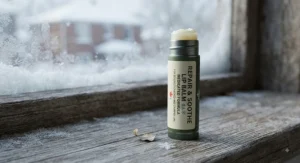
6. Aquaphor Lip Repair — best intensive treatment for severely chapped winter lips
When lips have gone past “dry” into “cracked and stinging,” this is the one dermatologists actually mention by name.
Key specs and what they mean: The formula’s dominant ingredient is petrolatum, an occlusive that dermatologists specifically recommend for very dry or cracked lips because it seals in water longer than waxes or plant oils alone. It’s paired with panthenol, a form of vitamin B5 associated with skin-barrier support, and the formula skips fragrance, flavour, and the tingle ingredients that can irritate broken skin.
Who it’s for: Here’s what the ingredient list actually means in practice: petrolatum-based balms are the closest thing to a “reset button” for lips that have cracked at the corners or started to bleed, because they physically block moisture loss rather than trying to add hydration to skin that’s too damaged to absorb it well yet. This is the pick for anyone dealing with genuine winter cheilitis, not just mild everyday dryness.
Aggregated review sentiment is strongly positive on healing speed for cracked, painful lips, with reviewers repeatedly describing visible improvement within a day or two of consistent use; a recurring critique is the noticeably greasy, glossy finish, which some find impractical to wear during the day.
Pros:
- ✅ Petrolatum base seals in moisture longer than wax-only balms
- ✅ Fragrance-free and free of tingle irritants
- ✅ Dermatologist-recommended ingredient profile
Cons:
- ❌ Greasy, glossy finish some find impractical for daytime wear
- ❌ No SPF, so it needs pairing with sun protection separately
Priced around C$7-C$10, it’s an inexpensive fix for a genuinely uncomfortable problem, and honestly one of the best value picks on this entire list for anyone in active winter-lip crisis mode.
7. Green Beaver Natural Lip Balm Trio — best premium Canadian natural formula
Green Beaver is a Canadian natural-personal-care brand, and this trio set is the closest thing on our list to a “gift yourself something nice” option.
Key specs and what they mean: The formula is built around beeswax and sunflower oil rather than petrolatum, positioning it firmly in the natural-ingredient camp alongside ATTITUDE Lip Balm SPF 15. Beeswax provides the occlusive seal, while sunflower oil contributes linoleic acid, a fatty acid associated with supporting the skin’s barrier function. The trio format bundles three full-sized balms rather than sample sizes, which changes the math on cost-per-use.
Who it’s for: Based on the spec comparison against other natural options on this list, this suits buyers who want to standardize their entire household — bedside table, coat pocket, desk drawer — on one clean formula rather than juggling different brands. It’s also a strong pick for anyone specifically researching beeswax lip balm benefits and natural lip balm ingredients, since it delivers both in a single, Canadian-formulated product.
Reviewers note a noticeably smooth, non-tacky finish and appreciate that the trio makes it easy to keep a balm in every bag without repurchasing constantly; some reviewers wish the flavour range in the trio were more varied.
Pros:
- ✅ Three full-size balms in one purchase, not samples
- ✅ Clean beeswax-and-sunflower-oil formula
- ✅ Canadian-formulated natural personal care brand
Cons:
- ❌ Limited flavour variety within the trio set
- ❌ No SPF variant currently included in the set
At C$14-C$18 for the trio, the per-balm cost actually lands competitively against buying three single natural balms separately, which is the real value story here.
Your Everyday Lip Care Routine
A lip balm only works as well as the habits around it, and this is the part most product pages skip entirely.
Morning: Apply your balm right after brushing your teeth, before makeup or sunscreen, while lips are still slightly damp from rinsing — this helps trap a little extra moisture under the occlusive layer. If you’re reaching for Burt’s Bees Tinted Lip Balm SPF 30 or ATTITUDE Lip Balm SPF 15, this is also your sun-protection moment; both need reapplication every couple of hours if you’re outside for extended periods, the same rule that applies to sunscreen on the rest of your face.
Midday: Keep a second tube somewhere you’ll actually see it — desk drawer, car console, jacket pocket — because the balms that work are the ones you reapply, not the ones sitting in a drawer at home. Reapply after eating, drinking anything hot, or any activity that involves a lot of lip-licking, since saliva evaporates quickly and leaves lips drier than before you started.
Evening: Before bed is arguably the highest-value moment in the whole routine, because you’re about to spend six to eight hours in dry, heated bedroom air without drinking water or reapplying anything. A slightly heavier balm — Aquaphor Lip Repair or Burt’s Bees Original Beeswax Lip Balm — works well here precisely because the greasy finish that’s inconvenient at 2 p.m. is exactly what you want overnight.
Weekly maintenance: Once a week, gently buff lips with a soft washcloth or a lip-specific scrub to clear flaking skin before it gets picked at, then follow immediately with balm. Avoid this step entirely if lips are actively cracked or bleeding — exfoliating broken skin delays healing rather than helping it.
Common first-30-days mistake: New balm users often over-rely on constant reapplication of a mint or medicated balm, which can create a mild dependency cycle where lips feel worse faster between applications. If that sounds familiar, it’s usually the tingle ingredients talking — switching to a fragrance-free, non-medicated option like Burt’s Bees Original Beeswax Lip Balm for two weeks often breaks the cycle.
Real-World Scenarios: Which Lip Balm Fits Your Life
The daily transit commuter: If you’re waiting for a bus in a Winnipeg wind chill five days a week, your lips are taking a beating that has nothing to do with sun and everything to do with wind stripping moisture at speed. A heavier, occlusive option like Aquaphor Lip Repair or Burt’s Bees Original Beeswax Lip Balm applied before you leave the house, plus a second tube kept at your desk, covers both ends of the commute.
The weekend skier or snowboarder: High altitude plus reflected sun off snow is a genuinely aggressive combination for lip skin, and this is where SPF actually earns its keep in winter. Burt’s Bees Tinted Lip Balm SPF 30 or ATTITUDE Lip Balm SPF 15 reapplied every couple of hours on the hill will do far more for you than a balm without sun protection, no matter how thick the formula.
The budget-conscious student: If you’re stretching a tight monthly budget and just need reliable, unglamorous relief, Carmex Classic Lip Balm (3-Pack) and Aquaphor Lip Repair both deliver real results for under C$10, and either one easily fits in a backpack pocket or pencil case without a second thought.
Common Lip Balm Problems and How to Fix Them
Problem: Lips feel worse the more you apply balm. This is almost always a tingle-ingredient or flavouring reaction, not a sign you need to apply more. Switch to a fragrance-free, camphor-free option like ATTITUDE Lip Balm SPF 15 or Aquaphor Lip Repair for a week and see if the cycle breaks.
Problem: Lips crack at the corners specifically. Corner cracking, medically called angular cheilitis, is often linked to saliva pooling or a mild fungal or bacterial component rather than simple dryness, and it doesn’t always respond to balm alone. If it persists past a week or two of consistent care, it’s worth a quick conversation with a pharmacist or doctor rather than pushing through with more product.
Problem: Lip balm melts into a puddle in your pocket. Petrolatum- and butter-heavy formulas like Aquaphor Lip Repair and EOS Natural & Organic Lip Balm soften faster in heat than harder wax-based balms. Store them in a bag pocket rather than a pants pocket close to body heat, or switch to the firmer Burt’s Bees Original Beeswax Lip Balm for warm-weather carrying.
Problem: Tinted balm feels drying compared to your regular one. Some tinted and SPF formulas use mattifying agents for a smoother colour payoff, which can read as more drying. Layer a plain balm underneath Burt’s Bees Tinted Lip Balm SPF 30 at night, then apply the tint fresh in the morning.
How to Choose the Best Lip Balm for Your Lips
- Start with your actual problem, not the packaging. Mildly dry lips need a preventive daily balm; cracked, bleeding lips need an occlusive treatment balm like Aquaphor Lip Repair first, and a lighter daily option once healed.
- Check for SPF if you’re outside often. Winter sun and snow glare are real; if you spend real time outdoors, Burt’s Bees Tinted Lip Balm SPF 30 or ATTITUDE Lip Balm SPF 15 covers a gap most people forget about entirely.
- Read the ingredient list before the marketing copy. Look for beeswax, shea butter, petrolatum, or plant oils near the top of the list; be wary of “fragrance” or “flavor” listed high up if you have sensitive skin.
- Match the format to your lifestyle. Sticks like EOS Natural & Organic Lip Balm apply evenly and travel well; pots and tins can be more precise but require a fingertip, which isn’t ideal mid-commute.
- Consider whether tint adds real value for you. If you already skip lipstick most days, Burt’s Bees Tinted Lip Balm SPF 30 does double duty; if not, a clear balm keeps the routine simpler.
- Price per tube isn’t the whole story — check tube size and multi-packs. A 3-pack like Carmex Classic Lip Balm or the Green Beaver Natural Lip Balm Trio often beats single-tube pricing per gram.
- Don’t ignore a persistent problem. If a season’s worth of consistent balm use hasn’t fixed genuinely cracked or bleeding lips, that’s a sign to loop in a pharmacist rather than trying yet another tube.
One frequent buying mistake worth flagging on its own: reaching for the most heavily flavoured or tingling option because it “feels like it’s working,” when that sensation is often mild irritation rather than actual healing — a pattern dermatologists point to often enough that it’s worth remembering before your next purchase.
Lip Balm for Chapped Lips in Winter: Why Canadian Cold Hits So Hard
Here’s the biology behind why this becomes an annual ritual for so many of us. Lip skin has only three to five cell layers, compared with up to sixteen layers on the rest of your face, and it has no oil glands to produce its own natural moisture barrier. Combine that thin, defenseless skin with a Canadian winter’s specific one-two punch — dry outdoor air paired with dry, heated indoor air — and you get rapid, repeated moisture loss all day long, a condition dermatologists formally call cheilitis, or more plainly, chapped lips.
What most people get wrong is treating winter lip care as a single-step fix rather than a layered defense. Reviewers and dermatologists alike consistently point to a combination approach: an occlusive base like Burt’s Bees Original Beeswax Lip Balm or Aquaphor Lip Repair for barrier protection, applied frequently enough to matter — every couple of hours if you’re outdoors, not just once in the morning. Add SPF into the mix if you’re outside in daylight at all, since winter sun reflecting off snow can deliver a genuine dose of UV exposure even at sub-zero temperatures. And where possible, a bedroom humidifier takes pressure off your lips overnight by keeping the air around you from pulling moisture out of your skin while you sleep.
Tinted Lip Balm vs Clear Lip Balm: What’s the Real Difference
The obvious answer — “one has colour” — undersells what’s actually different in the formulation. Tinted lip balms, including Burt’s Bees Tinted Lip Balm SPF 30, typically include pigments and sometimes mattifying or film-forming agents to keep the colour payoff even, which can shift the texture slightly drier or more matte compared with the brand’s clear equivalent. Clear balms, by contrast, tend to prioritize slip and shine, since there’s no pigment behavior to manage.
In practice, this means tinted balms suit anyone who wants a two-in-one product — skincare plus a hint of makeup — and are especially efficient for a simplified morning routine. Clear balms suit anyone prioritizing maximum hydration with zero trade-offs for colour performance, or anyone with sensitive skin who wants to minimize the number of extra ingredients (pigments, in this case) touching already-irritated lips. If you’re deciding between the two, the honest answer is that neither is objectively “better” — they’re solving slightly different problems, and it’s entirely reasonable to keep one of each in rotation.
Beeswax Lip Balm Benefits: What the Ingredient List Actually Means
Beeswax shows up in more lip balms than almost any other single ingredient, and it earns that spot for a specific, mechanical reason rather than marketing hype. As an occlusive, beeswax forms a semi-permeable physical film over the skin’s surface, which slows water loss from underneath without fully blocking the skin’s ability to breathe — a meaningfully different mechanism than a pure petroleum seal. That’s the honest, non-fabricated version of “locks in moisture”: it’s a barrier effect, not a hydration boost, which is why beeswax balms work best as prevention rather than as a fast-acting treatment for lips that are already badly cracked.
Burt’s Bees Original Beeswax Lip Balm and the Green Beaver Natural Lip Balm Trio both lean on this mechanism, and reviewers of both consistently describe a smoother, less greasy finish compared with straight petrolatum options — a fair trade-off, since the barrier effect of beeswax alone is generally considered somewhat less aggressive than petrolatum for genuinely severe chapping. Beeswax also brings a naturally firmer texture than plant oils alone, which is part of why beeswax-based sticks tend to hold their shape better in a warm pocket than shea- or jojoba-heavy formulas like EOS Natural & Organic Lip Balm.
Natural Lip Balm Ingredients: What to Look For (And What to Avoid)
If you’re specifically shopping natural lip balm ingredients, the label reading gets easier once you know the short list of ingredients that consistently show up in well-regarded natural formulas: beeswax or plant-based waxes for the occlusive base, shea butter or cocoa butter for softness, and plant oils like jojoba, sunflower, or coconut oil for slip and added fatty acids. ATTITUDE Lip Balm SPF 15 and the Green Beaver Natural Lip Balm Trio both build around this exact formula pattern, which is a large part of why ingredient-conscious shoppers gravitate toward Canadian natural brands in this category — natural personal care formulators frequently point to Alberta-sourced beeswax and sweet almond oil as reliable, minimally processed building blocks for exactly this reason.
On the avoid side, dermatologists commonly flag a specific cluster: camphor, menthol, and eucalyptus (the “tingle” ingredients that can irritate broken skin), synthetic fragrance or “parfum” broadly, and — for anyone with a wool sensitivity — lanolin. None of these are dangerous in the way a genuinely unsafe ingredient would be; they’re simply more likely to irritate lips that are already compromised, which is exactly the population most likely to be shopping for lip balm in the first place.
Comparing Natural Formulas vs Traditional Petroleum-Based Balms
| Factor | Natural (Beeswax/Butter-Based) | Traditional (Petrolatum-Based) |
|---|---|---|
| Barrier strength | Moderate, breathable seal | Strongest, fully occlusive |
| Best for | Prevention, daily maintenance | Active healing, severe chapping |
| Texture | Smoother, less greasy | Thicker, glossier finish |
| Example picks | ATTITUDE Lip Balm SPF 15, Green Beaver Natural Lip Balm Trio | Aquaphor Lip Repair |
Reading this side by side, the honest takeaway is that natural and petrolatum-based balms aren’t really competitors — they’re tools for different stages of the same problem. Prevention favours the natural picks; a genuine winter lip emergency favours Aquaphor Lip Repair, and there’s a reasonable case for owning both.
✨ Ready to build your winter lip kit?
Compare the picks above and add your top two or three to cart — one for prevention, one for when things get serious.
Long-Term Cost & Maintenance
A single tube of lip balm looks cheap in isolation, but the real cost is what you spend across a whole winter of reapplication, so it’s worth doing the math before assuming the priciest tube is the worst value.
| Product | Approx. Price Range | Typical Uses per Tube | Cost per Season (Est.) |
|---|---|---|---|
| Carmex Classic Lip Balm (3-Pack) | Under C$8 | 300+ per stick | Low |
| Burt’s Bees Original Beeswax Lip Balm | Under C$6 | 250+ | Low |
| Aquaphor Lip Repair | C$7-C$10 | 200+ | Low-Moderate |
| EOS Natural & Organic Lip Balm (3-Pack) | C$10-C$13 | 200+ per stick | Moderate |
| ATTITUDE Lip Balm SPF 15 | C$8-C$11 | 150+ | Moderate |
| Green Beaver Natural Lip Balm Trio | C$14-C$18 | 200+ per balm | Moderate |
| Burt’s Bees Tinted Lip Balm SPF 30 | C$10-C$14 | 150+ | Moderate |
Multi-packs consistently win on raw cost-per-use, which is why Carmex Classic Lip Balm and the Green Beaver Natural Lip Balm Trio both look better on a per-gram basis than their single-tube list prices suggest. The SPF-inclusive options, Burt’s Bees Tinted Lip Balm SPF 30 and ATTITUDE Lip Balm SPF 15, cost more per tube, but they’re replacing two products — balm and sun protection — with one, which is where their real-world value shows up over a season rather than in a single purchase.
Safety, Regulations & Sun Protection: What Health Canada Says
This is the part most lip balm articles skip entirely, and it’s genuinely useful if you’re comparing SPF claims. In Canada, any sunscreen product — including a lip balm making an SPF claim — must carry a Drug Identification Number or Natural Product Number before it can legally be sold, and Health Canada evaluates the underlying SPF testing data as part of that approval. In practice, this means an SPF claim on a lip balm has cleared a real regulatory bar, not just a marketing decision — which is worth knowing before assuming any tinted or “sun-protective” balm on a shelf is equally trustworthy.
It’s also worth knowing that enforcement is real: Health Canada has issued recalls for lip and skincare products sold in Canada without proper market authorization, a reminder that the SPF number on a label is only meaningful if the product behind it has actually gone through the approval process. When comparing Burt’s Bees Tinted Lip Balm SPF 30 and ATTITUDE Lip Balm SPF 15 against a generic, no-name SPF balm, sticking with established, licensed brands is a genuinely practical safety habit, not just brand snobbery.
Health Canada’s general sun-safety guidance is straightforward and applies just as much in February as in July: use a lip balm with SPF whenever you’re outdoors for extended periods, and reapply it as often as you would reapply sunscreen on the rest of your face — roughly every two hours, or more often after eating or drinking.
Frequently Asked Questions
❓ What is the best lip balm for chapped lips in winter?
❓ Is beeswax or petroleum jelly better for chapped lips?
❓ Does tinted lip balm dry out your lips?
❓ How often should I reapply lip balm in winter?
❓ Are natural lip balm ingredients actually better than synthetic ones?
Conclusion
If there’s one thing this whole comparison makes clear, it’s that “best lip balm” isn’t a single product — it’s a small toolkit matched to the problem in front of you. Aquaphor Lip Repair earns its spot when lips are genuinely cracked and need fast relief. Burt’s Bees Original Beeswax Lip Balm and the Green Beaver Natural Lip Balm Trio cover daily prevention with clean, well-understood ingredients. Burt’s Bees Tinted Lip Balm SPF 30 and ATTITUDE Lip Balm SPF 15 solve the sun-protection gap most people forget exists in winter. And Carmex Classic Lip Balm and EOS Natural & Organic Lip Balm round things out as reliable, budget-friendly everyday options.
None of these require you to overhaul your routine or spend big. Pick one that matches your actual problem — dry, cracked, sun-exposed, or just habitually chapped — apply it consistently, and give it a couple of weeks before judging the results. Your lips have a genuinely tough job to do every Canadian winter; give them a formula that’s actually built for it.
Recommended for You
- Best Eye Masks 2026: 7 Top Picks You’ll Actually Love
- Eye Cream for Puffiness: 7 Top Picks to Fix Tired Eyes Fast (2026)
- Product for Dark Circles: 7 Best Picks That Actually Work (2026)
✨ Found this helpful? Share it with your friends! 💬🤗
