
In This Article
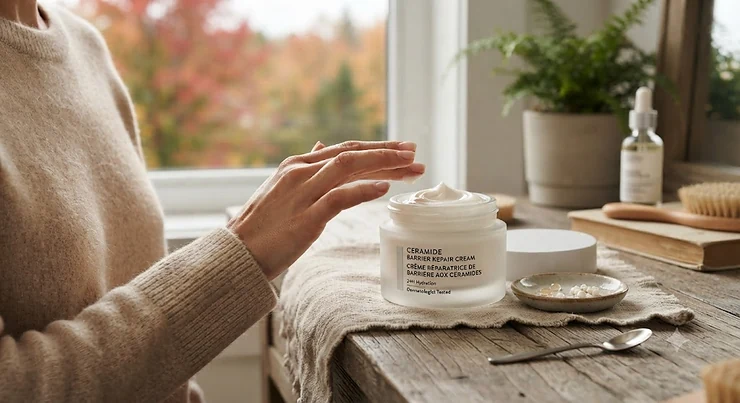
Your skin is arguing with you, and honestly, it has a point. That tight, flaky, stings-when-you-smile feeling isn’t just “dry skin having a moment” — it’s your skin barrier waving a small white flag. If you’ve spent the last month cycling through retinoids, salt-air vacations, or a Canadian winter that seems personally offended by your face, you already know that not every moisturizer earns the right to be called a best barrier repair cream. Most just sit on top of the problem. A genuine barrier repair cream works differently: it replaces the actual lipids your skin lost, the same way a bricklayer repoints crumbling mortar instead of just painting over the cracks.

This guide breaks down seven real, purchasable products — from a C$25 drugstore staple to a clinical-grade splurge — based on their actual ingredient decks, verified specs, and the aggregated sentiment from real user reviews, not invented testimonials. According to the Canadian Dermatology Association, atopic dermatitis alone affects up to 17 percent of Canadians at some point in their lives, so if your skin feels like it’s staging a rebellion, you’re in genuinely common company. We’ll also unpack skin barrier function itself, the actual chemistry behind ceramides and lipids skincare, and why a cream marketed as a ceramide moisturizer isn’t automatically the right one for eczema-prone skin. Let’s get your face back on speaking terms with the rest of your routine.
Quick Comparison Table
| Product | Best For | Texture | Price Range (CAD) |
|---|---|---|---|
| CeraVe Moisturizing Cream | Best overall, everyday use | Rich cream | Around C$25-C$35 |
| Vanicream Moisturizing Cream | Ultra-sensitive, fragrance-avoidant skin | Thick, light-feel cream | Around C$20-C$28 |
| Aquaphor Healing Ointment | Severely cracked or compromised skin | Occlusive ointment | Around C$15-C$22 |
| La Roche-Posay Cicaplast Baume B5 | Post-procedure and reactive skin | Balm | Around C$25-C$40 |
| First Aid Beauty Ultra Repair Cream | Eczema-prone skin | Whipped cream | C$45-C$55 range |
| Skinfix Barrier+ Triple Lipid-Peptide Cream | Combination or oil-prone skin | Lightweight gel-cream | C$65-C$80 range |
| SkinCeuticals Triple Lipid Restore 2:4:2 | Severe, chronic barrier damage | Rich clinical cream | C$140-C$170 range |
Looking at the spread above, there’s a real logic to the price ladder: you’re mostly paying for texture refinement, delivery technology, and clinical documentation, not for the presence of ceramides themselves — even the C$20 options contain functional lipids. Vanicream Moisturizing Cream and Aquaphor Healing Ointment are the ones to reach for when budget is tight and the priority is simply damage control, while SkinCeuticals Triple Lipid Restore 2:4:2 earns its premium price tag through a lipid ratio that’s been directly studied in barrier-recovery research. If your skin leans oily or acne-prone, Skinfix Barrier+ Triple Lipid-Peptide Cream avoids the heaviness that makes some of the cheaper picks feel like overkill on a Tuesday afternoon.
💬 Just one click — help others make better buying decisions too!😊
Top 7 Barrier Repair Creams: Expert Analysis
Coverage below spans budget, mid-range, and premium options, plus a couple of lesser-hyped picks that quietly outperform their price point. Every product here is a real, currently available formula — no invented names, no fictional “dupes.”
1. CeraVe Moisturizing Cream — best all-around value for daily barrier support
The tub format alone tells you this is meant for generous, repeated use, not the stingy dab-and-hope approach a lot of “luxury” jars encourage. Formulated with three ceramides (1, 3, and 6-II) plus hyaluronic acid, it uses a patented MVE (MultiVesicular Emulsion) delivery technology that releases moisturizing ingredients gradually rather than dumping them all at once — practically speaking, that means fewer reapplications through a dry office day. Based on the spec comparison with pricier ceramide creams, this one holds its own on ingredient substance; what it lacks is fragrance-free certainty for the most reactive skin types and the silkier finish of gel-creams. It’s the reasonable default for beginners, budget-conscious shoppers, and anyone building a barrier-repair routine for the first time. Reviewers consistently note that it layers well under sunscreen without pilling, though a handful mention the classic tub packaging can feel less hygienic than a pump. This is honest, workhorse formulation rather than flashy innovation — and for most people, that’s exactly the point.
Pros:
- ✅ Three ceramides plus MVE slow-release technology
- ✅ Fragrance-free and non-comedogenic formula
- ✅ Large tub size means genuinely low cost-per-use
Cons:
- ❌ Tub packaging invites finger-dipping hygiene concerns
- ❌ Rich texture may feel heavy in humid weather
CeraVe Moisturizing Cream sits in the C$25-C$35 range depending on tub size, and for the ingredient list you’re getting, it’s hard to argue with the value.

2. Vanicream Moisturizing Cream — best for fragrance-avoidant, ultra-reactive skin
What most buyers overlook about this one is what’s missing rather than what’s included: no dyes, no fragrance, no lanolin, no parabens, no formaldehyde-releasers — a genuinely stripped-back formula built around sunflower seed oil, glycerin, and white petrolatum to seal moisture in. Real-world meaning: if your skin flares from “fragrance-free” products that still contain masking fragrance, this is one of the few creams engineered to close that loophole entirely. It’s aimed squarely at people managing eczema, contact dermatitis, or post-treatment sensitivity, where every added ingredient is a potential trigger rather than a bonus. Aggregated review sentiment frequently praises how “boring” the formula feels on skin — in a good way — with minimal stinging even on broken or irritated patches, though some reviewers note the texture is thicker and slower to absorb than gel-based competitors. It won’t win any Instagram aesthetics awards, and that’s fine, because that was never the assignment.
Pros:
- ✅ Free of common irritants: fragrance, dyes, lanolin
- ✅ Well-suited to eczema and contact dermatitis flare-ups
- ✅ Large jar size keeps cost-per-use low
Cons:
- ❌ Slower absorption than lighter gel-creams
- ❌ Plain jar packaging feels clinical, not luxe
Priced around C$20-C$28, Vanicream Moisturizing Cream is arguably the safest “when in doubt” pick on this list for genuinely reactive skin.
3. Aquaphor Healing Ointment — best for cracked, severely compromised skin
This is the product you reach for when skin has actually broken down — chapped lips, cracked heels, raw skin around the nose after a cold, or the kind of dryness that makes a regular cream feel like it’s evaporating on contact. Built primarily on petrolatum with glycerin and panthenol, it’s occlusive rather than ceramide-forward, meaning it works by physically sealing moisture in rather than replenishing the lipid matrix directly. Here’s what to weigh: it’s not technically a “ceramide moisturizer,” but for acute damage, occlusion often outperforms lighter lipid creams in the first 48 to 72 hours before you transition to something like a Cicaplast Baume for ongoing maintenance. Reviewers consistently describe near-overnight relief on cracked skin, with the most common complaint being the greasy finish and reluctance to use it on the face during the day. Clinical guidance on eczema management generally notes that creams and ointments are more effective than lotions at trapping in moisture, and recommends applying a barrier cream liberally and regularly, especially right after bathing — which is exactly the use case this ointment is built for.
Pros:
- ✅ Petrolatum-based occlusion seals in moisture fast
- ✅ Effective on cracked heels, lips, and raw skin
- ✅ Inexpensive relative to its healing speed
Cons:
- ❌ Greasy finish makes daytime facial use impractical
- ❌ No ceramides for longer-term lipid replenishment
At around C$15-C$22, Aquaphor Healing Ointment is the emergency-kit item nobody regrets keeping in a drawer.
4. La Roche-Posay Cicaplast Baume B5 — best multi-use balm for reactive skin
The standout here is versatility: this balm was designed for post-procedure recovery, chapped skin, minor irritations, and general reactive-skin maintenance, all in one 40-100ml tube. It’s built around 5 percent panthenol (vitamin B5), madecassoside from centella asiatica, and shea butter, blended with La Roche-Posay’s thermal spring water base — a combination aimed at calming inflammation while supporting the skin’s natural repair process. What most buyers overlook is that this isn’t primarily a ceramide-based formula; its strength is the soothing, anti-inflammatory angle rather than direct lipid replacement, which matters if your barrier issue is more about redness and reactivity than pure dryness. It suits people recovering from dermatological procedures, aggressive exfoliation, or seasonal wind-and-cold irritation. A common theme in aggregated reviews is fast calming of stinging or tightness within a day or two of consistent use, alongside occasional notes that the tube’s thick consistency takes a bit of warming between fingers before it spreads easily.
Pros:
- ✅ Panthenol and madecassoside calm active irritation
- ✅ Multi-use: face, hands, and minor skin damage
- ✅ Widely available and dermatologist-recommended
Cons:
- ❌ Lighter on ceramides than dedicated lipid creams
- ❌ Thick balm texture needs warming before application
Sitting in the C$25-C$40 range depending on tube size, La Roche-Posay Cicaplast Baume B5 earns its spot as the “keep one everywhere” pick.
5. First Aid Beauty Ultra Repair Cream — best cream for eczema-prone skin
The standout advantage is right there in the name — this was formulated specifically around eczema-prone and extremely dry skin, built on colloidal oatmeal, shea butter, ceramides, and allantoin. Colloidal oatmeal in particular has long-documented anti-inflammatory and skin-protectant properties, and pairing it with ceramides addresses both the itch-and-inflame cycle and the underlying lipid deficiency at once — that’s a meaningfully different approach from a straightforward moisturizer. Based on the spec comparison with other picks on this list, this formula does double duty that single-ingredient-focused creams don’t: soothing plus rebuilding, in one whipped-texture jar that absorbs faster than its richness suggests. It’s aimed at people with diagnosed or suspected eczema, sensitive skin during flare season, or anyone whose skin reacts to typical “rich” moisturizers with more irritation rather than less. Aggregated reviewer sentiment repeatedly highlights calming of itchiness within days, with the main gripe being the jar’s opaque packaging making it hard to gauge how much product remains.
Pros:
- ✅ Colloidal oatmeal plus ceramides target itch and lipid loss
- ✅ Whipped texture absorbs faster than its richness suggests
- ✅ Frequently recommended for diagnosed eczema-prone skin
Cons:
- ❌ Opaque jar makes tracking remaining product difficult
- ❌ Pricier per gram than basic drugstore ceramide creams
Priced around C$45-C$55, First Aid Beauty Ultra Repair Cream is worth the step up if eczema, not just general dryness, is the core issue.

6. Skinfix Barrier+ Triple Lipid-Peptide Cream — best lightweight option for combination skin
What sets this one apart is texture engineering: it delivers ceramides, cholesterol, and fatty acids — the same three lipid families your stratum corneum naturally uses — in a gel-cream base light enough for combination or oil-prone skin that usually recoils from “barrier repair” formulas. The addition of peptides and niacinamide pushes it slightly toward an anti-aging angle as well, though the core function remains lipid replenishment. Here’s what to weigh: because it’s positioned as lightweight, it may under-deliver for someone with genuinely severe, cracked-skin dryness who needs a heavier occlusive layer at night. It’s best suited to people who want daily barrier maintenance without the greasy trade-off, particularly those layering it under makeup or sunscreen. Reviewers consistently note the fast absorption and non-pilling finish as the main selling point, with a smaller subset wishing the tube size lasted longer given the price.
Pros:
- ✅ Ceramide-cholesterol-fatty acid trio mirrors natural lipids
- ✅ Lightweight gel-cream suits combination, oily-prone skin
- ✅ Layers cleanly under makeup and sunscreen
Cons:
- ❌ May be too light for severely cracked, dry skin
- ❌ Smaller tube size relative to its C$65-C$80 price
Skinfix Barrier+ Triple Lipid-Peptide Cream lands in the C$65-C$80 range, positioning it as the go-to for people who’ve written off barrier creams as “too heavy” in the past.
7. SkinCeuticals Triple Lipid Restore 2:4:2 — best for severe, chronic barrier damage
The standout feature is right in the name: a 2:4:2 ratio of ceramides, cholesterol, and fatty acids, a formulation choice grounded in decades of dermatology research on how these three lipids need to be proportioned for the stratum corneum to actually rebuild itself efficiently. Peer-reviewed work on stratum corneum lipids has repeatedly pointed to specific ratios of cholesterol, ceramides, and fatty acids accelerating barrier recovery compared to incomplete lipid mixtures, and this cream is one of the more deliberate commercial attempts to apply that science rather than just listing “ceramides” on a label for marketing appeal. On paper, this means the formula isn’t guessing at proportions — it’s referencing published barrier-repair research, which is a meaningfully different claim than most drugstore competitors can make. It’s built for chronic, stubborn barrier compromise: think long-term retinoid users, post-procedure recovery, or skin that’s been fighting a losing battle against over-exfoliation for months. Aggregated review sentiment consistently praises visible improvement in redness and flaking within two to four weeks, balanced against near-universal comments about the steep price for a 48ml jar.
Pros:
- ✅ Clinically documented 2:4:2 ceramide-cholesterol-fatty acid ratio
- ✅ Strong track record for chronic, severe barrier damage
- ✅ Rich texture ideal for overnight intensive repair
Cons:
- ❌ Premium price relative to jar size
- ❌ Heavier texture unsuitable for daytime, oily skin
At C$140-C$170, SkinCeuticals Triple Lipid Restore 2:4:2 is the splurge pick reserved for skin that’s genuinely fighting a chronic battle, not everyday maintenance.
Repairing a Damaged Skin Barrier: A Step-by-Step Recovery Timeline
Repairing damaged skin barrier function isn’t an overnight fix, and any product promising 24-hour transformation is overselling. Realistically, you’re looking at a two-to-four-week rebuild, mirroring the timeline dermatology sources describe for lipid matrix recovery. Days one through three are about damage control: switch to a lukewarm-water cleanse (hot water strips lipids further), pat skin dry instead of rubbing, and apply an occlusive layer like Aquaphor Healing Ointment over any visibly cracked or flaking areas. Days four through fourteen shift toward active rebuilding — this is where a dedicated ceramide moisturizer like CeraVe Moisturizing Cream or First Aid Beauty Ultra Repair Cream earns its keep, applied twice daily to damp skin so the cream can help lock in that surface moisture rather than fighting a dry canvas.
By weeks three and four, most people notice the tightness and flaking have eased, though redness can linger slightly longer than the physical dryness itself. This is the point to reintroduce actives like retinoids or exfoliating acids slowly, if at all, and only once skin tolerates a fragrance-free cleanser without stinging. A common first-30-days mistake is declaring victory too early and resuming a full active-ingredient routine the moment skin looks normal — barrier recovery is structural, not cosmetic, and rushing it tends to trigger the exact same breakdown within a couple of weeks.
✨ Don’t Miss These Exclusive Deals!
🔍 Take your skincare routine to the next level with these carefully selected barrier repair creams. Click on any highlighted item to check current pricing and availability. These picks will help you build a genuinely calmer, more resilient complexion.
Real-World Scenarios: Matching the Right Cream to Your Situation
Consider three different people, all googling “best barrier repair cream” for very different reasons. First, a university student in Halifax who’s been layering a 10% retinol serum every night for three months without a proper moisturizer underneath, because nobody told her that was a problem until her skin started stinging in the shower. Her budget is tight and her skin type is otherwise normal-to-oily. For her, CeraVe Moisturizing Cream paired with a temporary retinol pause is the practical answer — affordable, non-comedogenic, and substantial enough to undo weeks of over-exfoliation without breaking a student budget.
Second, a parent in Winnipeg managing a toddler’s eczema flare-ups through brutal prairie winters, where indoor heating dries the air as aggressively as the cold does outside. Fragrance sensitivity is non-negotiable here, and application needs to happen multiple times a day without irritation risk. Vanicream Moisturizing Cream is the natural fit, given its stripped-back, fragrance-free formulation and its suitability for reactive, young skin.
Third, a 45-year-old office worker in Toronto who’s been using tretinoin for anti-aging for two years and just started noticing chronic redness and flaking that won’t resolve with regular moisturizer. Her budget allows for a premium option, and her issue is chronic rather than acute. SkinCeuticals Triple Lipid Restore 2:4:2 matches her situation precisely — its clinically-informed lipid ratio is built for exactly this kind of long-term, retinoid-driven barrier compromise.
What Is Skin Barrier Function?
Skin barrier function refers to your stratum corneum’s ability to retain moisture and block external irritants, allergens, and pathogens, using a “brick and mortar” structure where skin cells act as bricks and a lipid mixture of ceramides, cholesterol, and fatty acids acts as mortar. When that lipid mortar is depleted — through over-exfoliation, harsh weather, or genetic predisposition — water escapes faster than it should, a process called transepidermal water loss, and the skin becomes more vulnerable to irritation and inflammation.
A 2024 clinical study on skin barrier function found significantly higher transepidermal water loss and lower stratum corneum hydration in eczematous skin compared to healthy skin, which is a clinical way of confirming what your face already told you: a compromised barrier isn’t cosmetic, it’s measurably different at a physiological level. This is precisely why barrier repair creams are formulated around replacing those specific lipids rather than simply adding generic hydration.
How to Choose the Best Barrier Repair Cream
- Identify your primary trigger. Over-exfoliation, eczema, cold weather, and retinoid use each respond slightly differently, and matching the cause to the cream matters more than chasing the trendiest ingredient list.
- Check for all three lipid types. Ceramides alone help, but formulas including cholesterol and fatty acids more closely mirror your natural barrier composition and tend to perform better in comparative studies.
- Match texture to skin type. Oily or combination skin usually does better with gel-creams like Skinfix Barrier+ Triple Lipid-Peptide Cream, while very dry or cracked skin benefits from occlusive richness like Aquaphor Healing Ointment.
- Scrutinize the fragrance-free claim. “Unscented” and “fragrance-free” aren’t interchangeable — reactive skin should look for genuinely fragrance-free formulas like Vanicream Moisturizing Cream.
- Weigh price against frequency of use. A cream applied twice daily needs to be affordable enough to actually use consistently; a C$150 jar you ration defeats the purpose.
- Look for clinical or research-backed formulation. Products referencing specific lipid ratios, like SkinCeuticals Triple Lipid Restore 2:4:2, tend to have more substantiated barrier-recovery claims than vague “nourishing” marketing.
- Give it time before judging results. Barrier repair operates on a two-to-four-week timeline, so switching products every few days sabotages the very recovery you’re chasing.

Ceramides and Lipids in Skincare: What the Science Actually Says
The stratum corneum’s lipid mortar is roughly split between ceramides, cholesterol, and free fatty acids, and dermatology research has spent decades trying to pin down the optimal proportions for repair. Early foundational research on stratum corneum lipid ratios found that only a complete mixture of ceramides, cholesterol, and free fatty acids in an equimolar ratio facilitated normal barrier recovery, while single lipid species or incomplete two-component mixtures failed to do the same. That’s a genuinely important nuance for anyone shopping by ingredient list alone: a product boasting “ceramides” prominently on its front label isn’t automatically a complete barrier-repair formula if it’s missing cholesterol or fatty acids entirely.
Later research pushed this further, finding that specific unequal ratios — rather than a straight 1:1:1 split — actually accelerated recovery in some contexts, which is part of why formulas like SkinCeuticals Triple Lipid Restore 2:4:2 market their exact ratio as a selling point rather than a footnote. What most buyers overlook is that “ceramide moisturizer” has become something of a marketing shorthand; the more scientifically meaningful question is whether cholesterol and fatty acids are present in complementary amounts, not just whether ceramides appear somewhere on the ingredient deck.
Ceramide Moisturizer vs Regular Moisturizer: What’s the Real Difference
A regular moisturizer, broadly speaking, is built to attract and hold water at the skin’s surface using humectants like glycerin or hyaluronic acid, sometimes with an occlusive layer on top to slow evaporation. A ceramide moisturizer does that too, but it also supplies the actual structural lipids your skin uses to rebuild its own barrier — closer to replacing bricks and mortar than just spraying water on a crumbling wall. In practice, this means a ceramide moisturizer tends to deliver more durable, cumulative improvement over weeks, while a regular moisturizer offers more immediate but temporary comfort.
| Factor | Regular Moisturizer | Ceramide Moisturizer |
|---|---|---|
| Primary mechanism | Attracts/holds surface water | Replenishes structural lipids |
| Best for | Everyday comfort, normal skin | Compromised, reactive, or eczema-prone skin |
| Results timeline | Immediate but temporary | Gradual, cumulative over 2-4 weeks |
| Example | Basic drugstore lotion | CeraVe Moisturizing Cream |
The practical takeaway from this comparison is that regular moisturizers aren’t “wrong,” they’re just solving a different problem — surface comfort rather than structural repair. If your skin issue is chronic tightness, flaking, or a diagnosed condition like eczema, the extra formulation complexity of a true ceramide moisturizer, such as First Aid Beauty Ultra Repair Cream, is doing measurably different work than a standard lotion, even when both feel similarly hydrating on application.
Best Cream for Eczema-Prone Skin: What Sets Them Apart
Eczema-prone skin needs more than lipid replenishment alone — it typically requires anti-inflammatory support alongside barrier repair, because the itch-scratch cycle that defines eczema actively damages the barrier further with every flare. The Eczema Society of Canada notes that the natural skin barrier, which would normally trap moisture in, doesn’t work well for patients with eczema, making frequent moisturization a necessity rather than a luxury. This is exactly why First Aid Beauty Ultra Repair Cream, with its colloidal oatmeal and ceramide combination, outperforms a straightforward ceramide cream for this specific population — it’s addressing the inflammatory itch response and the lipid deficiency simultaneously.
Fragrance avoidance also matters disproportionately for eczema-prone skin, since reactive, compromised skin barriers are more permeable to potential irritants and allergens than healthy skin. Vanicream Moisturizing Cream and La Roche-Posay Cicaplast Baume B5 both lean into this principle, prioritizing a minimal, low-irritant ingredient list over trend-driven additions. If you’re managing a formal eczema diagnosis, it’s worth discussing product choice with a healthcare provider, since atopic dermatitis affects roughly 10 to 20 percent of the Canadian population and can require prescription treatment alongside moisturizer use during active flares.
Common Mistakes When Buying a Barrier Repair Cream
The most common mistake is chasing ingredient trends instead of matching formula to actual skin condition — a beautifully marketed cream with one ceramide type does less than a boring drugstore option with all three lipid families represented. A close second is judging results too quickly; because barrier repair operates on a multi-week timeline, plenty of people abandon an effective product after four or five days simply because it hasn’t produced a dramatic transformation yet. Another frequent misstep is layering barrier repair creams under continued aggressive actives, like daily retinoid use or frequent chemical exfoliation, which essentially cancels out the repair work in real time.
Price-based assumptions trip people up too: a C$150 jar isn’t inherently more effective than a C$25 tub if both contain complete, well-proportioned lipid formulas — the premium often buys texture refinement and clinical documentation rather than dramatically superior repair. Finally, skipping the fragrance-free check on products marketed as “gentle” or “sensitive skin” is a recurring issue, since unscented and fragrance-free are legally and formulaically different claims that can produce very different reactions on already-compromised skin.
Features That Actually Matter (And Those That Don’t)
What actually matters: the presence of all three core lipid families (ceramides, cholesterol, fatty acids), a genuinely fragrance-free formulation for reactive skin, and texture appropriate to your skin type and climate. A cream that nails those three elements will outperform flashier competitors nearly every time, regardless of brand recognition. What tends to matter less than marketing suggests: exotic single-ingredient “hero” additions, elaborate jar design, and unverified percentage claims for niche botanicals that haven’t been studied at the concentrations typically used in over-the-counter creams.
Peptides and niacinamide, as seen in Skinfix Barrier+ Triple Lipid-Peptide Cream, are a reasonable bonus rather than a core requirement — pleasant if present, but not worth prioritizing over the fundamental lipid composition. Similarly, “24-hour hydration” claims on packaging are largely unregulated marketing language rather than a substantiated clinical measurement, so they shouldn’t weigh heavily in a purchase decision compared to the actual ingredient deck.
Long-Term Cost & Maintenance: Is Premium Worth It?
Running the numbers on cost-per-use tells a more useful story than sticker price alone. CeraVe Moisturizing Cream, at roughly C$30 for a large tub used twice daily, works out to pennies per application and can realistically last two to three months of consistent use. SkinCeuticals Triple Lipid Restore 2:4:2, at C$150 for a 48ml jar used primarily at night, burns through faster given the smaller volume, landing at a noticeably higher cost-per-use even before factoring in the sticker price gap.
The long-term maintenance question really comes down to chronicity: if your barrier issue is seasonal or situational — a rough winter, a temporary over-exfoliation mishap — a budget option used consistently will typically resolve things within the standard two-to-four-week window, making the premium unnecessary. If you’re managing a chronic condition tied to ongoing retinoid use, medical treatment, or a diagnosed skin disorder, the more concentrated, research-backed formulation of a premium option may justify its cost by shortening flare duration or reducing the frequency of setbacks, even at a higher per-use price.

Frequently Asked Questions
❓ What is the best barrier repair cream for beginners?
❓ How long does it take to repair a damaged skin barrier?
❓ Can I use a ceramide moisturizer every day?
❓ Is a ceramide moisturizer good for eczema-prone skin?
❓ Do expensive barrier repair creams work better than drugstore options?
Conclusion
A genuinely compromised skin barrier doesn’t respond to guesswork, and it definitely doesn’t respond to whatever moisturizer happened to be on sale. The seven options covered here — from the reliably solid CeraVe Moisturizing Cream to the clinically-driven SkinCeuticals Triple Lipid Restore 2:4:2 — each solve a slightly different version of the same underlying problem: a lipid matrix that’s lost its structural integrity and needs real ingredients, not just a pleasant texture, to rebuild it.
The honest answer to “which one should I buy” depends entirely on your specific trigger, budget, and skin type, which is exactly why this guide leaned so heavily on matching formulas to real scenarios rather than crowning one universal winner. Whether you’re managing a diagnosed eczema condition, recovering from an overzealous retinol phase, or just trying to survive another Canadian winter with your face intact, there’s a legitimate, well-formulated option above at a price point that fits your situation. Give whichever one you choose the full two-to-four-week window before judging it — your barrier didn’t break down overnight, and it won’t rebuild overnight either.
Recommended for You
- Best Collagen Cream 2026: 7 Top Picks
- 7 Best Overnight Sleeping Masks of 2026 for Glowing Skin
- Best Facial Oil: 7 Top Picks for Canadians in 2026
Disclaimer: This article contains affiliate links. As an Amazon Associate, I earn from qualifying purchases. If you purchase products through these links, we may earn a small commission at no additional cost to you.
✨ Found this helpful? Share it with your friends! 💬🤗
