In This Article
If your bathroom shelf has turned into a tiny chemistry lab, you’re not alone — bakuchiol and retinol are two of the most talked-about anti-aging ingredients on Amazon.ca right now, and picking between them isn’t always obvious. A bakuchiol vs retinol serum decision usually comes down to one question: how much irritation is your skin willing to tolerate for results? Retinol is the gold-standard, vitamin A-derived ingredient dermatologists have trusted for decades, while bakuchiol is the plant-based newcomer that promises similar smoothing and firming benefits with a gentler touch.
For Canadians, this choice carries a few extra wrinkles (pun intended). Our winters are brutal on barrier function, our drugstores stock different SKUs than their American counterparts, and Health Canada has its own rules about how much retinol can legally go into a leave-on product. This guide walks through seven real, Amazon.ca-available serums — from budget heroes to a homegrown Canadian brand — plus the practical, season-by-season advice that no product listing will give you. By the end, you’ll know whether your skin (and your Calgary winter routine) is better suited to bakuchiol, retinol, or a smart combination of both.
Quick Comparison Table: Bakuchiol vs Retinol at a Glance
| Factor | Bakuchiol | Retinol | Best For |
|---|---|---|---|
| Irritation risk | Low — minimal purging or flaking | Moderate to high, especially first 4-6 weeks | Sensitive skin → bakuchiol |
| Sun sensitivity | Slight increase | Significant increase, SPF non-negotiable | Daily SPF users → either |
| Pregnancy/breastfeeding | Generally considered plant-derived alternative (always confirm with your doctor) | Avoid — vitamin A derivative | Expecting Canadians → bakuchiol (with medical advice) |
| Speed of visible results | Slower, 8-12 weeks | Faster, often 4-8 weeks | Impatient skin → retinol |
| Winter performance | Pairs well with rich moisturizers | Can worsen cold-weather flaking if overused | Prairie/Atlantic winters → bakuchiol or low-strength retinol |
| Price range (CAD) | $14-$45 CAD | $13-$45 CAD | Budget shoppers → either tier has options |
Looking at this table, bakuchiol’s biggest selling point for Canadians isn’t novelty — it’s compatibility with our already-stressed winter skin barriers, since it rarely adds the dryness retinol can amplify when humidity drops below 30%. Retinol, on the other hand, still has the deepest research backing for collagen stimulation and texture refinement, so if your main concern is stubborn texture or acne scarring, it remains the more proven option. Most dermatologists now suggest that the “winner” depends less on the ingredient itself and more on how your specific skin barrier handles actives in a Canadian climate — which is why several products below actually combine both.
✨ Don’t Miss These Exclusive Deals!
🔍 Take your skincare routine to the next level with these carefully selected bakuchiol and retinol serums. Click on any highlighted item to check current pricing and availability on Amazon.ca. These picks will help you build a routine your skin — and your Canadian winters — will actually love! 🇨🇦
Top 7 Bakuchiol and Retinol Serums for Canadians: Expert Analysis
1. The Ordinary Granactive Retinoid 5% in Squalane
The Ordinary Granactive Retinoid 5% in Squalane is the brand’s flagship “next-gen retinoid” and it’s everywhere on Amazon.ca for good reason. The 5% concentration sounds intense, but because Granactive Retinoid (hydroxypinacolone retinoate) binds more efficiently to skin receptors, it delivers retinol-like results at a much lower irritation threshold — what this actually means in practice is fewer of those dreaded “retinol uglies” during your first month. The squalane base also helps lock in moisture, which matters in February when your furnace is drying out every room in your house.
What most Canadian buyers overlook about this serum is that it doesn’t need refrigeration like some Ordinary products, making it easy to toss in a bag for a ski weekend in Whistler or Mont-Tremblant without worrying about degradation. Reviewers consistently mention smoother texture within 3-4 weeks and minimal flaking, even among people who reacted badly to traditional retinol.
✅ Pros: Budget-friendly, low irritation for a 5% formula, hydrating squalane base
❌ Cons: Slight tackiness on application, not ideal under heavy makeup
Best for: Budget-conscious beginners and anyone in a dry, indoor-heated apartment who got burned by retinol before.
Price: around $18-22 CAD — solid value for a near-retinol experience.
2. The Ordinary Retinol 0.5% in Squalane
The Ordinary Retinol 0.5% in Squalane is the brand’s true retinol entry point, and it’s one of the most-reviewed anti-aging serums on Amazon.ca. The 0.5% concentration sits in the “intermediate” range — strong enough to encourage cell turnover and fade early fine lines, but mild enough that most people can build up to nightly use within a few weeks. The squalane delivery system again earns its keep here: in practical terms, it slows the release of retinol so your skin gets a steadier dose instead of a sudden hit.
In my experience reviewing Canadian feedback threads, the biggest complaint isn’t irritation — it’s that people apply too much. A pea-sized amount for the whole face is genuinely enough; using more just increases redness without speeding up results. For Canadian users, this product pairs particularly well with a humidifier running overnight, since the dry, forced-air heat common in prairie and Ontario homes can otherwise amplify retinol-related flaking.
✅ Pros: Proven retinol concentration, excellent value, widely available on Amazon.ca
❌ Cons: Needs gradual introduction, can pill under thick moisturizers
Best for: First-time retinol users who want a dermatologist-recommended starting strength.
Price: typically $13-17 CAD.
3. CeraVe Skin Renewing Retinol Serum
CeraVe Skin Renewing Retinol Serum brings retinol into CeraVe’s signature ceramide-and-niacinamide framework, and the practical effect is a serum that feels noticeably less drying than many competitors. The encapsulated retinol technology means the active is released gradually rather than all at once — for Canadian users, this translates to a serum you can often tolerate even during the driest months without pairing it with a separate barrier-repair cream first.
What stands out in Canadian reviews is how often people mention using this through a full winter without the typical “retinol flake” around the nose and mouth — areas that take a beating from cold wind in cities like Winnipeg or Quebec City. The hyaluronic acid component adds a hydration boost that’s genuinely useful when indoor humidity drops.
✅ Pros: Ceramide barrier support, encapsulated retinol reduces irritation, fragrance-free
❌ Cons: Mild scent some find medicinal, results take longer to notice than higher-strength options
Best for: Canadians with combination or normal skin who want retinol benefits without an extra moisturizer step.
Price: roughly $28-35 CAD, and CeraVe is widely Prime-eligible on Amazon.ca.
4. CeraVe Resurfacing Retinol Serum with Niacinamide
CeraVe Resurfacing Retinol Serum is positioned for texture and post-acne marks rather than pure anti-aging, but it overlaps heavily with the bakuchiol-vs-retinol conversation because of its gentler formulation. The niacinamide addition does real work here — in practice, it calms the redness that retinol alone might trigger, which is especially relevant for Canadians dealing with the wind-burn-meets-actives combo that’s common from November through March.
What most buyers overlook is that “resurfacing” doesn’t mean exfoliating acids are involved — this is still a retinol-led formula, just one engineered to feel calmer on sensitive or rosacea-prone skin. For anyone in Atlantic Canada dealing with salt-air humidity swings, this is one of the more forgiving retinol options on Amazon.ca.
✅ Pros: Niacinamide reduces redness, fragrance-free, suitable for sensitive skin
❌ Cons: Lower retinol percentage means slower visible change, packaging pump can be finicky
Best for: Sensitive or rosacea-prone Canadians who still want retinol’s texture benefits.
Price: around $27-34 CAD.
5. The INKEY List 1% Bakuchiol Moisturizer
The INKEY List 1% Bakuchiol Moisturizer is the brand’s answer to “I want retinol results without the retinol drama,” and at roughly $14-20 CAD, it’s one of the most accessible bakuchiol products on Amazon.ca. The 1% bakuchiol concentration is paired with squalane for hydration, and the formula doubles as a moisturizer — meaning Canadians on a simplified routine can skip an extra step entirely, which matters on busy weekday mornings before a -20°C commute.
In my experience, what makes this product worth highlighting is its AM/PM versatility. Unlike retinol, which almost always needs to be a nighttime-only step due to sun sensitivity, this bakuchiol moisturizer can be used both morning and night, which simplifies travel routines — handy if you’re packing light for a flight to Cancún to escape the Canadian winter. Reviewers frequently describe it as “boring in a good way”: no breakouts, no purging, just gradual smoothing.
✅ Pros: Doubles as moisturizer, AM/PM use, very gentle
❌ Cons: Results are subtle and slow, less suited to deep wrinkles
Best for: Pregnant or breastfeeding Canadians (always confirm with a healthcare provider first) and anyone wanting a true “set it and forget it” routine.
Price: $14-20 CAD.
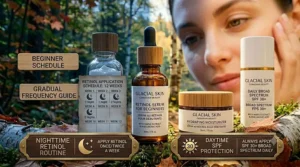
6. Three Ships SkinHero Calendula + 2% Bakuchiol Bio-Retinol Serum
Three Ships SkinHero Calendula + 2% Bakuchiol Bio-Retinol Serum is the standout Canadian-made option on this list — formulated and produced in Canada, which matters if supporting domestic skincare brands is part of your buying decision. The 2% bakuchiol concentration is on the higher end for this ingredient, and the calendula extract adds a calming, anti-inflammatory layer that’s particularly well-suited to rosacea-prone or weather-reactive skin, a common complaint among people who spend a lot of time outdoors in Canadian winters.
The spec sheet won’t tell you this, but the rosehip seed oil in the formula brings its own vitamin A-adjacent benefits, effectively giving you a “double bio-retinol” effect without any of the photosensitivity warnings that come standard with synthetic retinol. For Canadians who hike, ski, or simply walk to work year-round, that’s a meaningful advantage — you’re not stuck choosing between sun exposure and your anti-aging routine.
✅ Pros: Made in Canada, calming calendula + rosehip combo, B Corp and cruelty-free certified
❌ Cons: Higher price point, scent may be noticeable to fragrance-sensitive users
Best for: Canadians who want to support a domestic brand and need extra calming power for weather-reactive or rosacea-prone skin.
Price: approximately $35-45 CAD.
7. Olay Regenerist Retinol24 Night Facial Serum
Olay Regenerist Retinol24 Night Facial Serum is the mass-market heavyweight, and its presence on nearly every Canadian drugstore shelf (plus Amazon.ca) makes it the easiest “try before you commit to a niche brand” option. The Vitamin B3 (niacinamide) + retinol complex is formulated specifically to minimize the irritation that scares people away from retinol in the first place, and the “24-hour hydration” claim is less marketing fluff than it sounds — in colder provinces, that extra hydration layer can be the difference between a serum you tolerate and one you abandon by week two.
What stands out for Canadian buyers specifically is availability: because Olay is a Procter & Gamble staple, it rarely goes out of stock on Amazon.ca, and the fragrance-free version avoids the common complaint about scented retinol products feeling harsh on cold-irritated skin. It’s not the most “exciting” option, but it’s the one most likely to actually sit on your nightstand and get used consistently — and consistency is what actually drives results with retinol.
✅ Pros: Widely available, fragrance-free option, gentle niacinamide-retinol blend
❌ Cons: Texture is heavier/creamier than a true “serum,” scent (in original formula) divides opinion
Best for: Canadians who want a reliable, always-in-stock retinol option from a trusted drugstore brand.
Price: roughly $30-40 CAD.
Quick Products Comparison
| Product | Type | Price Range (CAD) | Best For | Amazon.ca Status |
|---|---|---|---|---|
| The Ordinary Granactive Retinoid 5% | Retinoid alternative | $18-22 | Sensitive beginners | Widely available |
| The Ordinary Retinol 0.5% in Squalane | Retinol | $13-17 | First-time retinol users | Widely available |
| CeraVe Skin Renewing Retinol Serum | Retinol | $28-35 | Combination/normal skin | Prime-eligible |
| CeraVe Resurfacing Retinol Serum | Retinol + niacinamide | $27-34 | Sensitive/rosacea-prone | Prime-eligible |
| INKEY List 1% Bakuchiol Moisturizer | Bakuchiol | $14-20 | Pregnancy-conscious, AM/PM | Widely available |
| Three Ships SkinHero Bakuchiol | Bakuchiol (Canadian brand) | $35-45 | Weather-reactive, supporting CA brands | Available, some province variance |
| Olay Regenerist Retinol24 | Retinol + niacinamide | $30-40 | Reliable drugstore staple | Almost always in stock |
Scanning this table, the clearest pattern is that price doesn’t map neatly onto effectiveness — The Ordinary’s two entries sit at the bottom of the price range while offering some of the most clinically familiar actives on the list. If budget is tight, starting with The Ordinary Retinol 0.5% or the INKEY List bakuchiol moisturizer gives you a legitimate entry point without compromising on the active ingredient itself. The premium tier (Three Ships, CeraVe) earns its higher CAD price through formulation extras — barrier-supporting ceramides, calming botanicals, or domestic manufacturing — rather than a fundamentally different core ingredient.
How to Choose a Bakuchiol or Retinol Serum in Canada
- Start with your skin’s current sensitivity. If you’ve reacted badly to acids or retinol before, lean toward bakuchiol or a low-percentage encapsulated retinol like the CeraVe options above.
- Factor in your province’s climate. Drier regions (Prairies, Yukon) benefit from formulas with squalane or ceramides regardless of which active you choose, since the active will be layered onto already-compromised skin.
- Check your life stage. If pregnancy or breastfeeding is a possibility, bakuchiol is generally considered the safer starting point — but this is a conversation for your doctor, not a blog post.
- Decide how fast you need results. Retinol typically shows changes faster (4-8 weeks); bakuchiol is a slower burn (8-12 weeks) but often with less downtime.
- Consider your sun exposure habits. Outdoor workers, skiers, and anyone who struggles to apply SPF consistently may find bakuchiol’s lower photosensitivity risk a practical advantage.
- Set a realistic CAD budget. Both categories span roughly $13-45 CAD on Amazon.ca, so budget shouldn’t be the deciding factor — formulation fit should.
- Read the ingredient list for actives that compound irritation. Pairing a new retinol with vitamin C or exfoliating acids in the same routine is one of the most common Canadian skincare mistakes — more on that below.
Bakuchiol vs Retinol: The Detailed Comparison
The bakuchiol vs retinol debate often gets framed as “natural vs synthetic,” but that framing misses what actually matters: mechanism and tolerance. Retinol is a vitamin A derivative that the skin converts into retinoic acid, the form that actually binds to retinoid receptors and triggers increased cell turnover and collagen production. This conversion process is well-documented and forms the basis of decades of dermatological research — it’s why retinol remains the benchmark against which newer ingredients get measured.
Bakuchiol, derived from the seeds and leaves of the Psoralea corylifolia plant, doesn’t share retinol’s chemical structure but appears to activate some of the same skin pathways, leading to comparable improvements in fine lines and skin tone in several studies — generally with less reported redness, peeling, and stinging. The trade-off, based on available research, is that bakuchiol’s effects tend to develop more gradually, and the body of long-term evidence is smaller than retinol’s decades-long track record. For background on how bakuchiol’s mechanism compares structurally to retinoids, the research suggests bakuchiol acts similarly to retinoids despite having a different chemical structure, with early studies showing it can help with fine lines, skin tone, and inflammation, though it’s not conclusively proven to match retinol’s effectiveness.
For Canadian users specifically, the practical tiebreaker is often seasonal. Many dermatologists suggest a “split routine”: retinol in the colder months when humidity is naturally lower indoors (so you’re more vigilant about moisturizing anyway), and bakuchiol through spring and summer when sun exposure and outdoor activity make a lower-photosensitivity ingredient more convenient. This isn’t a universal rule, but it’s a reasonable starting framework if you’re trying to decide between buying one or the other — or, as several products on this list demonstrate, choosing a formula that blends both.
What to Expect: Real-World Performance in Canadian Conditions
Specs on a product page rarely translate cleanly into “what will my face actually feel like in January.” Here’s the realistic timeline for most Canadian users starting either ingredient.
Weeks 1-2: Mild tingling or tightness is common with retinol, especially if applied before bed in a heated bedroom where humidity often sits below 30%. Bakuchiol users typically report little to nothing during this phase — which can feel anticlimactic but is generally a good sign of low irritation.
Weeks 3-6: This is where Canadian winter conditions start to matter most. Retinol users may notice increased flaking around the nose, mouth, and jawline — areas already exposed to cold wind. Layering a ceramide-rich moisturizer (or choosing one of the encapsulated retinol options above) significantly reduces this. Bakuchiol users generally continue without major changes, though some report a subtle “glow” emerging.
Weeks 8-12: Both ingredients should start showing visible improvements in texture and fine lines by this point, though retinol users often see more dramatic changes if they’ve tolerated the buildup phase well. This is also roughly when spring arrives in most of Canada — a good time to reassess whether your formula still suits the season, since rising humidity can mean you tolerate a slightly stronger product than you could in February.
Real-World Scenarios: Matching the Product to Your Canadian Lifestyle
The downtown Toronto condo dweller, mid-30s, combination skin, busy mornings: The INKEY List 1% Bakuchiol Moisturizer is a strong fit here — it collapses two routine steps into one, works AM and PM, and doesn’t require the careful “build-up” schedule retinol does. For someone juggling a commute and a packed calendar, simplicity wins.
The rural Manitoba homeowner, 40s, dealing with severe winter dryness and early fine lines: CeraVe Skin Renewing Retinol Serum makes sense thanks to its ceramide-forward formulation, which is specifically designed to counteract the kind of barrier damage that comes from extreme cold and forced-air heating. Pairing it with a humidifier amplifies the benefit.
The Vancouver outdoor enthusiast, late 20s, frequently hiking or cycling, rosacea-prone: Three Ships SkinHero Bakuchiol + Calendula is the better match — the calming calendula and rosehip combination addresses both the redness triggers from wind/sun exposure and the desire for a gentler, lower-photosensitivity active that won’t punish skin that’s already seeing plenty of UV.
Common Mistakes When Buying and Using These Serums in Canada
Layering too many actives at once is the single most common mistake — combining a new retinol with vitamin C, exfoliating acids, or benzoyl peroxide in the same routine often causes irritation that gets misattributed to the retinol itself, when really it’s the cumulative load. A second common issue is buying based on U.S. influencer recommendations without checking Amazon.ca availability or pricing, only to discover the product ships from the U.S. with longer delivery times or isn’t Prime-eligible in Canada. Skipping SPF is the third major mistake — and it’s a serious one with retinol, since increased photosensitivity combined with Canada’s surprisingly intense summer UV index (especially at higher elevations in Alberta or B.C.) can lead to sunburn-like reactions. Finally, many Canadians apply actives too heavily in winter, assuming “more product equals more protection against the cold,” when in reality a thinner layer of active paired with a separate occlusive moisturizer almost always performs better.
Practical Usage Guide: Building Your Routine
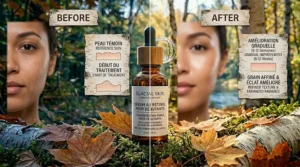
Start any new retinol or bakuchiol product 2-3 nights per week for the first two weeks, regardless of what the label suggests — Canadian winter air is drier than most product testing environments, so your skin may need a longer adjustment period. Apply to completely dry skin (wait 20-30 minutes after washing) to reduce the chance of stinging, then follow with a moisturizer containing ceramides or squalane. During winter months, consider storing your serum away from cold windowsills or unheated entryways, as temperature swings can affect some formulations over time. By spring, most Canadians can comfortably move to nightly use if tolerance has built up well — but if you notice increased sensitivity as UV index rises (typically starting in April across most provinces), that’s your cue to add or increase SPF, not to discontinue the active.
Long-Term Cost & Maintenance in Canada
A 30ml bottle of most serums on this list lasts 2-3 months with consistent use (a pea-sized amount per application). At the budget end, The Ordinary’s options work out to roughly $5-8 CAD per month — genuinely one of the most cost-effective anti-aging categories in skincare. The premium tier, like Three Ships, runs closer to $12-15 CAD per month. Compared to in-office retinoid treatments or prescription tretinoin (which requires a Canadian prescription and ongoing pharmacy visits), over-the-counter serums remain dramatically more affordable over a year of use, even accounting for the slightly higher shelf prices Canadians sometimes see compared to U.S. listings due to import costs and exchange rates. The trade-off is patience — OTC formulas work more gradually, so the “cost per visible result” only becomes favourable with consistent multi-month use.
Canadian Regulations & Safety Standards
Unlike the U.S., Canada applies specific concentration limits to retinol and its esters in cosmetics through the Cosmetic Ingredient Hotlist, which Health Canada updated as recently as February 2025. Under the current framework, leave-on products intended for full-body application are capped at a maximum of 0.2% total retinol equivalents, while other cosmetics — including facial serums — are limited to a maximum of 1.0% total retinol equivalents. This is part of why some higher-percentage retinol products marketed in the U.S. either aren’t sold on Amazon.ca or appear in reformulated versions — it’s worth double-checking the percentage on Canadian packaging rather than assuming it matches the U.S. version. You can review the full update directly on the Government of Canada’s site for Health Canada’s Cosmetic Ingredient Hotlist notices. Bakuchiol, as a botanical extract rather than a regulated vitamin A derivative, isn’t subject to the same concentration caps, which partly explains why some bakuchiol serums can market higher percentage claims without regulatory pushback.
Features That Actually Matter (And Those That Don’t)
Encapsulation technology matters — it genuinely reduces irritation by slowing ingredient release, and it’s worth the modest price premium if you’ve struggled with retinol before. Ceramide or ceramide-adjacent ingredients (squalane, niacinamide) matter enormously for Canadian users specifically, since they directly counteract the barrier stress our climate causes. On the other hand, “24-hour” hydration claims, while not false, shouldn’t be the deciding factor — most serums need to be paired with a separate moisturizer regardless of what the label implies. Fragrance is largely a “don’t care” feature unless you have reactive or rosacea-prone skin, in which case fragrance-free formulations (like the CeraVe options) genuinely reduce the chance of stinging during Canadian winter months when skin is already compromised.
Frequently Asked Questions
❓ Is bakuchiol better than retinol for sensitive skin?
❓ Can I use bakuchiol and retinol together?
❓ Does Amazon.ca ship bakuchiol and retinol serums across Canada, including remote areas?
❓ Is retinol safe to use during a Canadian winter?
❓ How much retinol percentage is allowed in Canadian cosmetics?
Conclusion
The bakuchiol vs retinol serum decision doesn’t have to be permanent — and for many Canadians, it isn’t really an either/or choice at all. If your skin has reacted poorly to actives in the past, or you’re navigating pregnancy, breastfeeding, or a particularly harsh prairie winter, starting with a bakuchiol option like The INKEY List 1% Bakuchiol Moisturizer or Three Ships SkinHero gives you a gentler entry point with genuinely supportive evidence behind it. If you want the deepest research backing and faster visible texture changes, The Ordinary’s retinol options or CeraVe’s encapsulated formulas remain reliable, well-priced choices that are easy to find on Amazon.ca.
Whichever direction you go, the two factors that matter most for long-term success in a Canadian climate are consistency and barrier support — a slightly weaker active used nightly through winter will almost always outperform a stronger one abandoned after two weeks of flaking. Pair your choice with a good moisturizer, daily SPF starting in spring, and realistic expectations (8-12 weeks for bakuchiol, 4-8 for retinol), and either ingredient can earn a permanent spot in your routine.
Recommended for You
- Best Retinol Serum for Beginners: Top 7 Gentle Picks Canada 2026
- Best Brightening Serum for Dark Spots in Canada 2026 (Top 7)
- Best Vitamin C Serum for Sensitive Skin in Canada 2026 (Top 7)
Disclaimer: This article contains affiliate links. As an Amazon Associate, I earn from qualifying purchases. If you purchase products through these links, we may earn a small commission at no additional cost to you.
✨ Found this helpful? Share it with your friends! 💬🤗
